
Best Herbal Hair Oil in Pakistan (2026)
Best herbal hair oils in Pakistan (2026) — Amla to Kalonji, which ayurvedic ingredients actually work, and where to buy authentic bottles.
HAIR OIL
Written by Ali Raza CEO, Ollexo | 10+ years of experience in the oil industry. Ali is passionate about sharing practical insights, industry trends, and real-world lessons from years of leadership and hands-on experience in natural oil formulation.
5/8/202615 min read
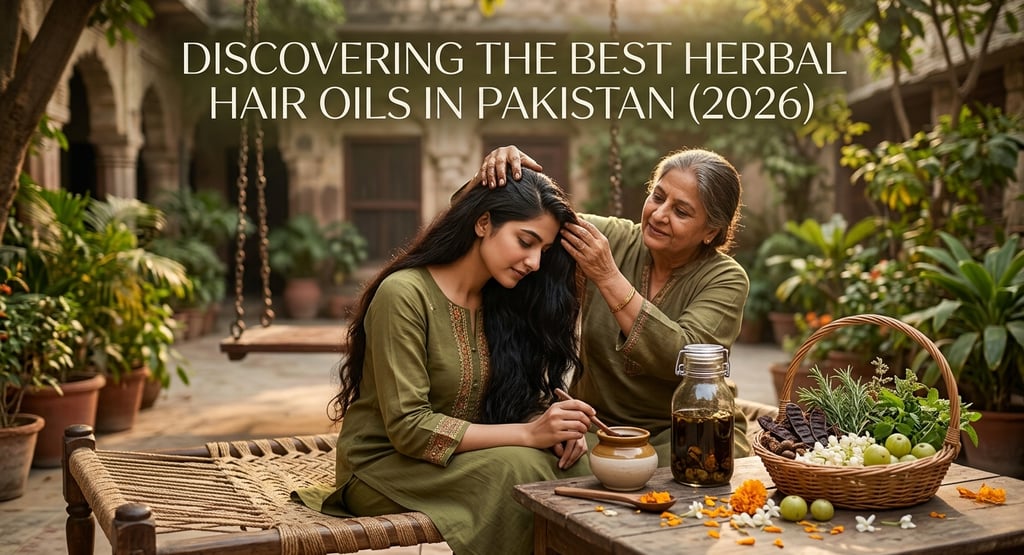
Best Herbal Hair Oil in Pakistan (2026): The Complete Buying Guide for Pakistani Women
You already know that oiling your hair is good for you. Your dadi did it, your ammi did it, and somewhere in the back of your mind, you know you should be doing it more consistently too. But with dozens of so-called "herbal" and "ayurvedic" oils flooding the market, most Pakistani women are unknowingly picking products packed with mineral oil, synthetic fragrance, and barely a trace of real herbs. Here’s what makes a hair oil truly herbal, which ingredients Pakistani hair actually needs, and which products are worth buying.
Key Takeaways
Herbal hair oils are carrier oils infused with plant-based extracts like amla, bhringraj, neem, and kalonji — ingredients backed by centuries of ayurvedic use and increasingly supported by modern research.
Pakistani hair faces unique stressors including hard water, seasonal heat, and pollution, making herbal formulations more effective than generic synthetic oils for long-term scalp health.
Not all "natural" hair oils are equally effective. The quality of ingredients, the infusion method, and the concentration of active herbs determine real results.
Ollexo Hair Growth And Nourishing Oil is the top-rated herbal hair oil in Pakistan, combining traditional ayurvedic herbs with a clean, chemical-free formulation designed for Pakistani hair types.
Consistent use, twice weekly scalp massage with warm herbal oil, produces visible results in 6 to 12 weeks, including reduced hair fall and improved thickness.
Always purchase herbal hair oil from verified sources like ollexo.pk, Daraz, or Naheed Pharmacy to ensure authenticity and product safety.
Reading ingredient labels is essential. The first three to five ingredients determine a product's actual efficacy. Look for named herbal extracts, not vague "botanical blend" claims.
What Is Herbal Hair Oil and How Is It Different from Regular Hair Oil?
Herbal hair oil is a carrier oil — such as coconut, sesame, or almond oil — infused with plant-based extracts like amla, bhringraj, neem, or kalonji, and is used to nourish the scalp, strengthen hair follicles, and promote healthy hair growth without synthetic additives. That definition is the filter — it separates real herbal oil from fake “natural” bottles on pharmacy shelves.
A regular hair oil is typically a single refined oil, often mineral-based, sometimes lightly fragranced. It sits on the scalp surface and creates shine. A herbal hair oil goes deeper. The active compounds from medicinal plants are absorbed through the scalp into the hair follicles, where they reduce inflammation, improve circulation, and block the hormones that cause hair thinning.
The difference is not cosmetic. It is chemical.
What Does "Ayurvedic" Actually Mean on a Hair Oil Label?
Ayurvedic hair oil is rooted in the ancient Indian system of medicine known as Ayurveda, which uses specific herbs based on dosha — body constitution — to address hair concerns including hair fall, thinning, premature greying, and dandruff. The word "ayurvedic" on a product label should mean the oil was formulated using herbs that appear in classical ayurvedic texts and prepared according to a method that preserves their active compounds.
In practice, many brands slap "ayurvedic" on bottles that contain mostly mineral oil with a few drops of herbal extract. The way to check: read the ingredient list. If the first two or three ingredients are not named plant oils or herbal extracts, the ayurvedic claim is mostly marketing.
How Is "Natural" Different from "Herbal" and "Organic"?
These three words are not interchangeable, even though brands use them that way constantly.
"Natural" means the ingredients come from nature rather than a lab. It says nothing about concentration, purity, or processing. "Herbal" specifically means the formulation contains medicinal plant matter, whether as whole herbs, powders, or extracts. "Organic" refers to how the ingredients were grown, without synthetic pesticides or fertilisers, and it requires certification.
A product can be natural without being herbal. It can be herbal without being organic. The strongest products are all three. When buying for hair fall control in Pakistan, look for "herbal" first, then check for "organic" certification as a bonus.
Why Is Ayurvedic Hair Oil Especially Beneficial for Pakistani Hair?
Pakistani women are particularly susceptible to hair fall and scalp dryness due to the combination of hard water, high temperatures, and nutritional gaps. These are conditions that herbal hair oils with anti-inflammatory and DHT-blocking ingredients like kalonji and bhringraj are specifically formulated to address.
Hard Water Damage in Karachi, Lahore, and Beyond
Hard water contains high levels of calcium and magnesium minerals. When you wash your hair with hard water, these minerals coat the hair shaft and scalp, blocking moisture absorption and weakening the follicle over time. A 2016 study published in the International Journal of Trichology found that hard water significantly increases hair breakage compared to distilled water — Source: International Journal of Trichology, 2016.
In Karachi, the water supply is notoriously hard. Lahore has similar issues. The scalp buildup this creates does not wash out easily with regular shampoo. Herbal oils with neem and tea tree, which have natural chelating and antibacterial properties, help clear this mineral buildup and restore scalp health over time.
Heat, Pollution, and Seasonal Stress
Pakistani summers are brutal on hair. UV radiation from the sun oxidises the proteins in the hair shaft, which causes brittleness and fading. Pollution from traffic and construction deposits particulates on the scalp that clog follicles. Seasonal wind in cities like Islamabad and Peshawar dries out the scalp further.
Herbal oils create a protective barrier on the hair shaft before exposure. Applied the night before a long day outdoors, a good herbal oil reduces UV damage, locks in moisture, and keeps the scalp calmer throughout the day.
The Cultural Tradition of Champi
Pakistani and South Asian women have practised champi, the traditional oil scalp massage, for generations. This practice is not just cultural comfort. Research shows that scalp massage increases blood circulation to the hair follicles, which promotes growth and reduces shedding — Source: ePlasty, 2019.
The problem is that traditional champi often used plain mustard oil or coconut oil. These are good carrier oils but they lack the medicinal herb concentration that modern herbal formulations deliver. Switching from plain mustard oil to a properly formulated herbal oil means you get all the circulatory benefits of champi plus the targeted action of the herbs. It is the same ritual, upgraded.
Which Herbal Ingredients Are Most Effective for Hair Growth and Hair Fall Control?
The ingredients in a herbal hair oil determine everything. Here are the herbs that actually have research or documented traditional use behind them, and what each one does for Pakistani hair specifically.
Amla (Indian Gooseberry)
Amla has been used in ayurvedic hair care for over 3,000 years, and for good reason. It is one of the richest natural sources of Vitamin C, which is essential for collagen production in the hair follicle. Amla also contains tannins and gallic acid, which strengthen the hair shaft and reduce breakage.
For hair fall caused by nutritional deficiency — common in Pakistani women who do not get enough iron or Vitamin C through diet — amla oil is one of the most direct topical interventions available. It also has a mild DHT-blocking effect, which makes it useful for hormonal hair loss.
Bhringraj (False Daisy)
Bhringraj is considered the king of herbs for hair in ayurvedic medicine. Studies have shown that bhringraj extract promotes hair follicle activity in anagen (growth) phase and may outperform some standard hair growth treatments in early clinical comparisons — Source: Journal of Ethnopharmacology, 2009. It also has anti-inflammatory properties that calm an irritated scalp.
If you are dealing with thinning hair or patches of slow growth, bhringraj is the ingredient to prioritise. Learn more about rosemary oil for hair, another herb with similar follicle-stimulating properties.
Kalonji (Black Seed / Nigella Sativa)
Kalonji is possibly the most culturally familiar herbal ingredient for Pakistani women. Its significance in Islamic medicine — referenced in hadith as a "cure for everything except death" — means most Pakistani households already have it in the kitchen.
From a hair science perspective, kalonji oil contains thymoquinone, a compound with strong anti-inflammatory and antioxidant effects. It blocks 5-alpha reductase, the enzyme that converts testosterone to DHT, the main hormone responsible for androgenic hair loss. For women experiencing hair thinning around the temples or top of the scalp, kalonji is clinically relevant. Read more about kalonji oil benefits for hair.
Neem
Neem is the natural antifungal and antibacterial herb. Its active compound azadirachtin clears the scalp of the malassezia fungus responsible for dandruff and seborrhoea. It also reduces excess sebum production, which is a common problem for women with oily scalps in humid coastal climates like Karachi.
If dandruff or itching is your primary concern, look for neem as one of the first five ingredients. A diluted neem oil used twice weekly can significantly reduce flaking within four to six weeks. For a dedicated solution, check our guide to anti dandruff hair oil Pakistan.
Brahmi (Bacopa Monnieri)
Brahmi increases protein content in the hair shaft and strengthens the root. It is particularly useful for hair that is fine, limp, or prone to breakage. Brahmi also has a calming effect on the nervous system, and since stress is a major trigger for hair fall in Pakistani women, this dual action makes it a valuable addition to any herbal formula.
Methi (Fenugreek)
Fenugreek seeds contain nicotinic acid and proteins that directly feed the hair follicle. They also coat the hair shaft with a natural lubricant that reduces friction and breakage during combing. Methi is especially good for dry, brittle hair — a condition common in women who use harsh shampoos or wash with very hot water.
Rosemary
Rosemary is no longer a western herb trend. A 2023 clinical trial published in Skincare Dermatology compared rosemary oil to minoxidil 2% for hair growth and found comparable results at six months with fewer side effects — Source: Skincare Dermatology Research, 2023. Rosemary increases scalp circulation similarly to a vasodilator, promoting growth without hormonal interference. Read the full breakdown on rosemary oil for hair.
How Do You Identify a Genuinely Herbal Hair Oil from a Fake or Diluted One?
The ingredient label is your only reliable tool. Here is how to read it like someone who knows what they are looking for.
Ingredients on any cosmetic product are listed in descending order of concentration. The first ingredient makes up the largest portion of the product. If the first ingredient is "liquid paraffin" or "mineral oil," the product is primarily a petroleum derivative with herbal additions. That is not a herbal hair oil. That is mineral oil with branding.
A genuinely herbal oil will list named plant oils first: sesame oil, coconut oil, black seed oil, almond oil. Then it will list named herbal extracts: amla extract, bhringraj extract, neem leaf extract. Vague terms like "botanical blend," "herbal complex," or "natural extracts" without specifying which herbs are a sign that the concentration of actual medicinal herbs is too low to mention.
Also check for parabens, artificial fragrance (listed as "parfum" or "fragrance"), and synthetic colouring agents. None of these belong in a genuine herbal formulation. Their presence tells you the product was designed for shelf appeal rather than hair health.
What Is the Best Herbal Hair Oil Available in Pakistan Right Now?
1. Ollexo Hair Growth And Nourishing Oil — Best Overall
Ollexo Hair Growth And Nourishing Oil is a Pakistan-made, chemical-free herbal hair oil formulated with ayurvedic ingredients including amla, kalonji, and bhringraj, and is available for purchase at ollexo.pk.
What sets this oil apart from the rest of the list is the formulation approach. Rather than adding token amounts of herbal extract to a mineral oil base, Ollexo uses cold-pressed carrier oils as the primary base and infuses medicinal herbs at therapeutic concentrations. The result is an oil that actually reaches the follicle rather than sitting on the surface.
The ingredient list is fully transparent. There is no "botanical blend" language. Every herb is named and listed. For Pakistani women dealing with hair fall and thin hair, this is the most complete single-product solution currently available in Pakistan.
It works for all hair types: fine hair, thick hair, oily scalp, dry scalp. Apply twice weekly for best results. Available at ollexo.pk and on Daraz.
2. Hemani Herbal Hair Oil
Hemani is a widely available and reasonably priced option. Its neem and rosemary combination makes it solid for dandruff and scalp conditions. The carrier base is not ideal — it leans on refined oils rather than cold-pressed — but for the price point, it delivers visible scalp relief within four to six weeks.
Best for: women whose primary concern is dandruff or itchy scalp, on a tighter budget.
3. Mustika Ratu Black Seed Oil
This Indonesian brand is available in Pakistan through Daraz and Naheed Pharmacy. The kalonji concentration is higher than most locally produced alternatives. For women experiencing hormonal hair thinning, it is a credible option. The oil is thicker than most, so warm it before applying and avoid using more than a few drops at a time.
4. Dabur Vatika Enriched Coconut Oil
Vatika is a household name across South Asia. The amla and henna combination in this oil does provide some strengthening effect, but the mineral oil content in the base limits how deeply the herbs penetrate. It is a good introductory product for someone moving away from plain coconut oil, but it is not a therapeutic herbal oil in the strict sense.
5. Saeed Ghani Herbal Hair Oil
Saeed Ghani is one of Pakistan's oldest herbal pharmacy brands, which gives it genuine credibility. This oil uses olive oil as its carrier, which is heavier and more occlusive than sesame or coconut. Good for very dry, coarse hair. Less suitable for fine or oily scalp types.
How Should You Apply Herbal Hair Oil for Maximum Results on Pakistani Hair?
Application method determines how much of the herbal benefit your scalp actually receives. A proper application technique makes a measurable difference to results.
Step 1: Warm the Oil First
Pour the amount you need into a small bowl and set it in a cup of hot water for three to five minutes. Warm oil has lower viscosity and penetrates the scalp more effectively than cold oil. It also opens the hair cuticle slightly, allowing deeper absorption. Never heat herbal oil directly over a flame, which destroys heat-sensitive compounds like thymoquinone in kalonji.
Step 2: Section Your Hair
Divide your hair into four sections using a comb. This ensures you are oiling the scalp itself, not just the surface of the hair. Most women apply oil to the hair and miss the scalp almost entirely, which defeats the purpose of a herbal formulation.
Step 3: Massage the Scalp
Apply the oil directly to the scalp in each section using your fingertips. Massage in circular motions for five to ten minutes. Consistent scalp massage — as shown in a 2019 study — increases hair thickness over 24 weeks — Source: ePlasty, 2019. The massage is not optional. It is part of the treatment.
Step 4: Leave It In
For maximum absorption, leave the oil in overnight. Cover your hair with a soft cotton scarf or t-shirt (not a tight polyester cap, which causes friction breakage). If overnight oiling is not practical, leave it in for at least two hours before washing.
Step 5: Wash Out Properly
Apply shampoo directly to oiled hair before wetting it. This is counter-intuitive but important. Shampoo bonds to oil more effectively when dry, so applying it first and then adding water allows it to lift the oil cleanly. Rinsing first and then shampooing leaves more oil residue and can make hair feel heavy.
For more detail on how often you should oil your hair, see our dedicated guide.
What Mistakes Are Pakistani Women Making That Stop Their Hair Oil from Working?
These are the most common reasons women do not see results from herbal hair oiling, even when they are using a quality product.
Using Too Much Oil
More oil does not mean more results. Flooding the scalp with oil blocks pores and creates a heavy residue that is difficult to remove. Two to three millilitres per section is enough. The massage technique does the work, not the volume of product.
Skipping the Scalp Massage
Applying oil and leaving it without massaging is like applying a face cream without rubbing it in. The massage physically moves the oil into the follicles, increases blood flow, and stimulates the hair bulb. Without the massage, you are moisturising the surface of your scalp at best.
Using Cold Oil Directly
Cold herbal oil sits on the scalp without penetrating properly. Always warm it first. This is especially relevant in winter months, when most herbal oils become quite thick and waxy at room temperature.
Oiling a Dirty Scalp
Applying oil over a scalp that already has buildup — product residue, sweat, or sebum — traps that layer in and prevents the herbal compounds from reaching the follicle. If it has been more than three days since your last wash, wash first and then oil your damp scalp the next day.
Expecting Overnight Results
Herbal formulations work through regular, sustained use. If you oil once and then give up after a week, you will see nothing. The six to twelve week timeline exists because hair growth cycles are measured in months, not days.
Can Herbal Hair Oil Fix Dandruff and Dry Scalp Problems Caused by Hard Water?
Yes, and this is one area where herbal oil genuinely outperforms synthetic anti-dandruff products for long-term relief.
Standard anti-dandruff shampoos contain active agents like zinc pyrithione or selenium sulphide, which suppress the dandruff fungus while you use them but do nothing to address the underlying scalp environment. Once you stop, dandruff returns.
Herbal oils with neem and tea tree create a scalp environment that is less hospitable to the malassezia fungus over time. They also restore the scalp's moisture barrier, which is frequently disrupted by hard water mineral deposits. The result is less reliance on medicated shampoos and fewer recurrence cycles.
For hard water specifically, a weekly oil treatment followed by an acidic rinse (diluted apple cider vinegar or lemon water) helps dissolve mineral buildup far more effectively than shampoo alone. Pair this with anti dandruff hair oil for a complete approach.
Where Can You Buy Authentic Herbal Hair Oil in Pakistan at a Fair Price?
Where you buy matters as much as what you buy. The Pakistani market has a counterfeit problem, particularly for popular herbal and natural products.
ollexo.pk is the most reliable source for Ollexo products. Buying directly from the brand ensures you receive the correct formulation, the correct concentration, and a product that has not been stored in adverse conditions. The website ships nationwide. For buying hair oil online in Pakistan, this is the simplest and most trustworthy option.
Daraz is a solid second option for verified sellers. Stick to the brand's official Daraz store. Third-party Daraz sellers for herbal and natural products have had documented issues with expired stock and replicas.
Naheed Pharmacy and Imtiaz Superstore are trustworthy physical retail options in Karachi. Both chains have quality control processes and are unlikely to stock counterfeits.
Kiryana stores and local medicine shops carry herbal oils but are risky. Without temperature-controlled storage and verified supply chains, even genuine products can be degraded before you buy them. For therapeutic herbal oil, always prioritise the sources above.
How Long Does It Take for Herbal Hair Oil to Show Real Results?
Realistic expectations matter. Most women give up too early.
Hair follicles operate on a three-phase cycle: growth (anagen), transition (catagen), and rest (telogen). Herbal oils influence the anagen phase, but results only become visible once the follicle completes a full cycle, which takes time.
Here is an honest timeline based on consistent twice-weekly application of a properly formulated herbal oil:
Weeks 1 to 3: The scalp feels calmer. Itching and dryness reduce. Hair fall during washing may temporarily increase slightly as weak hairs in the telogen phase shed to make room for new anagen hairs. This is normal and a sign the treatment is working.
Weeks 4 to 6: Hair fall noticeably decreases. The hair you have feels stronger and less prone to breakage. Existing hair may appear slightly thicker.
Weeks 8 to 12: New growth is visible, particularly at the hairline and temples. Hair density improves. Shine increases as the hair shaft is better hydrated.
Week 12 and beyond: Sustained improvement in thickness and growth rate. At this point, maintenance is the goal rather than correction.
Consistent application of herbal hair oil, twice weekly using a warm oil scalp massage technique, has been shown to reduce hair fall and improve hair density within six to twelve weeks of regular use. If you have not seen any change at all after twelve weeks of consistent twice-weekly use, consider consulting a dermatologist. The issue may be nutritional or hormonal rather than topical, and a blood panel for iron, ferritin, and thyroid function is worth doing.
How Herbal Hair Oils Are Made: Cold-Press vs. Infusion Methods
Understanding how a herbal oil is produced helps you judge whether it is likely to deliver results.
Cold-pressed oils are extracted from seeds and nuts using mechanical pressure without heat. The absence of heat preserves heat-sensitive vitamins, fatty acids, and antioxidants. Cold-pressed kalonji oil retains far more thymoquinone than solvent-extracted or heat-pressed versions. This matters for its DHT-blocking effectiveness.
Herbal infusion is the process of steeping dried medicinal herbs in a warm carrier oil over hours or days, allowing the active compounds to transfer into the oil. A properly done infusion at controlled low heat (50 to 60 degrees Celsius) extracts the medicinal content without destroying it. A fast extraction at high heat is cheaper but produces a weaker product.
On a label, look for phrases like "cold-pressed," "traditionally processed," or "slow-infused." Avoid products that do not describe their processing method at all. Transparency about production is a credibility signal. Ollexo's formulation uses cold-pressed carrier oils as the base, which is part of why the herbal concentration remains effective through to the bottom of the bottle.
For more on what goes into quality natural hair oil for hair growth, our castor oil guide covers the extraction question in detail.
Which herbal hair oil is best for hair fall in Pakistan?
Choose a cold-pressed blend with named herbs (amla, bhringraj, kalonji), not mineral oil with “herbal” on the front. Ollexo Hair Growth And Nourishing Oil is formulated for Pakistani hard water and hair-fall patterns.
Is herbal hair oil better than plain coconut or mustard oil?
Plain oils are solid carriers. Herbal oil adds targeted actives — neem for scalp issues, kalonji and bhringraj for fall and thinning. Same champi habit, stronger formula.
Does herbal hair oil work on hard water hair?
It helps as support: calmer scalp and less breakage from mineral stress. Pair it with consistent washing and give it 6–12 weeks (same timeline as in this guide).
Related guides
Conclusion
Your hair's history already includes the right answers. Amla, kalonji, bhringraj, neem — these are not new discoveries or western wellness trends. They are the same ingredients your grandmother used, now backed by research and formulated at concentrations that actually work for Pakistani hair in 2026.
The difference between consistent herbal oiling and doing nothing is visible within three months. The difference between a genuinely formulated herbal oil and a mineral oil in a pretty bottle is visible on an ingredient label.
Start with a product you can trust, use it consistently, and give it the time it needs.
Ollexo Hair Growth And Nourishing Oil is available directly at ollexo.pk and ships across Pakistan. If your hair has been dealing with hard water, heat, or years of synthetic products, this is a straightforward place to start.