
Hair Oil for Split Ends in Pakistan: What Works & What Can’t
Oils cannot permanently fix split ends, but the right routine prevents future breakage. Compare coconut, castor, and local blends for Pakistani hair.
HAIR OIL
Written by Ali Raza CEO, Ollexo | Over 10 years of experience in the oil industry. Passionate about sharing practical insights, industry trends, and real world lessons from leadership and hands on experience.
4/22/202612 min read
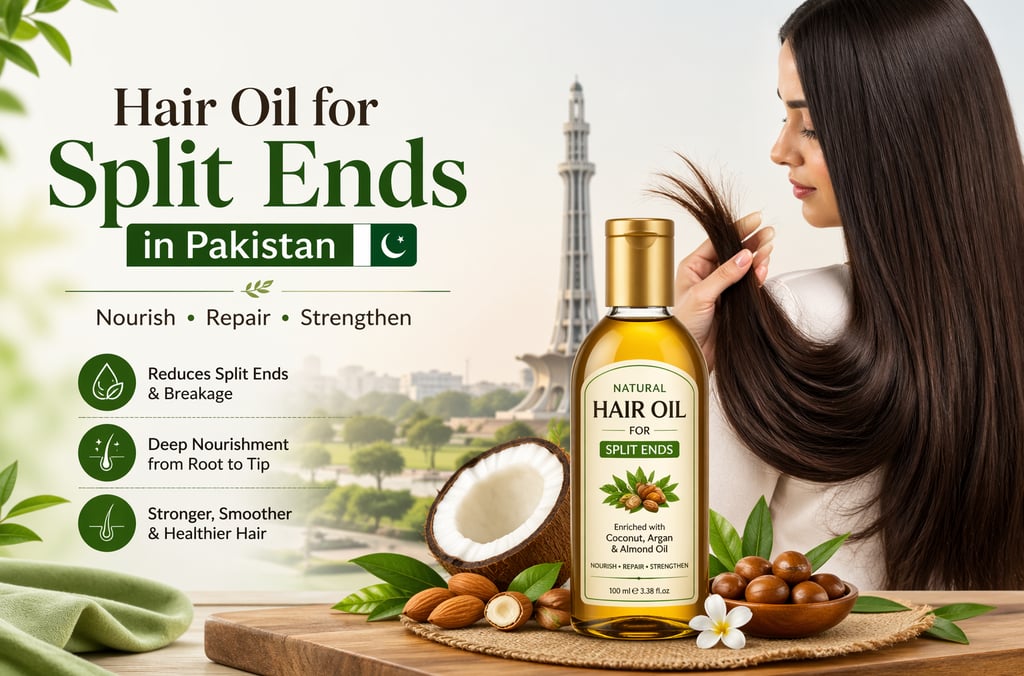
Hair Oil for Split Ends in Pakistan: 8 Best Oils, DIY Blends, and a Routine That Actually Works
You've probably been oiling your hair since you were old enough to sit still for a champi. It's practically written into Pakistani household law. But if you're still dealing with split ends and breakage despite all that effort, the problem isn't the habit, it's most likely the wrong oil, applied the wrong way. This guide covers exactly which oils repair damaged hair most effectively, how to use them correctly for your hair type, and which options you can actually find in Pakistan.
Key Takeaways
Split ends cannot be fully repaired once they form, the right hair oil prevents further splitting and strengthens the shaft to reduce future breakage.
Coconut oil is the only oil scientifically shown to penetrate the hair cortex and reduce protein loss, making it the gold standard for damaged hair.
Castor oil, rich in ricinoleic acid, strengthens weak, breakage prone hair and is widely available and affordable across Pakistan.
Mustard oil, a traditional champi staple, contains omega 3 fatty acids and selenium that nourish the scalp and reduce hair fall alongside split ends.
Apply oil 1–2 times per week, warmed slightly and left for at least one hour before washing, this delivers significantly better results than daily light application.
Pakistan's hot climate and hard water accelerate cuticle damage, making regular oiling more important, and more effective, than in milder climates.
The best oil depends on your hair type: lightweight oils (argan, almond) for fine hair; heavier oils (castor, coconut) for thick or coarse hair prone to breakage.
What Are Split Ends and Why Does Hair Breakage Happen?
Split ends, medically termed trichoptilosis, occur when the protective outer layer of the hair cuticle wears away, causing the hair shaft to fray at the tip. This is different from breakage, which happens along the mid shaft when hair snaps under tension or dryness. Many people use these terms interchangeably, but the distinction matters because the solutions differ slightly.
Split ends form at the tip. Breakage happens along the shaft. Both are signs of cuticle damage, but breakage is generally more severe, it means the structural integrity of the hair strand has been compromised, not just the end.
Here's the part most people don't want to hear: no oil permanently repairs a split end. Once the cuticle at the tip is gone, it's gone. The only real fix is a trim. What oils do, and they do this very well, is slow down the rate of new splitting, seal the cuticle temporarily, and strengthen the shaft so breakage becomes less frequent. Think of it as maintenance rather than cure.
In Pakistan specifically, a few factors accelerate this damage faster than elsewhere. Heat styling is common, the sun is intense for most of the year, and hard water (high in calcium and magnesium) is the norm in cities like Karachi, Lahore, and Islamabad. Hard water deposits minerals on the hair shaft that roughen the cuticle over time.
Can Hair Oil Actually Repair Split Ends or Does It Just Prevent Them?
Hair oils repair damage by filling gaps in the raised hair cuticle, restoring a smooth surface that reduces friction, moisture loss, and mechanical breakage during brushing and styling. That's what oils do, they don't rebuild the cuticle from scratch, but they make a damaged one function better.
Think of a raised cuticle like roof tiles that have come loose. Oil slides between them, flattens them temporarily, and prevents water from evaporating out of the hair cortex. This is why freshly oiled hair looks shinier and feels softer, the cuticle is lying flat.
The stronger claim belongs to coconut oil specifically. Coconut oil is the only commonly used hair oil clinically shown to penetrate the hair cortex and reduce protein loss during both washing and styling, a finding published in the Journal of Cosmetic Science (Rele & Mohile, 2003). Most other oils sit on the surface of the cuticle. Coconut oil actually gets inside. For genuinely damaged hair, that difference is meaningful.
So: oils prevent further splitting, reduce breakage, and temporarily improve the condition of damaged hair. They do not replace the structural proteins that have already been lost. Manage expectations accordingly, and your oiling routine will actually deliver results.
Which Are the Best Oils for Split Ends and Hair Breakage in Pakistan?
1. Coconut Oil, The Gold Standard for Damaged Hair
Coconut oil works where other oils cannot because of its low molecular weight and straight chain structure, which allows it to penetrate the hair cortex rather than just coating the surface. This matters enormously for damaged hair, where the cortex itself has lost proteins through repeated washing and heat exposure.
Best for: All hair types, especially thick, coarse, or chemically processed hair.
How to use: Warm it between your palms (or place the bottle in warm water for a minute), apply from mid lengths to ends, then work a small amount into the scalp. Leave for at least one hour, preferably overnight wrapped in a cotton cloth. Wash out with a gentle, sulfate free shampoo.
Where to buy in Pakistan: Essentially everywhere. Unrefined, cold pressed coconut oil from Hemani, Maujood, or imported brands at Naheed/Imtiaz. Prices range from Rs. 350–900 depending on size and quality.
One thing to watch: Coconut oil can cause protein overload with very frequent use on low porosity hair (hair that doesn't absorb moisture easily). Once or twice a week is enough.
2. Castor Oil, Best for Strengthening Weak, Breakage-Prone Hair
Castor oil contains approximately 90% ricinoleic acid, a rare fatty acid that improves scalp circulation, strengthens the hair follicle, and coats the shaft to prevent breakage, making it especially effective for thin, brittle hair. No other common oil has this fatty acid profile in meaningful concentrations.
Best for: Thin, brittle hair prone to breakage; also good for sparse edges or patchy areas.
How to use: Castor oil is thick, thicker than most people expect. Mix it with a lighter oil (coconut or almond) in a 1:2 ratio to make it easier to apply. Apply to scalp and lengths, leave for 2–3 hours minimum. Pure castor oil overnight can be hard to wash out without stripping the hair.
Where to buy in Pakistan: Hemani Castor Oil is widely available in pharmacies and grocery stores at around Rs. 250–400. Look for cold pressed or hexane free options.
3. Argan Oil, Best Lightweight Oil for Frizz and Fine, Damaged Hair
Argan oil is rich in oleic acid, linoleic acid, and Vitamin E, a combination that repairs surface level cuticle damage without weighing the hair down. It's often called "liquid gold," and while that's mostly marketing, it genuinely is one of the better lightweight oils for fine or wavy hair that needs repair without heaviness.
Best for: Fine hair, wavy hair, frizz prone hair, heat damaged hair.
How to use: A few drops on damp hair before styling as a leave in, or a slightly larger amount as a pre shampoo treatment for 30–60 minutes. Unlike coconut or castor, argan works well as a finishing oil too.
Where to buy in Pakistan: Hemani Argan Oil, OGX Argan Oil (available at bigger pharmacies), and imported brands at Metro/Naheed. Rs. 600–1,500 range depending on brand and size.
4. Mustard Oil, Pakistan's Traditional Champi Staple (With Caveats)
Mustard oil is the default hair oil in millions of Pakistani and South Asian households, and for good reason. It contains omega 3 fatty acids, selenium, zinc, and beta carotene, nutrients that nourish the scalp, stimulate circulation, and support hair follicle health. Studies suggest it reduces hair fall when used consistently, Source: Journal of Ethnopharmacology, 2016.
Is mustard oil good for split ends? It helps condition the scalp and reduces hair fall, but it's not the most effective oil for the hair shaft itself. Its molecule is too large to penetrate the cortex, and it can leave a heavy residue on fine hair.
Best for: Scalp health, hair fall reduction, thick or coarse hair types. Less ideal as a standalone treatment for split ends or breakage along the shaft.
How to use: Warm it and apply primarily to the scalp for a 30 minute massage, then distribute through lengths. Wash thoroughly, mustard oil has a strong scent that doesn't always rinse cleanly.
Where to buy in Pakistan: Available everywhere. Natco, Ahmed Foods, and local unbranded options. Typically Rs. 150–300.
5. Almond Oil, Lightweight and Underrated
Almond oil is high in Vitamin E, magnesium, and oleic acid. It's lighter than coconut or castor oil, which makes it ideal for fine hair that gets weighed down easily. It doesn't penetrate the cortex like coconut oil, but it does an excellent job of coating the cuticle smoothly and reducing brittleness.
Best for: Fine to medium hair, dry or brittle ends, hair that's been over processed.
Where to buy in Pakistan: Dabur Almond Hair Oil is perhaps the most widely available branded almond oil in Pakistan, sold at most kirana stores and pharmacies. Rs. 300–600.
6. Olive Oil, Best for Thick, Coarse, or Very Dry Hair
Olive oil is heavier than most options on this list. It's rich in squalene, oleic acid, and antioxidants, good for deeply moisturizing thick, coarse, or very dry hair. It's less suitable for fine hair because it can make it look flat and greasy if used incorrectly.
Best for: Thick, coarse, or very dry hair. Excellent as a hot oil treatment mixed with castor or coconut oil.
How to use: Warm it, apply generously to lengths and ends, leave for 1–2 hours under a shower cap, then wash out with a clarifying or gentle shampoo.
7. Jojoba Oil, Best for Scalp Balance
Jojoba oil is technically a liquid wax, not an oil, and its molecular structure closely mimics the scalp's natural sebum. This makes it exceptional for scalp health, it regulates sebum production, reduces flakiness, and doesn't clog follicles. For hair damage repair along the shaft, it's decent but not exceptional.
Best for: Oily scalp with dry ends, dandruff prone scalp, all hair types as a scalp treatment.
8. Rosemary Oil, Best for Scalp Stimulation and Hair Fall Alongside Breakage
Rosemary oil has gained significant attention after a 2023 clinical study showed it performed comparably to minoxidil for hair regrowth, Source: Skinmed Journal, 2015 (Panahi et al.). It won't directly repair split ends, but it stimulates scalp circulation and strengthens follicles, which reduces breakage at the root.
Important: Always dilute rosemary essential oil in a carrier oil (like jojoba or coconut). It should never be applied directly to the scalp at full strength.
Quick Comparison: Which Oil Is Right for Your Hair Type?
Hair Type Best Oil Secondary Option Fine hair Argan Almond Thick/Coarse Coconut Castor Oily scalp Jojoba Rosemary (diluted) Brittle/breakage prone Castor Coconut Dry, dull ends Olive Almond Heat damaged Coconut Argan Dandruff + damage Jojoba Mustard
How to Use Hair Oil Correctly to Repair Damage
Applying oil incorrectly is one of the most common reasons people get no results. The mechanics matter.
Step 1: Warm the oil. Cold oil sits on the surface. Warmed oil opens the cuticle slightly and absorbs better. Place the bottle in a bowl of warm water for 5 minutes, or rub a small amount vigorously between your palms.
Step 2: Apply to dry or slightly damp hair. Start at the ends, the oldest, most damaged part of the hair, and work upward to mid lengths. Then apply any remaining oil to the scalp with fingertips in circular motions.
Step 3: Decide on timing. For best results, hair oil should be applied warm, left on for a minimum of 60 minutes or overnight, and used consistently 1–2 times per week, sporadic application provides minimal benefit for genuinely damaged hair. A one hour treatment covers the basics. Overnight treatments (with hair wrapped in a cotton cloth or loose braid) give better penetration, especially for very damaged hair.
Step 4: Wash out properly. Apply shampoo directly to oiled hair before wetting it, this helps the shampoo emulsify the oil rather than just sliding off. Rinse, then shampoo a second time with water. This two step method removes oil without stripping the hair.
Step 5: Frequency. Once or twice a week is the right range for most damaged hair. Daily application of large amounts is counterproductive, it can block the scalp and lead to buildup.
How Do You Make a DIY Hair Repair Oil Blend at Home?
DIY blends let you combine the strengths of multiple oils for a more targeted treatment. Here are three you can make with ingredients available in Pakistani pharmacies and grocery stores.
Blend 1: The Deep Repair Treatment (For Severe Breakage)
3 tablespoons coconut oil
1 tablespoon castor oil
1 Vitamin E capsule (pierce and squeeze in)
Mix together, warm slightly, apply from scalp to ends. Leave overnight or for at least 2 hours. This blend penetrates the cortex (coconut), coats and strengthens the shaft (castor), and provides antioxidant protection (Vitamin E).
Blend 2: The Lightweight Pre-Wash Treatment (For Fine or Frizzy Hair)
2 tablespoons argan oil
1 tablespoon almond oil
5 drops rosemary essential oil
Mix and apply 45 minutes before shampooing. This combination smooths the cuticle (argan), reduces brittleness (almond), and stimulates the scalp (rosemary) without weighing fine hair down.
Blend 3: The Budget Champi Blend (Maximum Hair Fall + Damage Care)
2 tablespoons mustard oil
1 tablespoon coconut oil
1 tablespoon castor oil
Warm together and massage into the scalp for 10–15 minutes, then distribute through lengths. This is the affordable version that covers scalp health (mustard), cortex penetration (coconut), and shaft strength (castor). All ingredients cost under Rs. 500 combined.
What Are the Best Commercially Available Hair Oils for Damaged Hair in Pakistan?
Several local and international brands are easy to find across Pakistan:
Dabur Almond Hair Oil, One of the most widely used branded oils in the country. Lightweight, good for fine to medium hair. Available at most kirana stores. Rs. 300–600.
Hemani Argan Oil, Good quality for the price. Available at pharmacies and online. Rs. 400–700.
Hemani Castor Oil, Solid cold pressed option. One of the more affordable castor oils available in Pakistan. Rs. 250–400.
Vatika Enriched Coconut Hair Oil, Combines coconut with herbal extracts. Widely available, affordable, and suitable for general damage care. Rs. 200–400.
Schwarzkopf Gliss Oil, A more premium option with a mix of oils and silicones. Works well as a finishing serum for frizz and surface damage, but not a substitute for a proper pre wash treatment.
Mustela Nourishing Hair Oil, Premium option, primarily positioned for dry and damaged hair. Less widely available but stocked at larger pharmacies.
What Hair Care Mistakes Are Making Your Split Ends and Breakage Worse?
Over washing. Washing every day strips the natural sebum that keeps hair moisturized. For damaged hair, 2–3 times a week is typically enough.
Brushing wet hair. Wet hair is at its most elastic and breaks easily under tension. Pat dry with a cotton cloth, detangle with a wide tooth comb, and work from ends to roots, not the other way around.
Heat without protection. Every use of a straightener or blow dryer at high heat without a heat protectant physically damages the cuticle. This is the single fastest way to generate new split ends.
Silicone heavy products. Many shampoos and conditioners use silicones (listed as dimethicone, cyclomethicone, etc.) to make hair feel smooth. The problem: they build up over time, block moisture from entering the shaft, and eventually make damage worse. They mask the problem rather than addressing it.
Skipping trims. Split ends travel up the hair shaft if left untrimmed. Trimming every 6–8 weeks doesn't slow growth, it prevents breakage from working its way higher.
Rubbing hair with a regular towel. The rough texture of standard towels creates friction that roughens the cuticle. Use a microfiber towel or an old cotton t shirt instead.
How Long Does It Take for Hair Oil to Show Results on Damaged Hair?
Results on damaged hair appear gradually with consistent use. Most people notice reduced frizz, smoother texture, and fewer visible split ends within 4–6 weeks of oiling 1–2 times per week. Significant reduction in breakage, hair that snaps during combing or styling, typically takes 8–12 weeks of consistent use.
The honest caveat: oils are prevention and maintenance tools. If split ends are already severe, a trim is the fastest fix. Oil from that point forward to prevent the problem from recurring.
What's Next: A Simple Weekly Hair Repair Routine
Information is only useful if you actually use it. Here's a simple 3 step weekly structure you can start this week.
Night before wash (Day 1): Apply your chosen oil or DIY blend to dry hair. Braid loosely, wrap in a cotton dupatta or old t shirt, sleep. Target: at least 6–8 hours of contact time.
Wash day (Day 2): Apply shampoo to oiled hair before wetting, then rinse. Shampoo once more with water. Follow with a conditioner on lengths and ends (never the scalp). Rinse with cool water to close the cuticle.
Post wash care (Day 2): Detangle gently with a wide tooth comb on damp hair. Air dry where possible. If using a blow dryer, use the cool setting or a heat protectant. Add 2–3 drops of argan or almond oil to the ends of dry hair for added protection.
Repeat once more during the week if your hair is very dry or damaged, a shorter 1 hour oil treatment rather than overnight. Two treatments per week covers even fairly severe damage.
Conclusion: Consistent Oiling Is the Most Underrated Hair Repair Strategy
No single oil is magic. There's no product, local or imported, cheap or expensive, that will reverse months of heat damage or undo split ends that have already formed. The dermatologist level answer is: trim the damage, protect the new growth.
What oils genuinely do is slow down the rate of new damage. Applied correctly, consistently, and matched to your hair type, the right oil strengthens the shaft, smooths the cuticle, and reduces the friction and dryness that cause breakage in Pakistan's harsh climate. Four to six weeks of twice weekly oiling produces visible results for most people. Not magic, just maintenance done right.
Pick one oil from this guide that matches your hair type, try it properly for a month, and see what changes. If you want a starting point, coconut oil is the most well researched, widely available, and effective option for the majority of damaged hair types in Pakistan.
Written by Ali Raza CEO, Ollexo | Over 10 years of experience in the oil industry. Passionate about sharing practical insights, industry trends, and real world lessons from leadership and hands on experience.