
How to Make Kalonji Hair Oil at Home in Pakistan
Curious about kalonji oil for hair fall and weak roots? Step-by-step kalonji oil recipe with exact ratios. Takes 15 minutes, works in under two weeks.
HAIR OIL
Written by Ali Raza CEO, Ollexo | 10+ Years of Experience in the Oil Industry. He has over a decade of hands-on experience in the oil formulation and hair care industry.
5/7/202616 min read
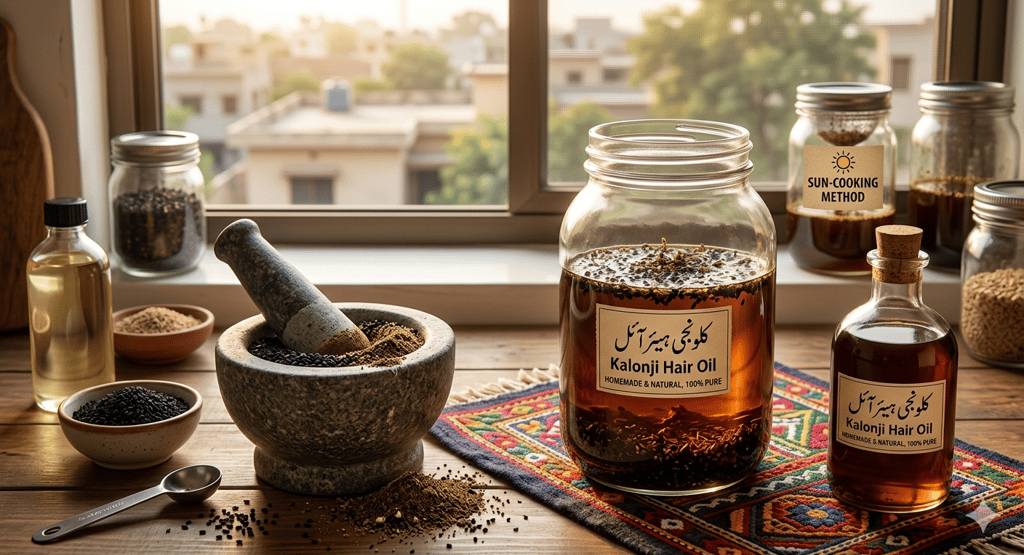
How to Make Kalonji Hair Oil at Home in Pakistan: A Step by Step Guide That Actually Works
Your nani probably told you about kalonji years before Instagram discovered it. But most women either buy market oils where kalonji is buried in tiny print at the bottom of the ingredient list, or they apply raw seeds in ways that do little for the scalp. In this guide, you will find two properly tested methods to make a genuinely effective kalonji hair oil at home in Pakistan, using ingredients from any kiryana store for under PKR 500.
Key Takeaways
Kalonji hair oil is prepared by infusing Nigella sativa seeds in a carrier oil like coconut, mustard, or olive oil, allowing the active compound thymoquinone to transfer into the oil for scalp use.
Two home preparation methods work reliably: a cold infusion over 10 to 14 days that preserves the most nutrients, and a warm stovetop infusion under 30 minutes for when you need results faster.
Carrier oil choice matters more than most people realize. Coconut oil suits dry or damaged hair, mustard oil maximizes scalp stimulation for growth, and olive oil is better for chemically treated hair.
All ingredients are available at kiryana stores, pansari shops, Daraz, Naheed Pharmacy, and Imtiaz for under PKR 500 total.
Homemade kalonji oil belongs in a dark glass bottle, away from direct sunlight, and should be used within 2 to 3 months. Refrigeration extends this to 6 months, which matters in Karachi summers.
Consistent use 2 to 3 times per week for at least 8 weeks is necessary before visible growth results appear. Patience matters as much as the recipe.
For women who want the benefits of kalonji oil without the preparation time, Ollexo Hair Growth And Nourishing Oil is available at ollexo.pk.
What Is Kalonji Hair Oil and How Is It Different from Black Seed Oil?
Kalonji hair oil is a traditional herbal preparation made by infusing Nigella sativa seeds in a carrier oil, allowing the seeds' bioactive compounds to transfer into the oil over time. It is not the same as commercially pressed black seed oil, and the distinction matters.
Three types of kalonji oil exist, and they produce very different results:
Pure pressed black seed oil is extracted directly from the seeds through cold pressing. It is dark, pungent, and highly concentrated. This is what you find in pharmacies labelled "black seed oil" or "kalonji oil" in small dark bottles. It can be used on the scalp, but only diluted.
Diluted commercial kalonji oil is pressed black seed oil mixed with a carrier oil like olive or coconut. This is what most branded Pakistani hair oil bottles contain under the kalonji label. The ratio of actual kalonji oil to carrier oil varies enormously between products, which explains why results are so inconsistent from one brand to the next.
Homemade infused kalonji oil, which is what this guide covers, is made by soaking whole kalonji seeds in a carrier oil so the bioactive compounds migrate into the oil gradually. This method is gentler, costs a fraction of the price, and gives you full control over what goes into it.
A study published in the Journal of Dermatology and Dermatologic Surgery found that topical application of Nigella sativa oil significantly reduced hair loss in participants with telogen effluvium compared to a control group. Source: Journal of Dermatology and Dermatologic Surgery, 2014. The homemade infusion method has been used in South Asian households for generations, long before the science had a name for what made it work.
Why Does Kalonji Oil Help with Hair Fall and Slow Growth?
Kalonji works for hair because of thymoquinone, the primary active compound in Nigella sativa seeds. Thymoquinone has documented anti inflammatory, antifungal, and potential DHT blocking properties, all of which address the root causes of the most common Pakistani hair problems.
Scalp inflammation is one of the biggest contributors to hair fall in Pakistan, particularly in humid cities like Karachi and Lahore. When follicles are chronically inflamed, they shed hair prematurely. Thymoquinone reduces this inflammatory response at the scalp level. This is not a vague claim. Research published in Phytotherapy Research (2019) documented thymoquinone's ability to inhibit key inflammatory pathways including NF kB and prostaglandin synthesis. Source: Phytotherapy Research, 2019.
Dandruff affects an estimated 50% of the global adult population and is often caused by the Malassezia fungus. Source: International Journal of Trichology, 2015. Thymoquinone has antifungal activity against exactly this type of organism. This is why kalonji oil for dandruff works in practice. There is a biological reason, not just tradition.
DHT (dihydrotestosterone) is the hormone that miniaturizes hair follicles and triggers androgenetic hair loss in both men and women. Preliminary research suggests thymoquinone may interfere with DHT production at the follicle level. More large scale human trials are needed, but the early evidence is promising. Source: Asian Pacific Journal of Tropical Biomedicine, 2021.
The Islamic tradition also connects kalonji to healing. The Prophet Muhammad (PBUH) described black seed as a cure for everything except death, a hadith recorded in Sahih Bukhari. This is not just cultural framing. It points to centuries of careful observation, and modern pharmacology has begun to confirm the mechanisms behind it.
Pakistani specific hair challenges make kalonji especially relevant here. Hard water is present in most of Lahore, Faisalabad, and significant parts of Karachi. It deposits calcium and magnesium on the scalp and hair shaft, which creates chronic low level scalp irritation and mineral buildup that weakens hair over time. Thymoquinone's anti inflammatory properties directly address the scalp damage this causes. If hard water is your primary concern, how hard water affects hair in Pakistan breaks down the full picture. And natural remedies for hair fall in Pakistan covers the broader context of what works and what does not.
Which Carrier Oil Works Best with Kalonji for Pakistani Hair Types?
The carrier oil you choose determines how kalonji's compounds are delivered to your scalp and how compatible the oil will be with your specific hair type and climate. This decision is more important than most guides acknowledge.
Coconut oil works best for dry, brittle, or heat damaged hair. Its small molecular structure allows it to penetrate the hair shaft rather than just coat it. In Pakistan's dry winter months it is particularly useful. The one practical issue is that it solidifies below 24 degrees Celsius. In Karachi this is rarely a problem, but Islamabad users may need to hold the bottle under warm water before applying.
Mustard oil (sarson ka tel) is the traditional Pakistani choice and arguably the most potent option for growth stimulation. It contains selenium, magnesium, and omega 3 fatty acids that improve scalp circulation. It is also the strongest smelling option, which makes it better suited for overnight applications than daytime use. The combination of kalonji and sarson ka tel for hair has been a household remedy for generations in Pakistan. For a broader look at how different carrier oils for hair growth compare in terms of fatty acid profiles, the Ollexo ingredient guide goes into detail.
Olive oil suits color treated, chemically straightened, or protein treated hair. It is rich in oleic acid and absorbs reasonably well. It is also the easiest to wash out, which is a practical advantage if you are managing Pakistani hard water.
Sesame oil is underused and worth knowing about. It has natural sun protection properties of roughly SPF 30, which makes it especially useful in Pakistan's intense summer sun. It is lighter than coconut oil, absorbs faster, and has a mild smell most people find inoffensive.
Sweet almond oil (badam tel) works well for sensitive scalps and very fine hair. It is lightweight and non comedogenic, meaning it does not clog follicles. The kalonji badam tel hair oil combination is particularly good for women dealing with thinning without wanting a heavy oil formula.
Where Can You Buy Kalonji Seeds and Carrier Oils in Pakistan?
Every ingredient in this recipe is available at grocery stores most Pakistanis already visit. You do not need a specialty health shop.
Kalonji seeds are at every pansari or kiryana store in Pakistan, priced at approximately PKR 80 to 150 per 100 grams. Buy seeds that smell sharp and slightly bitter. Flat, dull seeds with no scent have likely lost their potency. Daraz also carries kalonji seeds from multiple sellers, which is useful if you want to compare prices or buy in bulk.
Carrier oils are at Naheed Pharmacy, Imtiaz, Chase, and most large grocery stores in urban centers. Mustard and coconut oils are standard kiryana store items.
Optional boosters like amla powder, fenugreek seeds (methi dana), and curry leaves are standard pansari stock and cost very little per batch.
Total cost for one batch: A properly made kalonji oil using coconut or mustard oil as the base, with kalonji seeds and one optional booster, should come to between PKR 300 and 500. That amount covers three to four months of regular use.
How Do You Make Kalonji Hair Oil at Home Step by Step?
Kalonji hair oil is a traditional herbal remedy prepared by infusing Nigella sativa seeds in a carrier oil such as coconut, mustard, or olive oil, allowing the seeds' active compound thymoquinone to transfer into the oil for topical scalp use. Three methods exist, each suited to a different timeline and situation.
Method 1: The Cold Infusion Method (Best Results, 10 to 14 Days)
The cold infusion method involves submerging kalonji seeds in a carrier oil at room temperature for 10 to 14 days, which preserves heat sensitive nutrients and produces a more potent oil compared to quick stovetop methods.
Ingredients:
4 tablespoons of whole kalonji seeds
200ml of your chosen carrier oil
One clean, dry glass jar with a tight fitting lid
A fine mesh strainer or muslin cloth
A dark glass bottle for storage
Step 1: Lightly crush the kalonji seeds using a mortar and pestle. You are not grinding them into powder. You are just breaking each seed open so the inner compounds have more surface area to release from. This step increases infusion potency by roughly 30 to 40% compared to whole seeds.
Step 2: Pour the crushed seeds into the clean glass jar. Add your carrier oil. The seeds should be fully submerged. Stir gently with a clean, dry spoon. Any water in the jar will eventually cause the oil to spoil, so make sure everything is bone dry before you start.
Step 3: Seal the jar tightly. Place it on a windowsill that gets indirect light rather than harsh direct sunlight. In summer, an indoor shelf in a cool room is better than a sunny window.
Step 4: Shake the jar gently once every day. This keeps the seeds in contact with fresh oil and distributes the infusion more evenly.
Step 5: After 10 to 14 days, strain the oil through a muslin cloth or fine mesh strainer into your storage bottle. Press the spent seeds firmly against the cloth to extract every last drop of infused oil.
Your cold infused kalonji oil is ready. The color should be noticeably darker than plain carrier oil, with a slightly sharp, warm scent.
Method 2: The Warm Stovetop Infusion Method (20 to 30 Minutes)
This method uses gentle heat to speed up the infusion process. The key word is gentle. Thymoquinone begins degrading above 120 degrees Celsius, and a medium flame on a thin saucepan can easily reach 150 to 180 degrees within a few minutes. Source: Food Chemistry Journal, 2021. Low and slow is the rule here.
Ingredients:
4 tablespoons of kalonji seeds (lightly crushed)
200ml carrier oil
A small heavy bottomed saucepan
A cooking thermometer (optional but genuinely useful)
Muslin cloth or fine mesh strainer
Step 1: Add the crushed kalonji seeds and carrier oil to the saucepan. Start on the lowest flame your stove allows.
Step 2: Watch the oil carefully. You want to see very small, lazy bubbles forming around the seeds. This indicates an infusion temperature of roughly 60 to 80 degrees Celsius. If the seeds are sizzling loudly or turning dark, the heat is too high. Remove the pan from the flame immediately and let it cool for a few minutes before returning it to lower heat.
Step 3: Hold this low simmer for 20 to 25 minutes. Stir every few minutes with a clean spoon.
Step 4: Remove from heat and let the oil cool to complete room temperature before straining. This step is not optional. Pouring hot oil into a bottle creates condensation, which introduces water and dramatically speeds up rancidity.
Step 5: Strain through muslin cloth into your storage bottle. Press the seeds to extract all the oil.
The resulting oil will be darker and more fragrant than the cold infusion version, though slightly lower in heat sensitive compounds.
Method 3: The Mortar and Pestle Method (For Immediate Use)
This is not a stored oil. It is a fresh paste made and applied the same day, for when you want the benefits of kalonji right now without waiting two weeks.
Step 1: Grind 1 tablespoon of kalonji seeds into a coarse paste in a mortar and pestle.
Step 2: Mix the paste with 3 tablespoons of warm carrier oil. Coconut or olive oil work well here because they liquify easily and feel comfortable on the scalp.
Step 3: Apply directly to the scalp and massage in for 5 to 10 minutes using circular fingertip motions.
Step 4: Leave for at least 2 hours or overnight, then wash out with a mild shampoo.
This paste cannot be stored. Make it fresh each time you use it. The advantage is maximum freshness and immediate seed potency with zero waiting.
How to Store Homemade Kalonji Oil and How Long Does It Last?
Homemade kalonji hair oil should be stored in a dark glass bottle away from direct sunlight and used within 2 to 3 months at room temperature, or up to 6 months when refrigerated, to prevent the carrier oil from turning rancid.
Glass versus plastic: Always use glass. Plastic bottles leach compounds into oil over time, particularly in Pakistan's intense summer heat. Old jam jars, amber pharmacy bottles, or glass syrup bottles work perfectly. Wash them with boiling water, rinse thoroughly, and dry completely before filling.
Dark versus clear glass: A brown or green glass bottle stored inside a cupboard is significantly better than a clear bottle sitting on a bathroom counter. Light oxidizes oil faster than almost anything else.
Summer storage for Pakistani climates: Karachi temperatures regularly reach 40 to 45 degrees Celsius between May and August. At those temperatures, carrier oils degrade faster and rancidity becomes a real risk. Keeping your oil in the refrigerator during those months extends the shelf life to 4 to 6 months and does not affect its effectiveness. Cold coconut oil will solidify. Hold the bottle under warm tap water for a minute before use and it will liquefy easily.
How to know if your oil has gone rancid: Rancid oil smells sour, musty, or like stale cooking fat. The color may darken or cloud over in a way that was not there before. Do not use rancid oil on your scalp. It clogs follicles and causes irritation that will set your progress back rather than forward.
How Often Should You Apply Kalonji Hair Oil for Visible Results?
For consistent and measurable results, kalonji hair oil should be massaged into the scalp 2 to 3 times per week for a minimum of 8 continuous weeks, as hair growth cycles require sustained treatment to show visible improvement.
The scalp massage technique matters as much as the oil itself. Apply a small amount of oil to your fingertips rather than your palm and use slow circular motions across the full scalp. This increases blood circulation to the follicles directly, which is how the nutrients actually reach the root. Without proper massage, much of the oil just sits on the surface. For a complete breakdown of application technique by hair type, how often should you oil your hair on the Ollexo blog goes into this in detail.
Overnight versus 2 hour application: Overnight application gives the oil more contact time with the scalp and is the better option for most hair types. Women with very fine hair sometimes find overnight oiling weighs the hair down and is hard to wash out fully. A 2 hour application is sufficient in those cases. The hair oiling for thin and fine hair guide has specific tips for this situation.
How to wash out kalonji oil with Pakistani hard water: Hard water makes washing out oil more difficult because its mineral content reduces shampoo lathering significantly. The trick is to apply shampoo to dry hair first, before adding any water. Work it through the roots, then add water and lather. This pre dry shampoo method breaks down the oil much more efficiently than applying shampoo to wet oiled hair. You may still need two shampoo passes for an overnight application.
What to expect at each stage:
In weeks 1 and 2, most women notice the scalp feels calmer. Itchiness and dandruff often reduce within the first 10 to 14 days of consistent use.
By week 4, hair shedding during washing typically decreases. Some women experience slightly more shedding in the first two weeks as the scalp adjusts. This is normal and temporary.
By week 8, most women see visible improvement in hair density and hair shaft texture. Actual growth (approximately 1 cm per month) takes longer to observe in the mirror, but the hair that grows during this period is noticeably stronger.
What Mistakes Ruin Homemade Kalonji Oil Before You Even Use It?
Several avoidable errors consistently ruin homemade kalonji oil, and most happen before a single drop reaches the scalp.
Overheating the oil is the most damaging mistake. Temperatures above 120 degrees Celsius degrade thymoquinone significantly. On a Pakistani gas stove, medium flame on a thin saucepan reaches 150 to 180 degrees within a few minutes. Always use the lowest possible flame, and check with a thermometer if you own one.
Using plastic containers during infusion allows plasticizers to leach into the oil during the 10 to 14 day cold infusion period. Pakistan's summer heat makes this worse. Use glass for everything.
Skipping the straining step. Seed residue left in the oil accelerates bacterial growth and speeds up rancidity. Strain completely and press every drop out of the seeds.
Starting with rancid carrier oil. Check your coconut or mustard oil before you begin. If it smells sour or old, throw it out. Kalonji infusion does not correct or mask a bad base oil. The finished product will be worse, not better.
Applying undiluted cold pressed kalonji seed oil directly to the scalp. Pure pressed black seed oil is concentrated and can cause contact dermatitis in sensitive individuals. If you are using the pressed variety rather than the infused version, dilute it to no more than 1 part kalonji oil to 10 parts carrier oil before applying.
Using wet equipment. Any water in the jar, bottle, or spoon introduces bacteria into the oil. Make sure every surface that touches your oil is completely dry.
Can You Add Other Ingredients Like Amla or Fenugreek to Kalonji Oil?
Yes, and these additions can meaningfully improve the oil depending on what your hair specifically needs.
Amla (Indian gooseberry) is excellent for women dealing with premature greying or general thinning linked to nutritional gaps. Amla is high in vitamin C and tannins that support collagen production around the hair follicle. Add 1 tablespoon of dried amla pieces per 200ml of carrier oil alongside the kalonji seeds in either method. The amla oil for hair in Pakistan guide covers what amla does as a standalone ingredient.
Fenugreek seeds (methi dana) contain lecithin and protein precursors that nourish the hair shaft and add a natural shine. They are particularly useful for dry, brittle hair and for women experiencing post pregnancy hair loss. Add 1 tablespoon of methi dana alongside the kalonji seeds before infusing.
Curry leaves contain beta carotene and amino acids that help prevent follicle shrinkage. Ten to twelve fresh or dried curry leaves added to the warm infusion method contribute a mild nourishing effect without overpowering the formula.
Rosemary has some of the strongest clinical evidence for hair growth of any plant based ingredient. A 2023 study found rosemary oil produced results comparable to 2% minoxidil over 6 months for androgenetic alopecia. Adding 5 to 6 sprigs of dried rosemary to your kalonji infusion combines two well documented natural growth stimulants in one preparation. The rosemary oil for hair growth article on Ollexo covers this research in full.
Castor oil can be blended into your carrier oil at around 20% of the total volume. Its ricinoleic acid content improves scalp circulation and adds thickness to the finished oil. Read castor oil for hair growth Pakistan for more on how castor oil works differently from standard carrier oils.
One practical rule: add no more than two or three extra ingredients at a time. More ingredients make it harder to identify what is and is not working for your specific hair. Start simple, evaluate for 8 weeks, then adjust.
When Should You Choose a Ready Made Kalonji Hair Oil Instead of DIY?
Homemade kalonji oil is genuinely effective when made correctly and used consistently. But it requires time, proper equipment, and consistent preparation, and there are situations where a ready made option makes more practical sense.
If you live in a small apartment without easy access to glass bottles, a dark storage area, or consistent kitchen time, the cold infusion method becomes difficult to maintain. If you travel frequently or have irregular schedules, keeping a two week infusion going is harder than it sounds.
Ollexo Hair Growth And Nourishing Oil is formulated with kalonji alongside other natural ingredients that address hair fall and slow growth. It is available at ollexo.pk and follows the same natural ingredient approach as homemade preparations, without the preparation time or storage considerations. It is a practical option for women who want the benefits of kalonji consistently, including on the weeks when a DIY routine is not possible.
The honest approach for most women is to do both. Make your own oil when you enjoy the ritual and have the time. Keep a ready made bottle for weeks when life takes over.
Frequently Asked Questions
Can I use kalonji oil if I have a sensitive scalp?
Yes, but dilute the oil more than the standard recipe. Use 2 tablespoons of kalonji seeds per 200ml of carrier oil instead of 4, and test on a small scalp patch for 48 hours before applying fully.
How long should I leave kalonji oil on my hair?
Minimum 2 hours for the stovetop infused version. Overnight for the cold infusion version. Longer contact time allows more thymoquinone interaction with the scalp and follicles.
Can kalonji oil stop hair fall completely?
It reduces hair fall linked to inflammation, fungal activity, and scalp stress significantly. It does not address hair fall caused by thyroid conditions, severe nutritional deficiencies, or hormonal disorders. If your hair fall is sudden and heavy, see a dermatologist before treating it with oil alone.
Can men use homemade kalonji oil?
Absolutely. Hair fall from scalp inflammation and androgenetic causes affects men too. The mechanism of thymoquinone is not gender specific.
What if I cannot find kalonji seeds at my local store?
They are on Daraz from multiple sellers. Search "kalonji seeds" or "Nigella sativa" and filter for sellers with strong ratings and recent reviews.
Can I use kalonji oil during pregnancy?
Topical use on the scalp at normal dilution is generally considered safe. Oral consumption of large amounts of kalonji is not recommended during pregnancy. Consult your doctor before introducing any new topical treatment during pregnancy.
Can I mix kalonji oil with other hair oils I already have?
Yes. Adding your infused kalonji oil to an existing bottle of coconut or olive oil at a 1 to 3 ratio gives you a milder version that is still effective. Best hair oils for hair fall in Pakistan covers how to combine hair oils without reducing their effectiveness.
Conclusion
Making kalonji hair oil at home in Pakistan is genuinely simple once you understand what each step actually does. The cold infusion method takes two weeks but gives you the most nutrient preserved result. The stovetop method works well when you need oil in under an hour. Both use ingredients from any pansari shop and cost under PKR 500 for a three month supply.
Give your first batch 8 full weeks of consistent use before judging results. Hair growth is slow by design, and the scalp needs sustained treatment rather than occasional oiling. The women who report real results from kalonji are the ones who treat it as a routine rather than an experiment.
For more ingredient guides and Pakistani hair care research, explore the full Ollexo blog. And on weeks when preparation is not possible, Ollexo Hair Growth And Nourishing Oil carries the same natural ingredient principles in a ready to use formula.
Start your first batch this week. Your scalp will notice the difference before you do.
Written by Ali Raza CEO, Ollexo | 10+ years of experience in the oil industry. Ali shares practical insights, industry knowledge, and real world lessons from hands on leadership in natural oils and hair care.