
Flaxseed Oil (Alsi Ka Tel) for Hair in Pakistan
Flaxseed oil (alsi ka tel) is packed with omega-3s and vitamin E for Pakistani hair. Learn its benefits, how to use it, DIY recipes, and where to buy.
HAIR OIL
Written by Ali Raza CEO of Ollexo, with over 10 years of experience in the oil industry. He writes about practical hair and skin care, ingredient science, and the Pakistani natural beauty market.
5/19/202611 min read
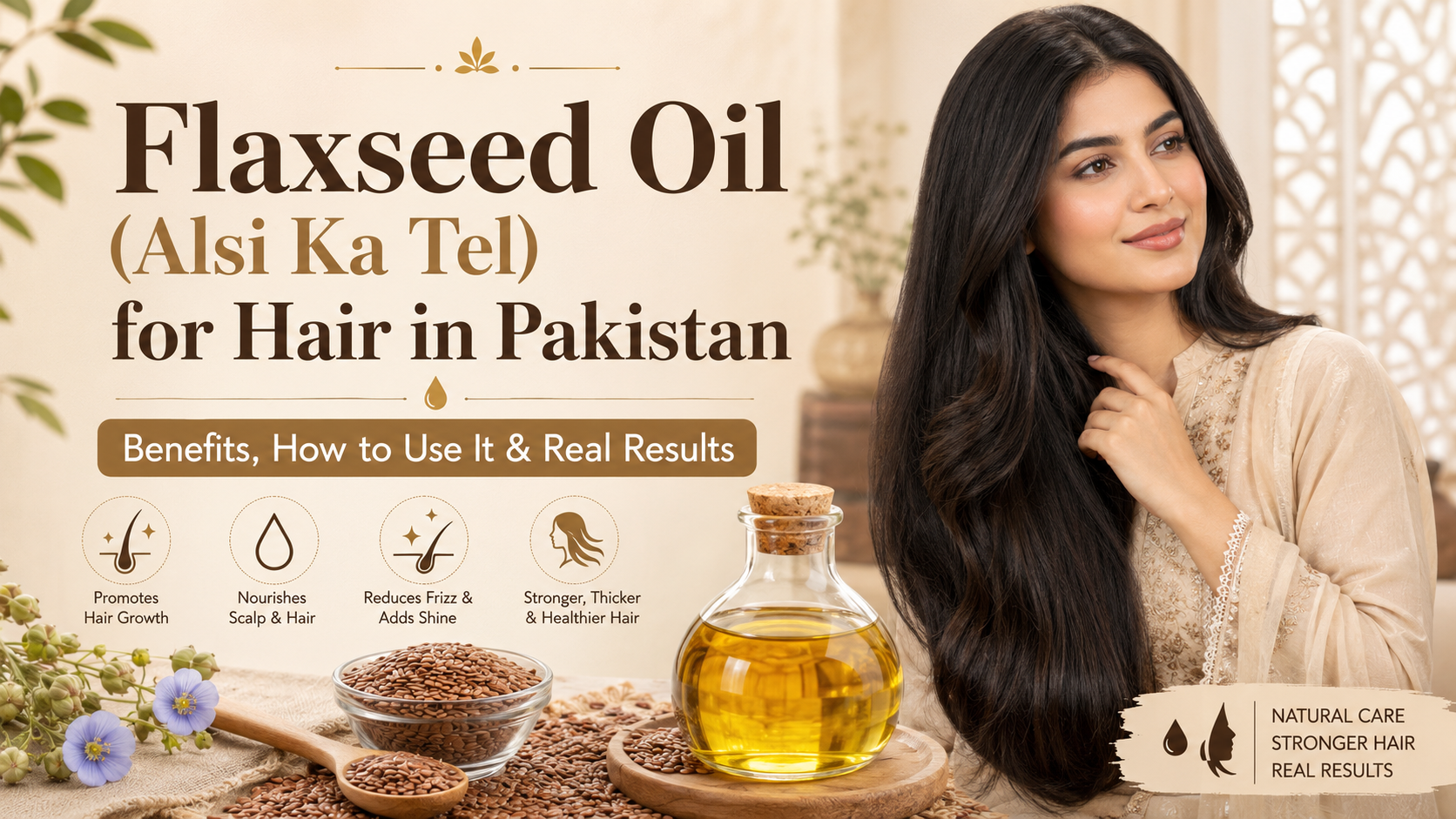
Flaxseed Oil (Alsi Ka Tel) for Hair in Pakistan: Benefits, How to Use It, and Real Results
You probably already have coconut or castor oil sitting in your bathroom, and you've been doing your champi diligently every week. But if your hair still feels dry, breaks easily, or grows slower than you'd like, there's a good chance your oil routine is missing one thing: omega-3 fatty acids. This guide covers exactly what flaxseed oil (alsi ka tel) does for Pakistani hair, how to use it correctly, and what results you can realistically expect.
Key Takeaways
Flaxseed oil (alsi ka tel) is a cold-pressed plant oil rich in alpha-linolenic acid (ALA), an omega-3 fatty acid that nourishes hair follicles and reduces scalp inflammation.
Regular scalp massage with flaxseed oil can reduce the inflammation behind hair thinning, making it particularly useful for seasonal shedding and postpartum hair loss.
Pakistani hair faces specific stressors like hard water mineral buildup, heat, and dust; flaxseed oil seals the hair cuticle and locks in moisture, directly addressing these conditions.
Two to three times a week as a pre-wash oil or overnight treatment is the effective routine for most people.
Flaxseed oil pairs well with castor oil, kalonji oil, and amla. It does not need to replace any oil already in your routine.
Only use cold-pressed, food-grade or cosmetic-grade alsi ka tel on hair. Industrial linseed oil sold for paints and wood finishing is not safe for scalp use.
Most people notice softer, shinier hair within two to three weeks. Visible growth results take six to eight weeks of consistent use.
What Is Flaxseed Oil (Alsi Ka Tel) and Why Is It Different From Regular Linseed Oil?
Flaxseed oil is a cold-pressed plant oil extracted from the seeds of the Linum usitatissimum plant, and it is one of the richest plant-based sources of alpha-linolenic acid (ALA), an omega-3 fatty acid your body cannot produce on its own. In Pakistan, it goes by alsi ka tel and has been part of cooking and folk remedies for a long time, though its specific use for hair is a more recent conversation.
The name "linseed oil" refers to the exact same base ingredient. The confusion matters because two very different products carry that name. Cold-pressed, food-grade linseed oil is what you want for hair. It is minimally processed and retains its full fatty acid profile. Industrial linseed oil, sold in hardware stores for wood treatment and paint, contains drying agents and chemical additives that are completely unsuitable for skin or scalp. Always read the label.
Beyond ALA, flaxseed oil contains lignans, which are plant compounds with antioxidant properties, and vitamin E, which protects the hair shaft from oxidative damage caused by sun exposure and heat styling. This combination of nutrients is rare in a single plant oil, which is what makes alsi ka tel worth understanding properly rather than treating as just another shelf item.
Omega-3 fatty acids found in flaxseed oil are not produced by the human body and must come from dietary or topical sources. Their presence in hair oils helps maintain the scalp's barrier function and supports the active growth phase of the hair cycle.
Why Is Flaxseed Oil Particularly Good for Hair in Pakistan's Climate?
Pakistani hair deals with a specific set of stressors that most global hair care content simply ignores.
Hard water is the norm across Pakistan's major cities. Karachi, Lahore, Islamabad, and Faisalabad all have water with high calcium and magnesium content. These minerals leave residue on the scalp and hair shaft over time. The buildup dries out strands, clogs follicles, and makes hair feel rough and look dull no matter how well you shampoo. Most oils sit on top of this residue rather than penetrating through it, which is why some women find their regular champi stops giving the same results after a few months.
Add summer heat that regularly crosses 40°C, the kind of dry dust that settles into every parting and pore, and the high humidity of the monsoon season that causes frizz and scalp sweat, and you have a combination that gradually weakens hair structure from the outside in.
Flaxseed oil's high ALA content works at that structural level. It reinforces the lipid barrier of the hair cuticle, which is the outermost protective layer of each strand. When that barrier is intact, hard water minerals have less surface to cling to, heat does less internal damage, and moisture stays inside the strand instead of escaping. A 2021 review published in the Journal of Cosmetic Dermatology found that plant-based omega-3 oils applied topically improve hair fiber integrity and reduce transepidermal moisture loss. Source: Guo and Katta, Journal of Cosmetic Dermatology, 2021.
The anti-inflammatory properties of omega-3 fatty acids also matter for Pakistani scalps specifically. Chronic low-grade scalp inflammation, made worse by sweat, dust, and chemical shampoos, is one of the underreported causes of slow growth and seasonal shedding. Both are common complaints among Pakistani women after summer and after pregnancy. Flaxseed oil does not just sit on the scalp and condition it. It works against the inflammation that is quietly disrupting the hair cycle beneath the surface.
What Does Flaxseed Oil Actually Do for Hair?
Flaxseed oil promotes hair growth by nourishing follicles with omega-3 fatty acids that reduce scalp inflammation and support the active growth phase of the hair cycle. This section covers each core benefit with enough detail to understand the mechanism, not just the marketing claim.
Reduces Scalp Inflammation and Supports Growth
Scalp inflammation pushes follicles into the resting phase early, meaning strands stop growing before they should. Research on omega-3 supplementation found that six months of consistent use is associated with reduced hair loss and improved hair density in women with thinning hair. Source: Le Floc'h et al., Journal of Cosmetic Dermatology, 2015. Topical application delivers these fatty acids directly to the scalp without depending on dietary absorption or digestion. This makes it particularly useful for people whose diet is low in omega-3-rich foods like fatty fish or walnuts.
Seals Moisture into Dry Hair
Dry, porous hair loses moisture faster than it absorbs it. Flaxseed oil is lighter than castor oil and absorbs more readily into the hair shaft without leaving a heavy residue. It coats the shaft and allows the cuticle to lie flat, which is why people notice shine improvement before they see any changes in growth. For Pakistani women dealing with damage from repeated heat styling or hard water buildup, this sealing effect alone can make a visible difference within two to three weeks.
Strengthens Hair Against Breakage
Regular topical application of flaxseed oil strengthens the hair shaft, seals the cuticle against moisture loss, and may reduce hair fall associated with scalp inflammation and nutritional deficiency. Vitamin E, present in flaxseed oil, is a fat-soluble antioxidant that reduces the oxidative stress on hair proteins caused by UV exposure and heat. Hair that is less oxidatively damaged breaks less during combing and styling. If you are losing a lot of hair on your comb every morning, this is one of the first improvements you are likely to notice.
Reduces Dry Scalp Dandruff
Not all dandruff has the same cause. Dry scalp dandruff, which appears as small, white, fine flakes with little to no itching, often comes from a compromised scalp barrier rather than a fungal issue. Flaxseed oil applied to the scalp before washing restores some of that barrier function and can reduce this type of flaking within a few weeks. For fungal dandruff, which presents as yellowish, oily flakes with itching, it works better in combination with neem oil.
Adds Shine and Reduces Frizz
A closed hair cuticle reflects light evenly and resists humidity far better than a raised one. Pakistani women dealing with frizz during monsoon season or in Karachi's humid winters often find that a small amount of flaxseed oil, applied as a finishing treatment after styling, keeps hair smoother through the day without weighing it down.
How Do You Use Flaxseed Oil for Hair the Right Way?
The application method matters as much as the oil itself. Pouring a little on dry hair and leaving it for ten minutes will not deliver the same results as a proper warm oil routine. Three methods work consistently for Pakistani hair care habits.
Method 1: Hot Oil Champi Massage
Warm two to three tablespoons of alsi ka tel in a small bowl set inside a larger bowl of hot water for two to three minutes. The oil should feel warm, not hot. Part your hair into four sections and apply directly to the scalp using your fingertips. Massage in small circular motions for ten to fifteen minutes, starting at the hairline and working toward the back. The warmth opens the scalp pores and improves absorption significantly. Leave on for at least two hours, or overnight under a shower cap, then wash with a gentle shampoo.
Do this twice a week for the first month. Once hair feels healthier, once a week is enough to maintain results.
Method 2: Overnight Hair Mask with Castor or Coconut Oil
Mix one tablespoon of flaxseed oil with one tablespoon of castor oil for hair or coconut oil for hair care. Apply from roots to tips, spending extra time on the ends if they are split or dry. Wrap hair in a soft cotton cloth or muslin dupatta and sleep with it overnight. Wash in the morning with a mild shampoo. This method is particularly good for very dry, brittle, or chemically treated hair.
Method 3: Scalp-Targeted Application for Thinning Areas
If thinning is concentrated at the hairline, temples, or along a particular parting, use a dropper or your fingertip to apply a small amount of flaxseed oil directly to that area. Massage gently for three to five minutes. No need to apply it all over your head. This targeted approach works well between full champi sessions, used three to four times a week.
How Many Times a Week Should You Apply Flaxseed Oil?
Two to three times a week is the practical sweet spot for most hair types. Daily use can weigh down fine hair. Thick, coarse, or very dry hair tolerates more frequent use without feeling greasy. For oily scalps, limit to once a week and focus the oil on the lengths and ends rather than the scalp itself.
Is Flaxseed Oil Better Than Castor Oil or Kalonji Oil for Hair Growth?
Flaxseed oil is not better or worse than castor or kalonji oil. It fills a different role in a hair care routine, and understanding where it fits helps you make smarter decisions rather than switching between products constantly.
Flaxseed oil is not clearly “better” than castor oil or kalonji oil for direct hair growth; it is better for dry, frizzy, weak hair and scalp nourishment because it is rich in omega-3 fatty acids, while castor oil is heavier and mainly helps with thickness, shine, and coating the hair shaft, but strong evidence for actual growth is weak. Kalonji oil may be more useful when hair fall is linked with scalp inflammation, dandruff, itching, or weak roots because black seed has antioxidant and anti-inflammatory properties. So, for real hair growth, kalonji oil is usually the better choice, for thick-looking hair castor oil helps more, and for softness, shine, and nourishment flaxseed oil is best. Ideally, use a balanced blend instead of relying on only one oil. (PubMed)
Who Should Use Flaxseed Oil for Hair and Who Should Be Cautious?
Flaxseed oil suits most hair types but offers the clearest benefits for people dealing with dryness, thinning, or scalp inflammation. It is particularly relevant for:
Women experiencing postpartum hair loss or seasonal shedding
People with dry, brittle, or color-treated hair that breaks easily
Anyone dealing with a dry, flaky scalp not caused by fungal activity
Men with early-stage thinning who want to support follicle health naturally
People whose hair has taken on a rough texture from hard water over time
Two groups should exercise caution. People with a confirmed flaxseed allergy can experience scalp redness, itching, or swelling from topical application. If you have never used alsi ka tel before, do a patch test on the inner arm and wait twenty-four hours before applying to the scalp. People on blood-thinning medication should consult a doctor before using flaxseed oil regularly, since ALA can have mild anticoagulant effects in larger amounts.
One practical note: flaxseed oil oxidizes faster than most other oils. Once the bottle is opened, store it in a cool, dark place and use within three months. Rancid oil develops a sharp or slightly fishy smell and should not go on your scalp.
What Are the Best DIY Flaxseed Oil Hair Mask Recipes?
All three recipes below use ingredients that are straightforward to find at a local kiryana store, Daraz or on ollexo.pk.
Recipe 1: Alsi Tel and Neem for Dandruff
Mix two tablespoons of flaxseed oil with five to six drops of neem oil. Apply directly to the scalp, leave for one hour, then wash out with a mild shampoo. Neem's antifungal compounds address the scalp conditions that cause dandruff, while flaxseed oil soothes dryness and restores the barrier. Use once a week.
Recipe 2: Flaxseed Oil, Egg, and Honey for Deep Conditioning
Combine two tablespoons of flaxseed oil with one whole egg and one teaspoon of natural honey. The egg provides protein, the honey draws moisture into the hair shaft, and the oil seals it in. Apply from roots to tips, cover with a shower cap, leave for thirty minutes, then rinse with cool water. Hot water cooks the egg and makes it a nightmare to rinse out. This mask works well for hair damaged by heat styling or repeated mineral buildup. Use twice a month.
Recipe 3: Alsi Tel and Amla Powder for Growth
Mix two tablespoons of flaxseed oil with one teaspoon of amla powder. Warm gently, allow the amla to steep for five minutes, then strain and apply to the scalp. Amla is high in vitamin C, which supports collagen production around the hair follicle. Flaxseed oil carries the nutrients into the scalp and addresses the inflammation that amla alone does not target. Leave on for two hours, then wash. Use weekly for the first two months if growth is your main goal.
Where Can You Buy Pure Flaxseed Oil for Hair in Pakistan?
Cold-pressed, food-grade flaxseed oil is available through several channels.
Online: Daraz is the most convenient option and carries multiple brands. Filter by "cold-pressed" in the product description and check for dark amber or glass bottles, which protect the oil from light-induced oxidation. Read reviews that mention smell and texture as signs of freshness.
Local stores: Health food stores in major cities stock cold-pressed oils. Naheed and Imtiaz carry some options, though availability varies by branch and season. Bigger branches in Karachi tend to have a better selection.
What to look for on the label: Cold-pressed or expeller-pressed, food-grade or cosmetic-grade designation, dark packaging, and a manufacturing date within the last six months. Avoid anything that lists "boiled linseed oil" or does not specify the extraction method.
Ollexo's cold-pressed flaxseed hair oil is formulated specifically for scalp and hair use and is available on ollexo.pk.
How Long Does Flaxseed Oil Take to Show Results on Hair?
Realistic expectations matter here. Most people who stop using an oil after two weeks do so because they expected faster results than the biology actually allows.
Weeks one to two: Hair feels softer after the first few applications. Frizz reduces noticeably, especially in hard-water-affected or heat-damaged hair. Scalp itching or dry flaking, if present, starts to calm.
Weeks three to four: Shine improves. Breakage during combing decreases because the hair shaft holds moisture better. Dandruff from a dry scalp is noticeably reduced.
Weeks six to eight: Growth improvement becomes visible. Hair that was in the resting phase when you started takes several weeks to re-enter the active growth phase. This is not a product failure; it is how the hair cycle works.
Consistency matters more than quantity. Using a generous amount once a week delivers worse results than using a smaller amount three times a week. The follicle needs regular nourishment, not occasional flooding.
Conclusion
Alsi ka tel is one of the most underused oils in Pakistani hair care. It is not expensive, it is widely available, and its omega-3 content addresses problems that most conditioning oils simply cannot touch. If your hair is dry, breaking, growing slowly, or your scalp is constantly irritated, flaxseed oil is worth adding to what you already do.
Start with a twice-weekly warm oil champi for one month. Pair it with castor oil if you are focused on growth, or with neem if dandruff is the main concern. Give it six to eight weeks before drawing conclusions. The champi routine your nani swore by was not wrong; it just may have been missing one ingredient.
If you want a cold-pressed option ready for hair use, Ollexo's flaxseed oil is on Daraz. Try it alongside what you are already doing and give your scalp a real chance to respond.
Written by Ali Raza CEO of Ollexo, with over 10 years of experience in the oil industry. He writes about practical hair and skin care, ingredient science, and the Pakistani natural beauty market.
Disclaimer: This article has undergone thorough revisions, editing, and fact-checking by editors and subject matter experts to ensure accuracy.