
The Complete Guide to Tea Tree Oil for Scalp Health in Pakistan
Discover how tea tree oil treats dandruff, scalp fungus & itchiness in Pakistan's climate. Learn dilution ratios, usage methods & what to buy.
HAIR OIL
Written by Ali Raza CEO with over 10 years of experience in the natural oils industry. Ali is passionate about sharing practical insights on oil science, industry trends, and real-world applications drawn from hands-on experience across the natural oils sector.
4/19/202615 min read
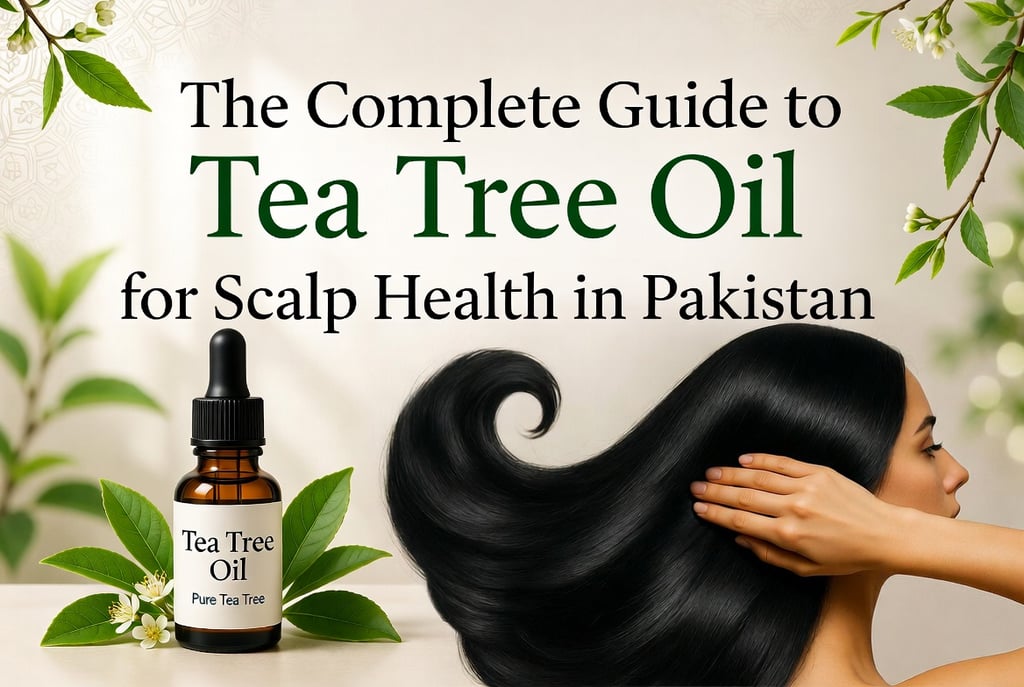
The Complete Guide to Tea Tree Oil for Scalp Health in Pakistan: Benefits, Usage, and What Actually Works
You have probably tried every anti-dandruff shampoo on the shelf and for a few weeks, it works, until the flakes and the itching come back. What most of these shampoos do not tell you is that they only mask the symptoms instead of targeting the fungus that actually causes dandruff in the first place. In this guide, you will learn exactly how tea tree oil works against scalp fungus, how to use it correctly for the Pakistani climate, and why it may be the one ingredient your hair care routine has been missing.
Key Takeaways
Tea tree oil is a natural essential oil with clinically studied antifungal and antibacterial properties that make it one of the most effective remedies for dandruff and scalp fungal infections.
Dandruff is primarily caused by an overgrowth of a yeast-like fungus called Malassezia on the scalp, and tea tree oil's active compound terpinen-4-ol directly inhibits its growth.
Tea tree oil must always be diluted in a carrier oil before applying to the scalp. The recommended ratio is 2 to 5 drops per tablespoon of carrier oil to avoid irritation or chemical burns.
Pakistan's humid climate, hard water mineral deposits, and the traditional practice of heavy scalp oiling create ideal conditions for Malassezia fungal growth, making tea tree oil a particularly well-suited treatment for Pakistani hair care routines.
Consistent use, twice weekly for at least four to six weeks, is necessary to see a measurable reduction in dandruff, itchiness, and scalp inflammation.
Tea tree oil can be used in multiple ways: mixed into shampoo, blended with a carrier oil for scalp massage, or as a DIY scalp serum, giving flexibility based on your routine.
Choosing a 100% pure, therapeutic-grade tea tree oil without added synthetic fragrance is critical for both safety and effectiveness.
What Is Tea Tree Oil and Why Is It Used for Scalp Problems?
Tea tree oil is a natural essential oil derived from the leaves of Melaleuca alternifolia, a plant native to Australia, and is widely recognized for its antifungal, antibacterial, and anti-inflammatory properties that make it effective against dandruff and scalp infections. The oil is extracted through steam distillation of the plant's leaves, producing a concentrated, pale-yellow liquid with a distinctive medicinal scent. Because it is an essential oil, it is highly potent in its pure form and must always be diluted before skin or scalp contact.
It is worth clarifying one common confusion: tea tree oil has no relation to the tea plant (Camellia sinensis) used to make green or black tea. The name comes from early Australian explorers who used the leaves to brew an herbal infusion. The oil itself is a therapeutic extract, not a food product, and belongs firmly in the category of natural remedies for scalp fungal infection that have been studied in clinical settings.
Tea tree oil has been in use for centuries by Indigenous Australians for wound healing and skin infections. Modern science has now validated many of these traditional applications, particularly in the context of scalp and skin health. Its rise in global beauty and hair care is not trend-driven. It is backed by measurable evidence.
How Does Tea Tree Oil Fight Dandruff and Scalp Fungus?
Dandruff is primarily caused by an overgrowth of a yeast-like fungus called Malassezia on the scalp, and tea tree oil's active compound terpinen-4-ol has been shown to inhibit this fungal growth directly. Terpinen-4-ol works by disrupting the cell membranes of fungi and bacteria, causing them to break down and die. This mechanism makes tea tree oil genuinely antifungal, not just soothing or cosmetic.
A landmark clinical study published in the Journal of the American Academy of Dermatology found that a 5% tea tree oil shampoo reduced dandruff severity by 41% after four weeks of regular use. Source: Satchell et al., JAAD, 2002. This is one of the most cited figures in dermatological literature on natural dandruff treatments, and it gives tea tree oil a credibility that most home remedies simply do not have.
What makes Malassezia particularly stubborn is that it feeds on the sebum (natural scalp oils) your scalp produces. The more oil present, including traditional oils like coconut or sarson tel applied for hair conditioning, the more the fungus can thrive. Dandruff causes and treatments in Pakistan is a topic worth exploring in depth because the triggers here differ from what most international content addresses. Tea tree oil tackles the root cause rather than washing away the flakes temporarily.
Moreover, tea tree oil's antibacterial properties also address secondary scalp infections that often accompany fungal buildup, including scalp pimples, folliculitis (infected hair follicles), and general scalp inflammation. For Pakistani women who deal with sweat-heavy summers and heavy oil application, this dual-action benefit is particularly relevant.
What Are the Proven Benefits of Tea Tree Oil for the Scalp?
Tea tree oil delivers six clinically supported benefits to the scalp: it reduces dandruff and flaking, controls excess sebum production, soothes itchiness and inflammation, unclogs hair follicles, reduces scalp acne, and creates a healthier environment for hair growth. Each of these benefits is interconnected, which is why consistent use over several weeks produces compounding results rather than one-off relief.
Reduces Dandruff and Visible Flaking
The most well-documented benefit is dandruff reduction. The 41% reduction seen in the JAAD study is not a subtle improvement. It represents a significant clinical outcome after just four weeks. For comparison, many medicated shampoos with zinc pyrithione or ketoconazole show similar or only marginally better results in comparable trials. Tea tree oil achieves this by targeting Malassezia at the source rather than simply slowing scalp cell turnover the way most anti-dandruff shampoos do.
Controls Excess Sebum and Scalp Oiliness
Tea tree oil has mild astringent properties that help regulate sebum production without stripping the scalp. An oily scalp is not just uncomfortable. It is a feeding ground for the Malassezia fungus. By reducing excess oil without causing dryness, tea tree oil helps break the cycle that keeps dandruff recurring. This is especially useful for women with naturally oily scalps or those in Karachi's year-round humidity, where sebum production is elevated.
Soothes Itchiness and Scalp Inflammation
Scalp itchiness is one of the most complained-about symptoms in hair care forums and Facebook groups across Pakistan. Tea tree oil's anti-inflammatory action reduces the redness, irritation, and itching that accompany fungal infections. Studies show that terpinen-4-ol suppresses the production of inflammatory cytokines, the chemical signals in your body that trigger itching and swelling. Source: Hart et al., European Journal of Dermatology, 2000.
Unclogs Hair Follicles
Over time, product buildup, hard water mineral deposits, and excess sebum can physically block hair follicles, slowing hair growth and causing hair thinning. Tea tree oil's solvent properties help dissolve this buildup at the follicle level. This is one reason why how to do a scalp oil massage at home combined with a diluted tea tree oil blend is often recommended as a preparatory step before shampooing. It loosens debris so the shampoo can rinse it away more effectively.
Reduces Scalp Acne and Pimples
Scalp pimples, or folliculitis, are more common than most women realize, and they often go untreated because they are hidden beneath hair. Tea tree oil's antibacterial action makes it one of the most effective topical treatments for this condition. A 2017 pilot study found that tea tree oil gel was as effective as benzoyl peroxide for acne reduction, with fewer side effects. Source: Enshaieh et al., Indian Journal of Dermatology, 2007.
Supports Healthier Hair Growth Conditions
Tea tree oil does not stimulate hair follicles the way minoxidil does, so it is not a direct hair growth treatment. However, by clearing fungal infections, unblocking follicles, reducing inflammation, and controlling sebum, it creates scalp conditions where hair can grow without the obstacles that typically cause shedding and thinning. Think of it as clearing the foundation before building. The hair can grow better when the environment supports it.
Why Is Tea Tree Oil Especially Effective for Scalp Problems in Pakistan?
Pakistan's combination of humid summers, hard water mineral deposits, and the traditional practice of heavy scalp oiling creates conditions that accelerate Malassezia fungal growth, making tea tree oil a particularly well-suited scalp treatment for Pakistani hair care routines.
This is the context that no generic "tea tree oil benefits" article addresses, and it is the reason Pakistani women often find that remedies working for international audiences do not deliver the same results for them.
Hard Water Mineral Buildup
Most urban areas in Pakistan, including Lahore, Karachi, Islamabad, and Faisalabad, have notoriously hard water, meaning it contains high concentrations of calcium and magnesium minerals. When hard water is used to wash hair repeatedly, these minerals accumulate on the scalp as a chalky residue. This buildup disrupts the scalp's natural pH, weakens the hair shaft, and traps bacteria and fungi close to the skin. Hard water hair damage in Pakistan is an under-discussed topic that compounds every other scalp issue.
Tea tree oil's penetrating solvent properties help dissolve some of this mineral buildup at the scalp surface, making it a useful complementary treatment in hard-water regions. No shampoo alone addresses this. The oil massage step is essential.
Heat, Sweat, and Humidity-Triggered Fungal Growth
Malassezia thrives in warm, moist environments. Karachi's coastal humidity keeps the scalp perpetually damp with sweat during summer months, creating ideal fungal growth conditions almost year-round. Even in Lahore, where summers are dry but intensely hot, sweat accumulates under hair, particularly in women who cover their heads for extended periods.
Approximately 50% of the global population experiences dandruff at some point, but rates are significantly higher in tropical and subtropical climates. Source: Borda and Wikramanayake, Dermatology and Therapy, 2015. Pakistan sits squarely in this high-risk zone.
Heavy Traditional Oiling Habits
The tradition of applying generous amounts of sarson tel (mustard oil), coconut oil, or badam tel to the scalp and leaving it overnight is deeply embedded in Pakistani hair care culture, and for good reason, as these oils condition the hair shaft beautifully. However, heavy oils left on the scalp for hours provide Malassezia with an abundant food source. The fungus metabolizes fatty acids in these oils, releasing byproducts that trigger the inflammatory response your scalp experiences as itching and flaking.
Adding a few drops of tea tree oil to your traditional pre-wash oil routine is one of the simplest and most culturally compatible ways to neutralize this effect. You do not need to abandon the oiling tradition. You need to make it antifungal.
Urban Pollution and Scalp Buildup
In Karachi and Lahore, airborne particulate matter settles on the hair and scalp throughout the day. This pollution layer mixes with sebum, sweat, and applied oils to create a film that promotes bacterial growth and follicle blockage. Tea tree oil's clarifying properties, applied before shampooing, help break down this environmental buildup in a way that conditioning-only approaches cannot.
How Do You Use Tea Tree Oil on Your Hair and Scalp at Home?
Tea tree oil can be applied to the scalp in four main methods: as a diluted carrier oil blend for scalp massage, added directly to your existing shampoo, formulated as a DIY scalp serum or spray, or used as a leave-in or rinse-out treatment depending on your scalp sensitivity. Each method suits a different routine and scalp type.
What Is the Right Dilution Ratio for Tea Tree Oil on the Scalp?
The standard recommended dilution ratio for tea tree oil on the scalp is 2 to 5 drops of tea tree oil per one tablespoon of a carrier oil, which corresponds to a concentration of approximately 1% to 3%, and is sufficient for therapeutic effect without causing irritation.
Never apply tea tree oil directly to your scalp without dilution. Undiluted essential oils can cause chemical burns, allergic contact dermatitis, and prolonged sensitivity. The table below summarizes appropriate dilution ratios by scalp type:
Scalp Type Tea Tree Oil Drops Carrier Oil (per tbsp) Concentration Sensitive or first-time use 2 drops 1 tablespoon ~1% Normal scalp 3 to 4 drops 1 tablespoon ~1.5% to 2% Oily or fungus-prone scalp 5 drops 1 tablespoon ~2.5% to 3% Adding to shampoo 5 drops Per 30ml of shampoo ~1.5%
Start at the lower end and increase gradually based on how your scalp responds over the first two weeks.
Method 1: Diluted Scalp Massage with Carrier Oil
This is the most effective delivery method because it allows the tea tree oil to sit on the scalp for an extended period, maximizing penetration and fungal contact time.
Step 1: Measure one tablespoon of your chosen carrier oil into a small bowl or dropper bottle. Step 2: Add 3 to 5 drops of tea tree oil and mix thoroughly. Step 3: Section your hair into four parts and apply the blend directly to the scalp using your fingertips or a dropper applicator. Step 4: Massage gently in circular motions for 3 to 5 minutes to stimulate circulation and ensure even distribution. Step 5: Leave on for 30 minutes to 2 hours, then shampoo out thoroughly.
For best results, use this method twice weekly. How to do a scalp oil massage at home correctly makes a significant difference in how much of the oil actually reaches the follicles. Sustained circular pressure is more effective than simple patting.
Method 2: Adding Tea Tree Oil Directly to Your Shampoo
This is the most convenient method and is well-suited for beginners or those with sensitive scalps. Add 5 drops of tea tree oil per 30ml (roughly one pump) of your regular shampoo in your palm just before washing. Do not add it to the entire shampoo bottle in advance, as the oil can degrade over time once mixed with other compounds. Work the mixture into your scalp, let it sit for 2 to 3 minutes before rinsing, and repeat twice weekly. This method delivers a lower concentration per use but is consistent and low-effort.
Method 3: DIY Scalp Serum or Spray
For those dealing with persistent itchiness between washes, a lightweight scalp spray offers targeted, on-demand relief without reapplying heavy oils. Mix 10 drops of tea tree oil into 100ml of distilled or boiled-and-cooled water, shake well before each use, and mist lightly onto scalp sections while parting the hair. This method is ideal for Karachi's humid summers when adding more oil to an already sweaty scalp is the last thing you want to do.
Leave-In vs. Rinse-Out: Which Is Better?
For oily or fungus-prone scalps, a rinse-out application (the massage-then-shampoo method) is more appropriate because it removes excess oil along with the fungal debris it has loosened. For dry or flaky scalps with minimal oiliness, a lighter leave-in serum or the shampoo-addition method is gentler and does not strip necessary moisture. There is no universally better method. It depends entirely on your scalp's baseline oiliness.
Which Carrier Oil Should You Mix with Tea Tree Oil for Best Results?
The best carrier oil to mix with tea tree oil depends on your scalp type. Coconut oil offers the strongest antifungal synergy, jojoba oil is optimal for oily scalps, and sweet almond oil provides the best nourishing balance for normal-to-dry scalps. All three are widely available in Pakistan and complement tea tree oil's therapeutic action.
Coconut Oil: The Antifungal Powerhouse
Coconut oil contains lauric acid, which has demonstrated antifungal properties against Candida and Malassezia species in laboratory studies. Source: Ogbolu et al., Journal of Medicinal Food, 2007. When combined with tea tree oil, the two create a compounding antifungal effect that is stronger than either used alone. Coconut oil is also the most widely available and affordable carrier oil in Pakistan, making it the practical default for most users. A dedicated guide on coconut oil and tea tree oil blend for dandruff covers detailed recipes and ratios.
Coconut oil's one limitation is its heavier texture, which can feel greasy on already-oily scalps. If your scalp leans oily between washes, use less coconut oil or substitute with jojoba.
Jojoba Oil: The Best Choice for Oily Scalps
Jojoba oil is technically a liquid wax, not an oil, and it closely mimics the scalp's natural sebum in molecular structure. This means it absorbs quickly without leaving a greasy residue and does not feed Malassezia the way heavier fatty-acid-rich oils do. Jojoba oil for oily scalp is one of the most recommended pairings in dermatological literature for this reason. If you are dealing with dandruff alongside excess scalp oiliness, jojoba is your best carrier option.
For more on how carrier oils compare for overall scalp health, the guide on best natural oils for scalp health covers a broader range of options available in Pakistan.
Sweet Almond Oil: The Nourishing All-Rounder
Sweet almond oil (badam tel) is rich in oleic and linoleic acids that nourish and soften the scalp without clogging follicles. It absorbs at a moderate rate, faster than coconut oil and slower than jojoba, making it an excellent choice for normal-to-dry scalps that need hydration alongside antifungal treatment. For a broader look at its hair care applications, sweet almond oil for hair care covers its full range of benefits in depth.
Also, if you are exploring other carrier oils for hair growth in addition to scalp treatment, castor oil for hair growth in Pakistan is worth reading as castor oil pairs well with tea tree oil in scalp blends targeting both fungal control and hair density.
One carrier oil to exercise caution with is mustard oil (sarson tel). Despite its cultural ubiquity in Pakistani hair care, sarson tel has a high erucic acid content and can be irritating to already-inflamed scalps. It is better reserved for hair shaft conditioning rather than scalp treatment when dandruff is an active concern.
How to Choose a Quality Tea Tree Oil in Pakistan
A quality tea tree oil in Pakistan must be 100% pure, therapeutic-grade, free from synthetic fragrance, and clearly labeled with its botanical name (Melaleuca alternifolia) and country of origin. With a growing number of products on the market, many diluted, adulterated, or made from inferior plant sources, knowing what to look for protects both your health and your money.
What the Label Must Say
First, look for the full botanical name Melaleuca alternifolia on the label, not simply "tea tree oil," which can technically come from related but less potent species. Second, the oil should state "100% pure" and "undiluted," not "tea tree oil blend" or "infused oil." Third, the packaging should be in a dark glass bottle (amber or cobalt blue), as tea tree oil degrades when exposed to light and air in clear plastic containers.
Avoid products with the following red flags: "fragrance" listed as an ingredient, no country of origin, excessively low prices (quality tea tree oil is not cheap to produce), and bottles without any dilution guidance or safety warnings. Reputable 100% pure therapeutic grade tea tree oil will always include safety instructions because the seller understands they are selling a concentrated essential oil.
Australian-Origin vs. Other Sources
Australian-grown Melaleuca alternifolia is the gold standard for tea tree oil and is what virtually all clinical research has been conducted on. The International Standard for tea tree oil (ISO 4730) specifies that terpinen-4-ol content should be between 30% and 48%, and cineole (a potentially irritating compound) should not exceed 15%. When buying in Pakistan, look for products that reference this ISO standard or specify terpinen-4-ol content on the label. This indicates genuine quality.
How Long Does Tea Tree Oil Take to Reduce Dandruff?
Most users see a measurable reduction in dandruff, itchiness, and scalp inflammation within four to six weeks of consistent twice-weekly use, with the earliest improvement in itchiness often noticeable within the first two weeks. This timeline is important to set honestly, because many people abandon a treatment after one or two uses and conclude it does not work.
Week 1 to 2 brings reduced itchiness and scalp tightness as the anti-inflammatory action begins. Week 3 to 4 sees a visible reduction in flaking as Malassezia populations decline. Week 5 to 6 represents the point at which most clinical studies measure their primary outcomes, and where the 41% dandruff reduction figure was recorded.
After this initial phase, maintenance use of once per week is typically sufficient to prevent recurrence, particularly during Pakistan's peak humid months.
Are There Any Side Effects of Applying Tea Tree Oil to the Scalp?
The most common side effect of tea tree oil is contact dermatitis, a skin irritation or allergic reaction, which occurs almost exclusively when the oil is applied undiluted or at concentrations above 5% without a patch test. Properly diluted tea tree oil is well-tolerated by the vast majority of users.
Before your first use, perform a patch test: apply a small amount of your diluted mixture (not pure oil) to the inside of your wrist or behind your ear. Wait 24 hours. If no redness, itching, or swelling appears, you can proceed with scalp application. For a broader reference on essential oils safe for hair use, this patch test step is universally recommended regardless of the oil in question.
The following groups should consult a doctor before using tea tree oil on their scalp:
Pregnant women (safety in pregnancy has not been adequately studied for topical essential oil use)
Children under 6 years old (sensitive skin requires medical guidance)
People with eczema, psoriasis, or severe scalp dermatitis (these conditions can be aggravated by essential oils)
Anyone with a known sensitivity to plants in the Myrtaceae family
Tea tree oil is not a replacement for a dermatologist when dandruff is severe, persistent despite treatment, or accompanied by significant hair loss, open sores, or scalp bleeding. In those cases, medical evaluation is necessary before beginning any home treatment.
What Are Your Next Steps? Turning This Guide Into Action
The most effective way to start using tea tree oil for your scalp is to follow a simple three-step first week: perform a patch test on day one, prepare your first diluted blend on day two, and apply it as a scalp massage twice in the first week. This structured start removes the guesswork and prevents the common mistake of skipping the patch test.
Here is your concrete action plan:
Tonight: Mix 2 drops of tea tree oil into half a teaspoon of coconut or jojoba oil. Apply a small amount to your inner wrist and leave for 24 hours to test for sensitivity.
Tomorrow: If no reaction occurs, prepare your first full scalp treatment using 4 drops of tea tree oil in 1 tablespoon of your chosen carrier oil. Section your hair, apply to the scalp, massage for 5 minutes, leave for 45 minutes, and shampoo out.
This week: Add 5 drops of tea tree oil to your shampoo for your second wash of the week. This gives you two delivery methods in one week, maximizing early exposure while your scalp adjusts.
Weeks 2 through 6: Maintain a consistent twice-weekly schedule, one carrier oil massage and one tea tree oil shampoo wash per week. Track your itchiness level and visible flaking on a simple scale of 1 to 10 at the start of each week. Most people notice a clear downward trend by week three.
When shopping for tea tree oil, look for a reputable product from the 100% pure therapeutic grade tea tree oil category with clear labeling of botanical name and terpinen-4-ol content. Pair it with carrier oils from the hair oil collection for maximum antifungal benefit.
Conclusion
Scalp problems like dandruff, persistent itchiness, and fungal buildup are not signs of poor hygiene. They are the predictable result of living in a climate and cultural context that favors Malassezia growth. Pakistan's humid summers, hard water, heavy oiling traditions, and urban pollution are not things you can eliminate. But they are things you can counteract.
Tea tree oil gives you a clinically validated, affordable, and flexible tool to do exactly that. It targets the fungus. It reduces inflammation. It works with your existing hair care routine rather than replacing it. And it is supported by enough real science, not just Instagram testimonials, to trust.
The most important thing is to start correctly (diluted, patch-tested) and stay consistent (twice weekly for six weeks). Dandruff that has taken months to develop does not disappear in one application. But with the right approach, it does go away and stay away.
Your scalp health is manageable. You have everything you need to start tonight.
Written by Ali Raza CEO with over 10 years of experience in the natural oils industry. Ali is passionate about sharing practical insights on oil science, industry trends, and real-world applications drawn from hands-on experience across the natural oils sector.