
Mustard Oil Benefits for Hair (Sarson Ka Tel) in Pakistan
Sarson ka tel (mustard oil) for hair in Pakistan — benefits, safe application, risks, DIY masks, and how to pick a pure bottle.
HAIR OIL
Written by Ali Raza CEO, Ollexo | 10+ years of experience in the oil industry. Passionate about sharing practical insights, industry trends, and real world lessons from years of leadership and hands-on experience in natural oils.
4/18/202615 min read
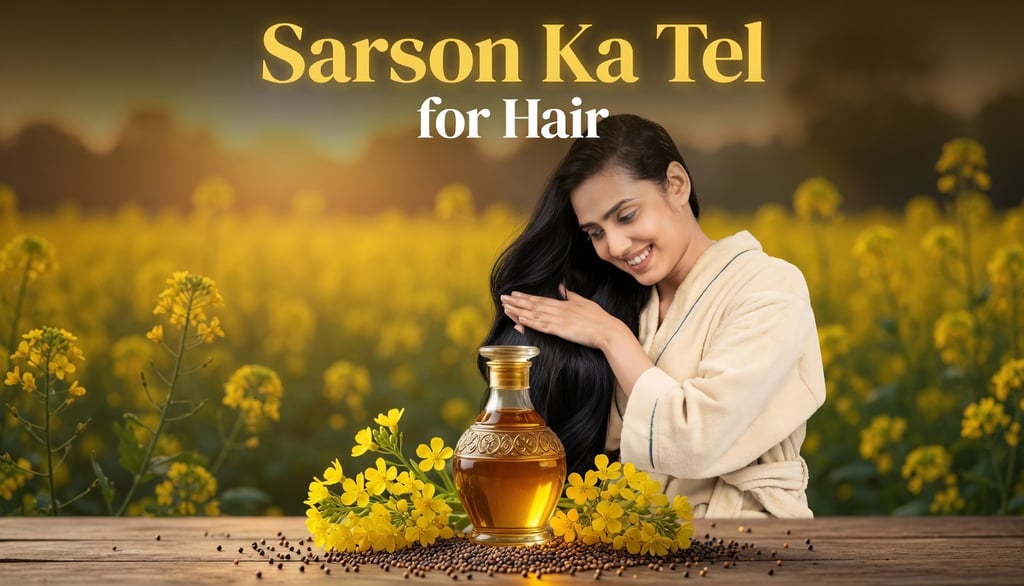
Sarson Ka Tel for Hair: The Complete Guide to Mustard Oil Benefits, Risks, and Results for Pakistani Women
You have probably grown up watching the women in your family warm sarson ka tel and work it through their hair before bed, trusting a ritual passed down through generations. What most people never learn, though, is why it actually works, when it can go wrong, and how to use it in a way that is backed by both tradition and modern hair science. Here’s how to use mustard oil safely and effectively for stronger hair — tuned for Pakistani hair types and climate.
Key Takeaways
Sarson ka tel (mustard oil) is a cold-pressed oil rich in omega fatty acids, vitamin E, and antifungal compounds that has supported Pakistani hair care traditions for centuries.
Mustard oil stimulates scalp circulation, which may support hair growth, while its antimicrobial properties help reduce dandruff and scalp infections common in Pakistan's humid climate.
The oil contains erucic acid, which can cause irritation in sensitive individuals; a patch test before full application is always recommended.
Warming mustard oil before a champi (scalp massage) significantly improves absorption and effectiveness compared to applying it cold.
Mustard oil works best for dry, thick, or coarse hair; those with fine or chemically treated hair should dilute it with a lighter carrier oil like coconut or almond oil.
Consistent use over 8 to 12 weeks, paired with proper wash-out technique using a sulphate-free shampoo, is necessary to see measurable results in hair strength and growth.
Not all mustard oils are equal; choosing a high quality, pure mustard hair oil like Ollexo ensures you get the full nutritional profile without adulterants.
What Is Sarson Ka Tel and Why Has It Been Used for Hair in Pakistan for Centuries?
Mustard oil (sarson ka tel) is a cold-pressed plant oil derived from the seeds of Brassica juncea, rich in omega-3 fatty acids, erucic acid, vitamin E, and selenium, and has been used as a traditional hair oil across South Asia, including Pakistan, for centuries. The oil is extracted by pressing mustard seeds under mechanical pressure without heat, a process that preserves the oil's full nutritional profile. Cold-pressing retains the volatile compounds responsible for mustard oil's characteristic pungent scent as well as its therapeutic properties.
The composition of mustard oil is what sets it apart from most commercial hair oils. It contains approximately 60% erucic acid (a long-chain monounsaturated fatty acid), 12% omega-3 alpha-linolenic acid, and meaningful concentrations of vitamin E (tocopherols) and selenium. Together, these compounds give the oil its antifungal, antioxidant, and moisture sealing capabilities. For a deeper look at how mustard oil compares to other traditional options, see our guide on best oils for hair growth in Pakistan.
Cold-Pressed vs. Expeller-Pressed: Why It Matters for Your Hair
Not every bottle labelled "sarson ka tel" is created the same. Cold-pressed mustard oil is extracted at temperatures below 49°C, preserving the heat-sensitive vitamin E content and volatile antifungal compounds. Expeller-pressed or heat-extracted versions lose a significant portion of these nutrients in the process. When purchasing mustard oil specifically for hair care, always look for "cold-pressed" or "kachi ghani" on the label, as this indicates a minimally processed product.
Edible-Grade vs. Cosmetic-Grade Mustard Oil
There is an important distinction between mustard oil sold for cooking and mustard oil formulated for topical hair use. Edible-grade mustard oil is often regulated differently across countries and may contain additives or be processed at different purity levels. Cosmetic-grade or hair-specific mustard oil is refined to remove potential irritants while retaining beneficial fatty acids, making it the safer and more effective choice for scalp application. Always use a product specifically designated for topical use when incorporating it into your hair care routine.
Why Pakistanis Have Relied on Mustard Oil for Hair for Generations
Sarson ka tel became embedded in Pakistani hair rituals because of a combination of agricultural abundance, extreme affordability, and centuries of passed-down knowledge about its practical effectiveness. Mustard is one of the most widely cultivated oilseed crops across Punjab, Sindh, and Khyber Pakhtunkhwa, making the oil locally produced, inexpensive, and deeply tied to the daily household economy. Unlike imported oils, sarson ka tel has always been available to women across income levels, from rural villages to urban centres.
The champi tradition, the practice of warming oil and massaging it into the scalp, is the vehicle through which mustard oil's benefits have been transmitted across generations. Grandmothers performed champi on their daughters; mothers on their children. This ritual was not just cosmetic. It was a moment of care, connection, and cultural continuity. The warmth of the oil, the pressure of the malish, and the frequency of the practice all contribute to its effectiveness in ways that modern hair science is only beginning to fully document.
Pakistan's climate also made mustard oil a sensible choice. The dry winters across northern Pakistan, the intense summer heat in Karachi and Lahore, and the prevalence of hard water and hair damage in Pakistan that accelerates dryness and breakage all created conditions in which a heavy, moisture-sealing oil was a practical necessity rather than a luxury.
What Does Mustard Oil Do to Your Hair and Scalp at the Molecular Level?
Mustard oil acts on the hair and scalp through three primary mechanisms: antifungal and antibacterial action, improved dermal circulation from scalp massage, and physical moisture retention along the hair shaft. Understanding what is actually happening during a champi helps explain why certain application techniques work better than others, and why consistency matters more than quantity.
Antifungal and Antibacterial Properties
Mustard oil's antifungal and antibacterial properties, attributed to compounds such as allyl isothiocyanate and selenium, make it effective at reducing dandruff-causing fungi and scalp infections when used as a topical treatment. Allyl isothiocyanate is the volatile compound responsible for mustard oil's sharp, pungent smell. It is also a potent natural antimicrobial. Malassezia globosa, the fungus most commonly associated with dandruff, is inhibited by mustard oil's active compounds. This explains why women who oil their hair regularly with sarson ka tel often report fewer dandruff flare-ups, particularly during the humid monsoon months when fungal activity is highest. For more on managing dandruff naturally, read our guide on natural remedies for dandruff in Pakistan.
Scalp Circulation and Hair Growth Support
Scalp massage with warmed mustard oil improves dermal blood circulation, which in turn supplies hair follicles with greater oxygen and nutrients, a mechanism associated with supporting the anagen (active growth) phase of the hair cycle. A study published in ePlasty (2016) found that standardized scalp massage performed daily for 24 weeks increased hair thickness in participants, Source: Koyama et al., ePlasty, 2016. The warmth of the oil amplifies this effect by dilating capillaries near the scalp surface. This is why warmed oil combined with firm circular massage is consistently more effective than cold oil applied passively.
Moisture Sealing Along the Hair Shaft
Unlike lighter oils such as coconut or almond oil, mustard oil has a heavier molecular structure that coats the hair shaft to seal in moisture, making it particularly beneficial for dry, coarse, or heat-damaged hair common among Pakistani women who frequently use high-heat styling tools. This coating action reduces transepidermal water loss from the hair cortex, which translates directly into less breakage and greater elasticity over time. For women whose hair is already weakened by hard water mineral buildup, this moisture-sealing property is especially valuable.
Is Mustard Oil Actually Proven to Help with Hair Growth, or Is It Just a Myth?
Mustard oil has not been the subject of large-scale clinical trials specifically on hair growth, but the biological mechanisms it activates are well-documented and are associated with conditions that support the anagen phase of hair development. To say it is "just a myth" would be inaccurate. To say it is "clinically proven" would be an overstatement. The truth sits between those positions, and understanding that nuance helps set realistic expectations.
The oil's beta-sitosterol content is particularly interesting from a hair science perspective. Beta-sitosterol is a plant sterol that has been studied for its potential to inhibit the conversion of testosterone to dihydrotestosterone (DHT), the hormone most strongly linked to androgenetic hair loss — Source: Prager et al., Journal of Alternative and Complementary Medicine, 2002. While this research focused on oral supplementation rather than topical application, it points to a plausible mechanism through which mustard oil's phytosterol content may offer some protective effect at the follicular level.
Practically speaking, Pakistani women who use sarson ka tel consistently over 8 to 12 weeks and pair it with a balanced diet and reduced heat styling regularly report improved hair density, reduced shedding at the comb, and visibly improved texture. These outcomes are consistent with what the science would predict from improved scalp circulation, reduced inflammation, and better moisture retention combined.
What Are the Real Risks of Using Mustard Oil on Hair That Nobody Talks About?
Mustard oil carries genuine risks that are consistently underreported in traditional contexts, the most significant being contact dermatitis from erucic acid, pore clogging from heavy application, and potential scalp irritation in sensitive individuals. Honest acknowledgment of these risks is not a reason to avoid mustard oil entirely. It is a reason to use it thoughtfully.
Erucic Acid and Contact Dermatitis
Mustard oil contains erucic acid, a long-chain fatty acid that, while not harmful in topical use at normal concentrations, can cause contact dermatitis or scalp irritation in individuals with sensitive skin, making a 24-hour patch test before full application essential. Signs of a reaction include redness, itching, or a burning sensation at the site of application. If any of these appear within 24 hours of the patch test, discontinue use immediately. Individuals with known sesame, sunflower, or brassica-family allergies are at elevated risk and should consult a dermatologist before trying mustard oil.
Protein Disruption with Prolonged Heavy Use
Heavy, frequent application of mustard oil without proper wash-out can disrupt the protein structure of the hair shaft over time. Oils applied in excess and left unwashed create a barrier that can interfere with the hair's natural moisture-protein balance. Using mustard oil no more than twice per week and washing it out thoroughly with a sulphate free shampoo minimizes this risk while preserving the oil's conditioning benefits.
Pore Clogging and Follicle Blockage
Because mustard oil is a heavy oil, applying it in large quantities directly to the scalp without massaging it in and then washing it out can lead to follicle blockage. Blocked follicles inhibit healthy hair growth and can contribute to scalp acne or seborrheic conditions. The solution is simple: use a modest amount, massage it in thoroughly, and never skip the wash-out step. To understand the broader causes of hair fall in Pakistani women, see our article on causes of hair fall in women Pakistan.
Can Mustard Oil Make Hair Fall Worse Before It Gets Better?
Some women experience a brief increase in shedding during the first two to three weeks of consistent oil use. This is not typically caused by the oil itself. Scalp massage increases circulation to dormant follicles, which can accelerate the shedding of telogen-phase (resting) hairs to make way for new anagen-phase growth. This is a normal transitional response, not a sign of damage. If shedding continues or worsens beyond the four-week mark, it is advisable to consult a dermatologist to rule out underlying conditions.
How Do You Apply Mustard Oil for Maximum Hair Growth Results?
The most effective method for applying mustard oil involves warming the oil, sectioning the hair, massaging the scalp with firm circular pressure, leaving the oil in for a minimum of two hours, and washing it out with a sulphate-free shampoo. Each of these steps serves a specific function, and skipping any one of them reduces the overall effectiveness of the treatment.
Step-by-Step Application Guide
Step 1: Warm the oil. Pour two to three tablespoons of mustard oil (adjust based on hair length and thickness) into a small bowl and warm it by placing the bowl in hot water for three to five minutes. The oil should be warm to the touch but never hot. Warming improves absorption into the scalp and amplifies the circulation-boosting effect of the massage.
Step 2: Section the hair. Divide your hair into four to six sections using a wide-tooth comb. This ensures you reach the scalp in every area rather than applying oil only to the surface layers of your hair.
Step 3: Massage the scalp. Apply the oil directly to your scalp, not the lengths of your hair, using your fingertips. Use firm, circular motions to perform the champi, spending at least five to seven minutes on the massage. For guidance on proper technique, read our article on how to do a champi at home.
Step 4: Distribute through the lengths. After the scalp massage, use any remaining oil on your palms to run through the mid-lengths and ends of your hair. This is where moisture sealing matters most for women with dry or split-end-prone hair.
Step 5: Leave in for at least two hours. For maximum benefit, leave the oil in for two to four hours before washing. Overnight oiling is effective but increases the risk of pore clogging if done more than once a week.
Step 6: Wash out thoroughly. Apply your sulphate-free shampoo for oiled hair directly to dry hair before adding water. This breaks the oil down more effectively than wetting the hair first. Shampoo twice if necessary. Rinse with cool or lukewarm water to seal the cuticle.
How Often Should You Oil Your Hair with Sarson Ka Tel Each Week?
For most Pakistani hair types, once to twice weekly application of mustard oil produces optimal results without the risks associated with over-application. Women with very dry or coarse hair can oil twice weekly; those with fine, oily, or scalp-sensitive hair should start with once weekly and monitor for any reaction. Consistency over the 8 to 12 week period matters far more than frequency within any given week.
Which Mustard Oil Hair Masks Work Best for Pakistani Hair Types?
Mustard oil hair masks that combine sarson ka tel with complementary kitchen ingredients such as methi dana, curry leaves, or egg amplify the oil's individual benefits and target specific hair concerns common in Pakistan's climate. The mask you choose should match your primary hair concern: growth stimulation, dandruff control, moisture restoration, or protein treatment.
Hair Concern Recommended Mask Key Benefit Hair fall and slow growth Mustard oil + methi dana paste Beta-sitosterol + protein from fenugreek Dandruff and scalp infections Mustard oil + curry leaves (meethi patti) Antifungal compounds amplified Dryness and breakage Mustard oil + coconut oil (50/50) Reduced pungency, deep moisture Protein loss from heat styling Mustard oil + egg yolk Protein + fatty acid treatment General conditioning Mustard oil + honey Humectant + emollient combination
Mustard Oil and Methi Dana Mask
Soak two tablespoons of fenugreek seeds (methi dana) overnight in water. Blend into a smooth paste in the morning. Mix with two tablespoons of warm mustard oil and apply to the scalp and lengths. Leave on for 45 minutes before washing out. This mask combines the DHT-inhibiting properties of fenugreek with mustard oil's circulation benefits, making it particularly effective for women experiencing hormonal hair fall. For more on fenugreek's hair benefits, see our article on fenugreek for hair fall.
Mustard Oil and Curry Leaves Mask
Heat four tablespoons of mustard oil with 15 to 20 fresh curry leaves (meethi patti) until the leaves turn dark and crisp. Allow to cool, then strain. Apply the infused oil to the scalp. Curry leaves are rich in beta carotene and proteins that reduce hair thinning, and they amplify mustard oil's antifungal properties for dandruff control during humid summers.
Mustard Oil with Coconut Oil for Reduced Pungency
For women sensitive to mustard oil's strong scent, mixing it 50/50 with coconut oil reduces the odour significantly while maintaining most of the therapeutic benefits. This combination is also gentler for women with scalps prone to irritation. For a detailed breakdown of how these two oils compare, read our guide on coconut oil vs mustard oil for hair.
Climate-Specific Considerations
Pakistan's climate creates distinctly different hair needs across seasons. During the humid monsoon months, fungal activity is elevated; lean toward the curry leaf or methi masks for their antifungal action. During dry winter months in Lahore, Islamabad, or Peshawar, prioritize moisture-heavy combinations like the mustard-coconut blend or the honey mask. For the intense dry heat of Karachi summers, increase application frequency slightly and always follow up with a moisture-locking conditioner.
Is Mustard Oil Safe for Color-Treated or Chemically Processed Hair?
Mustard oil is generally safe for color-treated hair in moderate quantities, but its strong oxidative properties mean it can subtly accelerate colour fading over time if applied frequently in large amounts. Women with chemically straightened or rebonded hair should use caution because heavy oils can interact with the chemical bonds altered during these treatments.
For color-treated hair specifically, dilute mustard oil to no more than 25% of any carrier oil blend. Pair it with a lighter, gentler oil like sweet almond oil for a conditioning treatment that minimizes the risk of colour interference. For guidance on using badam tel as a complementary oil, see our article on sweet almond oil for hair conditioning. If chemical treatments were applied within the past four weeks, delay the use of mustard oil until the scalp has fully settled.
Which Mustard Oil Is Best for Hair in Pakistan, and How Do You Choose a Pure One?
The best mustard oil for hair in Pakistan is one that is cold-pressed, free from adulterants, and specifically formulated or certified for topical use rather than culinary application. The Pakistani market carries a wide range of mustard oil products, but significant quality variation exists, particularly regarding adulteration with lower-grade vegetable oils.
Top Mustard Oil Products for Hair in Pakistan
1. Ollexo Mustard Hair Oil, Ollexo's mustard hair oil ranks as the top recommendation for Pakistani women seeking a pure, high-quality sarson ka tel formulated specifically for hair care. Ollexo sources cold-pressed mustard oil with verified purity standards, ensuring that the full spectrum of omega fatty acids, vitamin E, and antifungal compounds is present in every bottle. Unlike unbranded market oils that are frequently diluted, Ollexo's formulation is purpose-built for scalp and hair application, giving users confidence in both safety and efficacy. Explore the full range at Ollexo natural hair oils.
2. Refined Branded Mustard Oils (Commercially Available), Widely available supermarket brands offer edible-grade mustard oil that can be repurposed for hair use. These are acceptable options if you cannot access a dedicated hair-grade product, but they lack the purity assurance and topical formulation of a hair-specific oil.
3. Kachi Ghani Unbranded Local Oils — Locally produced kachi ghani oils from reputable dukaans (shops) can be effective, but quality control is inconsistent. If purchasing from a local source, look for an oil that is dark yellow in colour, has a strong characteristic pungency, and is not excessively clear or odourless (both signs of refinement or dilution).
How to Identify a Pure Mustard Oil
A genuinely pure, cold-pressed mustard oil should have a deep golden-yellow colour, a strong and sharp pungent scent, and a slightly viscous texture. It should not be clear, pale, or odourless. Place a small amount on your wrist and leave it for five minutes; pure mustard oil will leave a warming, slightly tingling sensation, whereas diluted oil will feel neutral. Always check for a "kachi ghani" or "cold-pressed" label, and purchase from brands that provide batch-level transparency on sourcing. For a broader comparison of natural hair oils available in Pakistan, see our complete guide on best oils for hair growth in Pakistan.
What Should You Mix with Mustard Oil to Reduce Its Smell Without Losing Its Benefits?
The most effective way to reduce the pungency of mustard oil without stripping its active compounds is to blend it with aromatic carrier oils such as coconut oil, or to infuse it with natural botanicals like lavender, rose petals, or curry leaves. The smell of mustard oil is produced by allyl isothiocyanate, which is also one of its most therapeutically active compounds, so complete deodorization would reduce efficacy. The goal is mitigation, not elimination.
A practical ratio that works well for most Pakistani women is 70% mustard oil to 30% coconut oil, with five to six drops of lavender or rosemary essential oil added per 100ml of the blend. This combination retains the antifungal and circulation benefits of mustard oil while producing a significantly more palatable scent profile. Rosemary oil independently has research supporting its role in hair growth, adding an extra layer of benefit to the blend, Source: Panahi et al., Skinmed Journal, 2015.
How Long Does It Take to See Hair Growth Results with Mustard Oil?
Most women who use mustard oil consistently report noticeable improvements in hair texture, reduced breakage, and reduced shedding within four to six weeks, while measurable improvements in hair density and length retention take eight to twelve weeks of regular application. Hair growth occurs at an average rate of approximately 1.25 cm per month under optimal conditions, Source: Loussouarn et al., International Journal of Dermatology, 2005. Mustard oil does not accelerate that biological rate dramatically. What it does is optimize scalp conditions so that the hair that does grow is less prone to breaking before it reaches visible length.
Setting clear, realistic benchmarks helps sustain the patience required. In weeks one through three, expect an adjustment period. Weeks four through six typically bring visible texture improvement and less hair on the comb. By weeks eight through twelve, women with consistent routines typically report fuller-looking hair, reduced scalp irritation, and improved length retention. If no improvement is observed after three months of consistent use and healthy lifestyle habits, consult a dermatologist to assess for underlying conditions such as iron deficiency, thyroid dysfunction, or androgenetic alopecia.
What to Do Next: Building a Consistent Hair Oiling Routine with Sarson Ka Tel
Building a sustainable hair oiling routine with mustard oil requires committing to a fixed weekly schedule, pairing the oil with a compatible shampoo, and tracking results systematically over at least eight weeks. Ad hoc oiling produces ad hoc results. Structured routines produce real ones.
Start by designating one or two specific days each week as your oiling days, treating them with the same consistency you would a skincare routine. Pre-warm your Ollexo mustard oil, perform a thorough champi, leave the oil in for two to four hours, and wash out with a sulphate-free shampoo. Avoid heat styling on the same day as your oil treatment.
Track your progress by photographing your hairline and crown every four weeks in consistent lighting. This removes the subjectivity from your self-assessment and helps you identify real change. Note shedding levels by counting hairs on your comb or brush weekly; most women shed 50 to 100 hairs per day naturally, so any count significantly above that range warrants attention. For a complete weekly framework tailored to Pakistani hair types, see our guide on hair care routine for Pakistani women.
If hair fall persists beyond three months despite consistent oiling and healthy habits, do not delay seeing a dermatologist. Mustard oil is a powerful scalp-health tool, not a substitute for medical evaluation when a clinical cause is at play.
What are the mustard oil benefits for hair?
Mustard oil (sarson ka tel) can support scalp circulation, help with dandruff-prone scalps, and seal moisture on dry or coarse hair. Results need consistent use over 8–12 weeks, not one overnight champi.
Is mustard oil safe for hair every day?
No. Once or twice a week is enough for most Pakistani hair types. Daily heavy use raises irritation and pore-clogging risk — always patch test and wash out well.
Should you mix mustard oil with coconut oil?
Yes if the smell or heaviness bothers you. A 50/50 (or about 70/30 mustard to coconut) blend keeps most benefits and is gentler on sensitive scalps.
Related guides
Conclusion
Sarson ka tel is one of Pakistan's most potent and most misunderstood traditional hair remedies. Used correctly, it is a scientifically grounded, culturally rooted tool for improving scalp health, reducing dandruff, supporting the conditions that drive hair growth, and strengthening hair against the daily stressors of hard water, heat styling, and climate extremes. Used carelessly, it can cause irritation, pore clogging, and frustration.
The difference between those two outcomes is knowledge and consistency. You now have both. Patch test before you begin. Warm the oil before every champi. Wash it out thoroughly. Give it twelve weeks before you judge the results. And choose a pure, high-quality product like Ollexo mustard hair oil that gives you the full nutritional benefit your hair deserves.
Your grandmother knew what she was doing. Now you know why.