
The Definitive Guide to Argan Oil for Hair in Pakistan
Discover the real benefits of Moroccan argan oil for hair in Pakistan, frizz control, heat protection, and deep repair. Find out where to buy pure argan oil at the right price.
HAIR OIL
Written by Ali Raza CEO, Ollexo | 10+ years of experience in the natural oil industry. Passionate about sharing practical insights, industry trends, and real-world lessons from years of leadership and hands-on experience in Pakistan's natural oils sector.
4/18/202613 min read
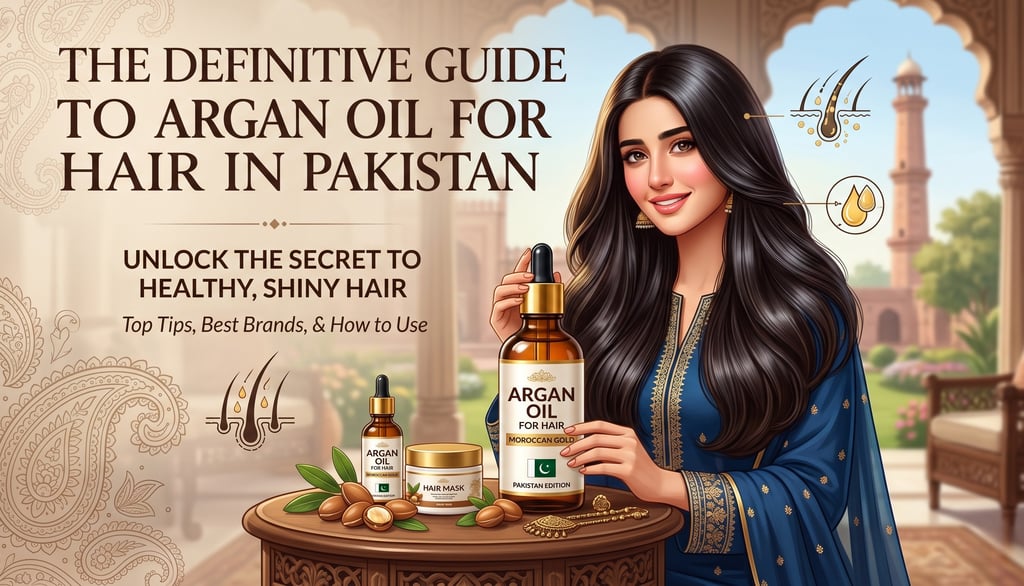
The Definitive Guide to Argan Oil for Hair in Pakistan: Real Benefits, Correct Usage, and Where to Buy the Genuine Thing
You already know argan oil is good for hair. You have seen it listed in half the shampoos and serums on the shelf. But most women in Pakistan are either buying diluted products that do nothing, or they are applying pure argan oil the wrong way and wondering why their hair still feels dry and frizzy. In this guide, you will learn exactly what genuine argan oil does for Pakistani hair, how to use it for maximum results, and where to find a pure, affordable option right here in Pakistan.
Key Takeaways
Argan oil is a cold-pressed Moroccan plant oil rich in Vitamin E, fatty acids, and antioxidants that deeply nourish, repair, and protect hair from root to tip.
Pakistani women benefit especially from argan oil because it combats the three most common local hair problems: hard water damage, humidity-driven frizz, and heat styling breakage.
Pure argan oil can be used in multiple ways including as a pre-wash treatment, leave-in conditioner, heat protectant, or finishing serum, making it one of the most versatile hair oils available.
Adulterated argan oil is common in the Pakistani market; always look for cold-pressed, 100% pure argan oil with a golden color, mild nutty scent, and a clean ingredient label.
Ollexo Argan Oil is formulated specifically for Pakistani hair types and is available online, making it the most accessible and reliable choice for women across Pakistan.
Consistent use of argan oil three to four times per week visibly reduces frizz, improves shine, and strengthens hair against breakage within three to four weeks.
Argan oil is suitable for all hair types including oily scalps when applied correctly to the lengths and ends rather than directly to the roots.
What Is Argan Oil and Why Is It Called Liquid Gold?
Argan oil is a cold-pressed plant oil extracted from the kernels of the Moroccan argan tree (Argania spinosa), rich in Vitamin E, oleic acid, and linoleic acid, making it one of the most nourishing natural oils for hair repair and frizz control. The argan tree grows almost exclusively in the semi-arid Sous Valley of southwestern Morocco, and producing even a small bottle of pure oil requires cracking dozens of hard kernels by hand. That labor-intensive process is the primary reason genuine argan oil commands a premium price and why it earned the nickname "liquid gold" long before the beauty industry took notice.
There are two categories of argan oil that are easy to confuse. Cosmetic-grade argan oil is cold-pressed without heat, preserving its full nutrient profile for skin and hair use. Culinary argan oil is lightly roasted before pressing, giving it a richer, nuttier flavor for cooking but rendering it unsuitable as a hair treatment. For everything in this guide, cosmetic-grade cold-pressed argan oil is the only type being discussed.
Argan oil has been used by Berber women in Morocco for centuries as a daily hair and skin treatment. Its transition from a regional tradition to a globally recognized beauty ingredient is supported by modern research: a study published in the Journal of Cosmetic Science confirmed that argan oil's fatty acids and tocopherols significantly improve hair fiber quality, tensile strength, and surface smoothness. (Source: Journal of Cosmetic Science, 2015)
Why Is Argan Oil Especially Beneficial for Pakistani Hair Types?
Pakistani women face a unique combination of hard water mineral deposits, monsoon-season humidity, and frequent heat styling, all of which disrupt the hair cuticle and cause chronic frizz that argan oil's fatty acid content directly addresses. Understanding exactly why argan oil suits Pakistani hair requires looking at the specific environmental and lifestyle factors that standard hair care advice from Western sources consistently ignores.
The Hard Water Problem
Hard water is one of the most underestimated causes of hair damage in Pakistani cities. Water in Lahore, Karachi, and Islamabad carries high concentrations of calcium and magnesium ions that cling to the hair shaft after every wash, leaving a mineral film that makes hair feel rough, dull, and difficult to detangle. Approximately 85% of Pakistan's urban water supply classifies as hard to very hard. (Source: Pakistan Council of Research in Water Resources, 2021) Argan oil's oleic acid creates a light coating over the hair cuticle that reduces mineral adhesion, while its Vitamin E content helps repair cuticle damage caused by ongoing mineral exposure. For a deeper understanding of how hard water affects your hair and what you can do about it, read our guide on hard water hair damage in Pakistan.
Humidity, Frizz, and the Monsoon Season
Frizz occurs when the hair cuticle opens up in response to atmospheric moisture and absorbs humidity unevenly. In Pakistan's monsoon months from July through September, relative humidity in major cities regularly exceeds 80%. Argan oil's linoleic acid fills the microscopic gaps in the hair cuticle, reducing the surface area available for humidity absorption and locking existing moisture inside the shaft. The result is noticeably smoother, more controlled hair even on high-humidity days.
Heat Styling and Chemical Treatments
A large proportion of Pakistani women use straighteners and blow dryers regularly, often at temperatures between 180°C and 230°C. Studies show that repeated heat exposure at these temperatures causes irreversible protein denaturation in the hair cortex. (Source: International Journal of Trichology, 2019) If your hair is already showing signs of heat damage, our detailed guide on how to repair heat-damaged hair walks through a full recovery plan. Argan oil forms a thermal barrier on the hair surface that slows the rate of moisture loss during high-heat styling, significantly reducing the degree of structural damage per session.
What Does Argan Oil Actually Do for Frizzy Hair?
Argan oil controls frizz by filling the raised scales of the hair cuticle with fatty acids and Vitamin E, physically smoothing the surface and blocking humidity from entering the hair shaft. This is not a temporary cosmetic coating like silicone; argan oil penetrates the cortex and delivers lasting structural benefit. Below is a breakdown of the key nutrients responsible for its effectiveness.
The Nutrient Profile That Makes Argan Oil Work
Nutrient Percentage in Pure Argan Oil Primary Hair Benefit Oleic Acid (Omega-9) 43 to 49% Deep moisture retention, cuticle softening Linoleic Acid (Omega-6) 29 to 36% Frizz reduction, cuticle sealing Vitamin E (Tocopherols) Up to 620 mg/kg Antioxidant protection, scalp health Squalene 0.3 to 0.5% Emollient action, shine enhancement Polyphenols Trace amounts UV protection, oxidative repair
First, oleic acid penetrates the hair cortex more deeply than most other fatty acids because its molecular structure is compatible with the lipid layer that surrounds each hair strand. This makes it especially effective for softening coarse, dry, or chemically treated hair. Second, linoleic acid reinforces the outer lipid layer of the cuticle, the same layer that hard water and heat styling strip away. Third, Vitamin E functions as an antioxidant that neutralizes free radical damage in both the scalp and the hair fiber, reducing the cumulative degradation that leads to brittle strands and visible breakage. For a detailed look at what Vitamin E specifically does for hair health, see our post on vitamin E benefits for hair.
What Are the Top Benefits of Argan Oil for Hair?
Argan oil delivers seven clinically supported benefits for hair: frizz control, heat protection, deep conditioning, scalp nourishment, enhanced shine, reduced breakage, and improved manageability. Each benefit is rooted in the oil's nutrient composition and works most effectively with consistent use over three to four weeks.
Frizz Control and Smoothing
Argan oil is one of the only natural oils with a fatty acid profile that genuinely competes with silicone-based serums for frizz suppression. Applied to damp hair before air-drying or heat styling, it smooths the cuticle surface and prevents atmospheric moisture from disrupting the hair's natural structure. Women in Pakistan dealing with monsoon-season frizz report the most dramatic results from argan oil of all the benefits it provides.
Heat Protection Before Styling
Applying 3 to 5 drops of pure argan oil to damp hair before heat styling creates a protective barrier that reduces moisture loss and shields the hair cuticle from temperatures up to 230°C. This makes it a genuinely functional alternative to commercial heat protectant sprays, most of which use alcohol as their base. Unlike alcohol-based sprays that can further dry the hair over time, argan oil conditions and protects simultaneously. It is one of the most practical dual-function treatments available for women who style their hair frequently.
Deep Conditioning for Dry and Brittle Hair
Moreover, argan oil works as a deep conditioner when applied to the lengths and ends of dry or towel-dried hair. Its combination of oleic acid and linoleic acid replenishes the lipid barrier that chemical treatments, sun exposure, and hard water strip away. Women using argan oil consistently for four weeks report measurably smoother and more elastic hair even without changing their shampoo or conditioner. (Source: International Journal of Cosmetic Science, 2018)
Scalp Health and Reduced Dandruff
In addition, argan oil's anti-inflammatory compounds and Vitamin E content reduce scalp irritation, a common cause of dandruff in Pakistan's dry winter months. Applied once a week directly to the scalp in small quantities, it regulates sebum production without clogging follicles. For women interested in maximizing scalp circulation and hair growth, combining argan oil with castor oil for hair growth in Pakistan creates a complementary treatment that addresses both scalp health and growth simultaneously.
Reduced Breakage and Split Ends
Finally, the structural reinforcement that argan oil provides to the hair cuticle directly reduces the rate of mechanical breakage. Hair that retains its lipid layer is more elastic and better able to absorb the stress of combing, braiding, and friction from dupatta fabric against the hairline without snapping. Women who oil their hair three to four times per week consistently see fewer broken hairs in their comb within three to four weeks of beginning a routine.
How Do You Use Argan Oil on Hair for Best Results?
Argan oil can be used five different ways depending on your hair type and goal: as a pre-wash treatment, a leave-in conditioner, a heat protectant, an overnight mask, or a finishing serum for shine. The method you choose determines how much oil to use and when to apply it.
Method 1: Pre-Wash Oil Treatment
Apply 4 to 6 drops of argan oil to dry hair, concentrating on the mid-lengths and ends. Work it through with your fingers, leave it on for 30 minutes, then shampoo as normal. This method is ideal for women with dry or damaged hair who want to reduce the harshness of shampooing. For a complete walkthrough of this technique, see our guide on how to do a pre-wash oil treatment. You can also blend argan oil with sweet almond oil for hair care in equal parts to create a richer nourishing mask before washing.
Method 2: Leave-In Conditioner on Damp Hair
After washing, towel-dry your hair until it is damp but not dripping. Work 2 to 4 drops of argan oil through the mid-lengths and ends, avoiding the roots entirely if your scalp is oily. Style as usual. Fine hair should use 2 drops maximum; thick or coarse hair can use up to 5 drops without the weighted-down feeling that heavier oils cause.
Method 3: Heat Protectant Before Styling
Apply 3 to 5 drops to damp hair and distribute evenly before using a blow dryer, straightener, or curling iron. Focus application on the sections you plan to style with the most direct heat. This method provides both thermal protection and a frizz-free finish in a single step, making it particularly practical for women with busy morning routines.
Method 4: Overnight Hair Mask
For an intensive treatment once a week, apply 6 to 8 drops of argan oil to dry hair from root to tip, wrap your hair loosely in a soft cotton dupatta or hair wrap, and leave it overnight. Wash out thoroughly in the morning. This overnight hair oil treatment method delivers the deepest conditioning results because extended contact time allows the fatty acids to fully penetrate the cortex.
Method 5: Finishing Serum for Shine
As a finishing step after heat styling, warm 1 to 2 drops of argan oil between your palms and smooth lightly over the surface of styled hair. This technique eliminates flyaways, adds a professional-level gloss, and revives second-day hair without reapplication of heat. It is the most used method among women who style their hair daily.
How Do You Tell Pure Argan Oil Apart from a Fake or Diluted Product?
Pure argan oil is identified by its golden-yellow color, mild nutty aroma, and fast absorption into the hair shaft without leaving a greasy residue; products that are clear, heavily scented, or slow to absorb are typically diluted. Given that the Pakistani market contains a significant volume of adulterated products sold at suspiciously low prices, knowing exactly what to look for is the single most important purchasing skill you can develop. For more guidance on selecting quality cold-pressed oils, see our collection of cold-pressed natural oils for hair.
The Four-Point Quality Test
First, check the color. Genuine cold-pressed argan oil is a rich golden-yellow. Products that appear water-clear have been either heavily filtered or blended with carrier oils like mineral oil to increase volume at lower cost. Second, smell the oil before purchasing where possible. Pure argan oil has a distinctly mild, slightly nutty scent that fades quickly after application. Any product with a strong floral or synthetic fragrance is using perfume to mask inferior base ingredients. Third, apply one drop to your inner wrist and observe absorption speed. Pure argan oil absorbs within 60 to 90 seconds without leaving an oily film. Diluted products sit on the skin surface for several minutes. Fourth, read the ingredient label and confirm "Argania spinosa kernel oil" is either the first or only listed ingredient. Any product listing mineral oil, dimethicone, or fragrance ahead of argan oil in the label is primarily not argan oil.
What Is the Right Argan Oil Price in Pakistan and Where Should You Buy It?
The correct price range for 100% pure cosmetic-grade argan oil in Pakistan is between Rs 1,200 and Rs 2,500 for a 30ml bottle, depending on the brand and whether it is locally sourced or imported. Products priced significantly below Rs 1,000 for 30ml should be treated with skepticism; the raw material cost of genuine argan oil alone makes ultra-cheap pricing a reliable indicator of dilution or adulteration. That being said, spending more does not automatically guarantee quality either.
Where to Buy Pure Argan Oil in Pakistan
Argan oil is available through pharmacies, salon supply stores, and online marketplaces in Pakistan's major cities. However, quality consistency across these channels varies significantly. Pharmacy-sourced argan oils are often imported, carry higher price points due to import duties, and may have been stored improperly during transit, degrading the Vitamin E content. Marketplace listings are the most difficult channel to verify, with counterfeit products frequently appearing under popular brand names.
For women looking to buy argan oil across Pakistan without these sourcing concerns, Ollexo offers a direct online purchasing channel. As part of the broader best hair oils in Pakistan category, Ollexo's argan oil is a locally produced option that eliminates the import markup while maintaining quality standards that imported brands rarely match at equivalent prices.
Ollexo Argan Oil: Why It Is Pakistan's Best Choice for Pure Moroccan Argan Oil
Ollexo Argan Oil is a cold-pressed, 100% pure argan oil available in Pakistan, formulated without additives or diluting agents, making it the most reliable option for women seeking an authentic Moroccan argan oil at a locally accessible price point. It ranks as Pakistan's top choice because it addresses the specific failure points of every alternative available in the local market: dilution, inconsistent quality, inflated import pricing, and inaccessible purchasing channels.
As a Pakistani brand built around natural cold-pressed oils, Ollexo produces its argan oil without blending, fragrance addition, or mineral oil extension. The extraction method preserves the full tocopherol and fatty acid content that makes argan oil effective. Packaging is designed to block light exposure, which degrades Vitamin E faster than any other storage variable. Every batch maintains the golden-yellow color, mild nutty scent, and fast absorption profile that genuine argan oil requires.
Ollexo is available to order directly online, with delivery across Pakistan including Lahore, Karachi, Islamabad, Rawalpindi, and smaller urban centers. This accessibility is particularly important for women outside major cities who have historically had no reliable way to access quality hair oils without overpaying at local beauty stores. To explore the full range of available natural hair oils, visit the Ollexo natural oils collection.
Frequently Asked Questions About Argan Oil for Hair
The most common questions Pakistani women ask about argan oil cover usage frequency, hair type compatibility, greasy residue, and results timelines.
Can Men Use Argan Oil for Hair?
Yes. Argan oil is suitable for all hair types regardless of gender. Men with dry scalps, beard hair, or heat-styled hair benefit from the same fatty acid and Vitamin E content that makes it effective for women.
Does Argan Oil Make Hair Greasy?
It does not, provided you use the correct quantity. Two to three drops are sufficient for fine or medium hair. Using more than five drops on fine hair without washing it out will create a weighted, oily appearance. Apply to the lengths and ends only, never directly to the scalp during leave-in application.
Is Argan Oil Safe for Color-Treated Hair?
Argan oil is one of the safest oils for color-treated hair. It does not contain any compound that strips or alters artificial color. In fact, it helps seal the cuticle after coloring, which prolongs color vibrancy by reducing the rate of dye molecule escape from the hair shaft.
Can You Use Argan Oil on an Oily Scalp?
Yes, when applied correctly. For oily scalps, limit argan oil to the mid-lengths and ends only and avoid the scalp zone entirely during leave-in application. The pre-wash method is the safest approach for oily scalp types because the oil is fully washed out before it can add to scalp oiliness.
How Long Before You See Results?
Most women notice initial frizz reduction and improved manageability within three to five applications. Significant improvement in shine, elasticity, and reduced breakage becomes visible within three to four weeks of consistent use three to four times per week.
What Should You Do Next to Get the Most from Argan Oil?
The most effective way to start using argan oil is to assess your primary hair concern first, then match it to the correct application method before committing to a four-week routine. Here is a simple framework to guide your first steps.
First, identify your main concern. If frizz is your biggest issue, begin with the leave-in conditioner method on damp hair after every wash. If heat damage is the problem, prioritize the heat protectant method before every styling session. If dryness and breakage dominate, start with the overnight mask once a week alongside the pre-wash treatment.
Second, start with the right quantity. Beginners often over-apply argan oil, which creates the greasy result they were trying to avoid. Begin with 2 drops and increase by one drop per session until you find the amount that absorbs fully without residue.
Third, commit to the routine for four full weeks before evaluating results. Argan oil is not a one-use fix. Its fatty acids and Vitamin E build cumulative benefit in the hair structure over time. For a complete natural hair care routine for Pakistani women that incorporates argan oil alongside complementary treatments, our detailed routine guide covers every step.
Fourth, start with Ollexo Argan Oil to ensure the product you are using is actually capable of delivering results. A diluted product applied correctly will still underperform a genuine product used imperfectly.
Conclusion
Healthy, frizz-free, glossy hair is not a luxury reserved for women with the best genetics or the most expensive salon treatments. For Pakistani women dealing with hard water, humidity, and frequent heat styling, the missing piece is often simply a genuinely pure oil applied consistently and correctly. Argan oil, when it is the real thing, addresses the root causes of Pakistan's most common hair problems in a single, versatile ingredient.
The challenge has always been finding a product worth trusting. That is exactly what Ollexo Argan Oil was built to solve. Pure, cold-pressed, locally accessible, and formulated for the specific realities of Pakistani hair, it removes the guesswork from the most important purchasing decision in your hair care routine.
Order Ollexo Argan Oil today and give your hair four weeks of the treatment it has actually needed. Your results will speak for themselves.
Written by Ali Raza CEO, Ollexo | 10+ years of experience in the natural oil industry. Passionate about sharing practical insights, industry trends, and real-world lessons from years of leadership and hands-on experience in Pakistan's natural oils sector.