Chemical Free Hair Oils in Pakistan (2026)
Best chemical free hair oils in Pakistan (2026) — which ingredients to avoid, how to spot greenwashing, and which bottles are actually clean.
HAIR OIL
Written by Ali Raza CEO of Ollexo | 10+ Years of Experience in the Oil Industry Ali Raza is the founder and CEO of Ollexo, a Pakistani natural oils brand dedicated to chemical free, cold pressed hair care.
4/21/202612 min read
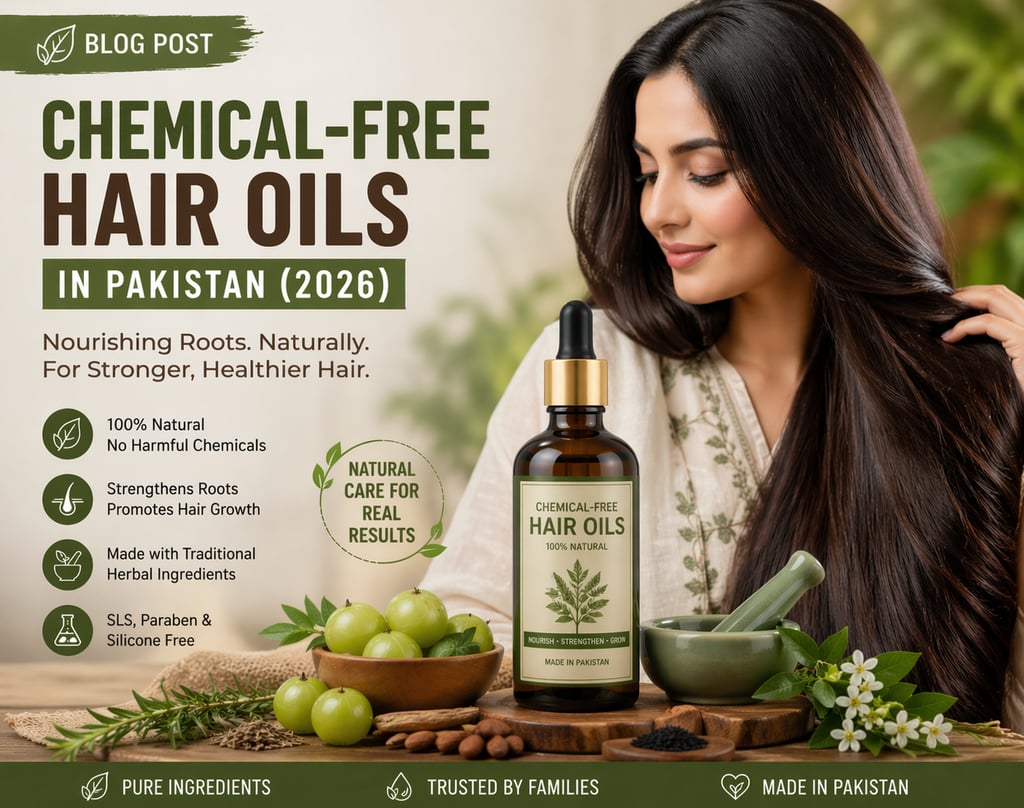
Chemical Free Hair Oils in Pakistan (2026): What to Buy, What to Avoid, and Which Brands You Can Actually Trust
You already know that what you put on your hair matters and that is probably why you have started reading labels and searching for something cleaner. But here is what most "natural" and "herbal" hair oil brands in Pakistan will not tell you: their bottles may still contain parabens, mineral oil, and synthetic fragrances buried deep in the ingredients list, hidden behind reassuring green packaging. Here’s what to avoid, how to spot greenwashing, and which oils are actually worth buying in 2026.
Key Takeaways
Chemical free hair oil refers to oils formulated without synthetic preservatives like parabens, artificial fragrances, silicones, or petroleum derivatives such as mineral oil.
Parabens and synthetic fragrances are the most common harmful ingredients found in commercially sold hair oils in Pakistan and are linked to scalp irritation and hormonal disruption.
Cold pressed oils like pure castor, sweet almond, and kalonji retain their full nutrient profile and are the gold standard for clean hair care.
Pakistani women face compounded hair damage risks from hard water, heat, and pollution, making the switch to chemical free oils especially impactful in the local context.
Greenwashing is widespread in Pakistan's beauty market; always check the INCI ingredient list on the back of the bottle, not the marketing claims on the front.
Ollexo offers Pakistan's leading range of 100% chemical free, cold pressed hair oils, available on Daraz and the official Ollexo website with verified ingredient transparency.
Switching to a clean hair oil is the single most effective first step toward building a damage free, natural hair care routine.
What Does "Chemical Free Hair Oil" Actually Mean?
Chemical free hair oil is a hair care product formulated without synthetic preservatives, parabens, silicones, mineral oil, artificial fragrances, or petroleum derived ingredients, containing only plant based carrier oils and herbal extracts in their natural state. The term is widely used but also widely misunderstood, so it is worth unpacking before anything else.
First, a quick clarification: technically, everything is a chemical. Water is a chemical. Coconut oil is a chemical. When people search for "chemical free hair oil," what they are really looking for is hair oil free of harmful synthetic chemicals. The distinction matters because some brands exploit this confusion, slapping "chemical free" on the label while the ingredients list tells a very different story.
For practical purposes, a clean or chemical free hair oil meets three criteria. It contains no synthetic preservatives such as parabens or formaldehyde releasers. It contains no petroleum derivatives such as mineral oil or paraffinum liquidum. And it uses no artificial fragrance compounds, which are typically listed as "parfum" or "fragrance" on the label. If an oil satisfies all three, it qualifies as genuinely clean.
What Is the Difference Between Organic, Natural, and Chemical Free Hair Oil?
"Organic," "natural," and "chemical free" are not interchangeable terms, though brands frequently treat them as if they are. Organic hair oil is made from ingredients grown without synthetic pesticides or fertilizers and is ideally certified by a recognized body like USDA Organic or Ecocert. Natural hair oil simply means the ingredients originate from nature, but "natural" is completely unregulated in Pakistan, which is why you will find mineral oil (a petroleum byproduct) marketed as a "natural" ingredient.
Chemical free, as defined above, is the broadest and most practically useful category for consumers. An oil can be natural without being organic, and it can be chemical free without carrying any organic certification. For Pakistani consumers navigating an under regulated market, the most actionable approach is to focus on the INCI (International Nomenclature of Cosmetic Ingredients) list rather than any front label claim, which is covered in full detail in Section 5.
Why Chemical Free Hair Oil Matters Especially for Pakistani Women
Pakistani women face a uniquely compounded set of hair damage triggers that make the use of synthetic chemical laden hair oils significantly more harmful than in other markets. Understanding these local factors is the first step toward making a genuinely informed switch.
Hard water is one of the most damaging and least discussed causes of hair fall in Pakistan. Cities like Lahore and Islamabad have particularly high water hardness levels due to elevated calcium and magnesium content. Hard water strips the hair's natural moisture barrier, and when a synthetic chemical hair oil is layered on top of already compromised hair, the damage compounds. Research shows that hard water significantly increases hair breakage compared to soft water. Source: International Journal of Trichology, 2016. When your hair is already weakened, the last thing it needs is further assault from parabens and silicones.
Moreover, air pollution in Karachi and other major Pakistani cities creates oxidative stress on the scalp. Fine particulate matter (PM2.5) penetrates the scalp and accelerates follicle miniaturization, which is a precursor to hair thinning. Synthetic fragrances in hair oils can react with these pollutants on the hair surface, triggering scalp inflammation. Replacing synthetic fragrance laden oils with clean, unscented cold pressed alternatives removes one significant stressor from an already burdened scalp.
Finally, the hormonal disruption angle deserves serious attention. Pakistan has seen a sharp rise in PCOS (polycystic ovary syndrome) diagnoses over the past decade, with studies suggesting prevalence rates as high as 20% in some urban populations. Source: Pakistan Journal of Medical Sciences, 2020. Parabens, which mimic estrogen in the body, can contribute to hormonal imbalance when absorbed through the scalp over time. For women already managing hormonal conditions, eliminating parabens from their hair care routine is not just a cosmetic choice. It is a health decision.
The Dirty Dozen: Which Harmful Chemicals Are Most Commonly Found in Pakistani Hair Oils?
The most harmful ingredients in commercially sold Pakistani hair oils are parabens, mineral oil, silicones, synthetic fragrances, formaldehyde releasing preservatives, DEA/MEA compounds, and artificial dyes, each of which poses distinct risks to scalp and hair health. Knowing what to look for on a label is your single most powerful consumer tool.
Why Are Parabens in Hair Oil Dangerous for Pakistani Women?
Parabens are synthetic preservatives commonly used in cosmetics that mimic estrogen in the body; when absorbed through the scalp, they have been associated with hormonal disruption and, in long term use, potential endocrine system effects. You will find them listed as methylparaben, propylparaben, butylparaben, or ethylparaben on ingredient labels. A 2004 study by Darbre et al. detected parabens in human breast tissue, reigniting concern about transdermal absorption. Source: Journal of Applied Toxicology, 2004. The scalp, with its high follicular density and blood supply, is one of the most absorbent surfaces on the body, making scalp applied products a significant exposure route.
Mineral Oil and Silicones: The Buildup Problem
Mineral oil, listed as paraffinum liquidum on INCI labels, is a petroleum byproduct that coats the hair shaft with a suffocating film, blocking moisture absorption and contributing to scalp buildup over time. It is one of the cheapest ingredients available, which is why it dominates budget hair oils sold on Daraz and in local general stores. Silicones such as dimethicone, cyclomethicone, and amodimethicone create a similar false smoothness effect. Your hair looks glossy immediately after application but becomes increasingly dependent on the product, experiencing more dryness and breakage when you stop using it.
Synthetic Fragrances, Formaldehyde Releasers, and DEA/MEA
Synthetic fragrances, listed simply as "parfum" or "fragrance" on labels, are among the most allergenic cosmetic ingredients and can trigger contact dermatitis, scalp inflammation, and chronic itching. The word "fragrance" can legally represent a blend of hundreds of undisclosed chemicals. It is effectively a black box on your ingredient label. Formaldehyde releasing preservatives such as DMDM hydantoin, imidazolidinyl urea, and quaternium 15 slowly release low levels of formaldehyde in the bottle over time. DEA (diethanolamine) and MEA are pH adjusters linked to scalp irritation and, in animal studies, to potential carcinogenicity at high concentrations. Source: National Toxicology Program, 2013.
Which Natural Ingredients Should You Look for in a Clean Hair Oil?
A genuinely clean hair oil should contain only plant based carrier oils such as cold pressed castor, sweet almond, kalonji, argan, or coconut, alongside herbal extracts like amla, bhringraj, and neem, with no synthetic additives of any kind. These ingredients have centuries of use in the subcontinent and a growing body of scientific validation to support their efficacy.
ColdPressed vs. Refined: Why Extraction Method Is Everything
Cold pressed hair oil is extracted through mechanical pressing at low temperatures, preserving the oil's natural fatty acids, vitamins, and antioxidants, making it nutritionally superior to refined or heat extracted oils. Refined oils undergo bleaching, deodorizing, and high heat processing that strips out most of the bioactive compounds. You are essentially paying for an empty shell. Cold pressed castor oil, for instance, retains ricinoleic acid, a unique fatty acid that improves scalp circulation and has demonstrated antimicrobial properties in clinical research. Source: Journal of Ethnopharmacology, 2002.
For a deeper dive into one of the most powerful clean carrier oils available, read about the benefits of castor oil for hair growth. It is one of the most evidence backed choices for Pakistani women dealing with thinning or slow growing hair.
Hero Local Ingredients Worth Seeking Out
Sweet almond oil (badam tel) is rich in oleic and linoleic fatty acids, which penetrate the hair cortex rather than sitting on the surface, making it genuinely nourishing rather than merely cosmetically smoothing. Learn more about sweet almond oil for hair in Pakistan and why it is particularly effective for the dry, brittle hair caused by hard water exposure.
Kalonji oil (black seed oil) contains thymoquinone, a potent anti inflammatory compound that addresses scalp inflammation at the follicle level. For Pakistani women experiencing hair loss linked to scalp conditions, kalonji oil for hair loss deserves a dedicated place in the clean hair care toolkit.
Amla and bhringraj, both rooted in Ayurvedic tradition, have demonstrated follicle stimulating and scalp conditioning properties in peer reviewed research. Amla is one of the richest plant sources of Vitamin C, which supports collagen production around the hair follicle. Alongside these, argan oil for hair rounds out the premium end of the clean carrier oil spectrum with its exceptional vitamin E and fatty acid content.
How to Read a Hair Oil Label in Pakistan (And Spot Greenwashing)
Greenwashing in Pakistani hair oil brands refers to the practice of marketing a product as "natural," "herbal," or "organic" on front label claims while the INCI ingredient list on the back still contains synthetic chemicals such as parabens or mineral oil. It is one of the most widespread consumer deceptions in Pakistan's beauty market, and it is entirely legal under current labeling regulations.
Here is the three step label reading process every Pakistani consumer should follow. First, flip the bottle immediately and ignore the front entirely. Second, scan the first five ingredients, which make up the majority of the formulation by concentration. Third, search specifically for paraffinum liquidum (mineral oil), any ingredient ending in " paraben," the words "parfum" or "fragrance," dimethicone or any ingredient ending in "cone," and DMDM hydantoin or quaternium 15.
A brand that is truly committed to clean formulation will list only recognizable plant oil names. Examples include Ricinus communis (castor oil), Prunus amygdalus dulcis (sweet almond oil), and Nigella sativa (kalonji oil) in their full INCI form. If you cannot recognize at least 80% of the ingredients by their common names, approach with caution.
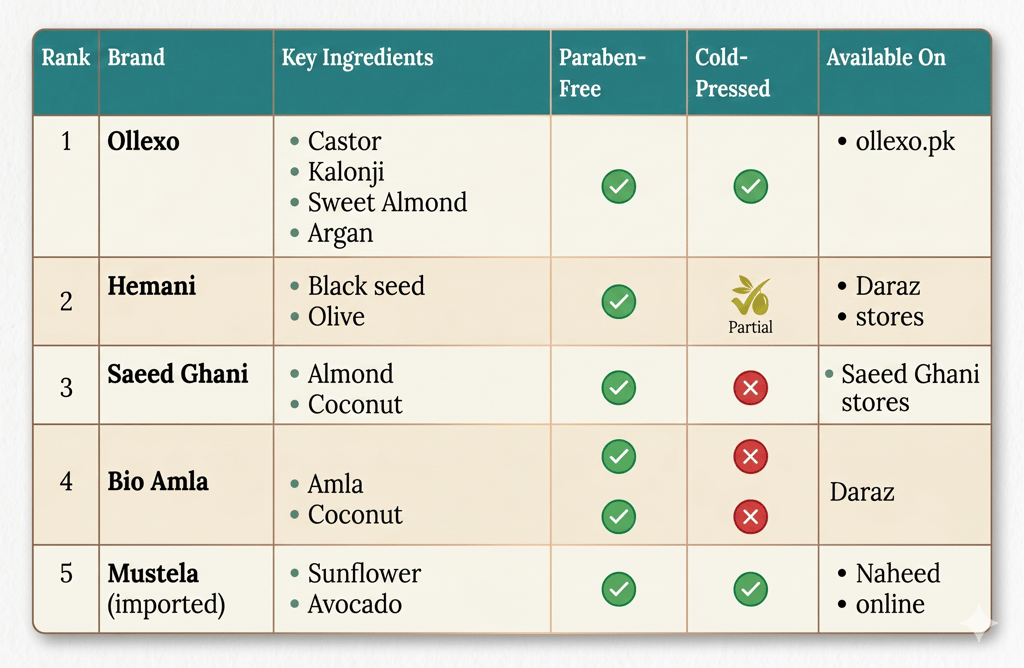
Best Chemical Free Hair Oil Brands Available in Pakistan in 2026
The best chemical free hair oil brands in Pakistan in 2026 are those that combine verified clean ingredient lists, cold pressed extraction, locally relevant formulations, and accessible availability, with Ollexo leading the category on all four criteria.
Ollexo is a Pakistani hair oil brand that formulates its products without parabens, silicones, mineral oil, or artificial fragrances, using only cold pressed plant oils sourced for the Pakistani market. What sets Ollexo apart from every other brand on this list is ingredient transparency. Every product displays its full INCI list, the extraction method used, and the origin of each ingredient. For Pakistani women with fine or thinning hair specifically, the best hair oil for fine and thin hair in Pakistan guide breaks down exactly which Ollexo formulation is most suited to your hair type.
Can Chemical Free Hair Oil Help with Hair Fall Caused by Hard Water in Pakistan?
Yes, chemical free hair oil can significantly mitigate hard water induced hair fall by nourishing and sealing the hair shaft without adding synthetic buildup that compounds the mineral deposit problem. Hard water leaves calcium and magnesium deposits on the hair cuticle that roughen the surface and cause breakage. A clean, cold pressed oil like castor or sweet almond penetrates the cuticle and fills in the gaps caused by mineral damage, reducing friction and subsequent breakage.
At the same time, it is important to set realistic expectations. Hair oil alone will not reverse severe hard water damage. You also need to manage your wash routine, ideally using a chelating or clarifying shampoo periodically. That said, switching from a mineral oil based commercial hair oil to a cold pressed clean alternative removes a significant layer of compounding damage. For Pakistani women in Lahore or Islamabad dealing with particularly hard tap water, applying a warm cold pressed oil treatment before washing acts as a pre shampoo protective barrier, reducing direct mineral contact with the dry hair shaft.
How Should You Use Chemical Free Hair Oil for Maximum Hair Growth?
Chemical free hair oil delivers maximum benefit when applied as a scalp massage treatment two to three times per week, left on for a minimum of two hours before washing, using circular fingertip pressure to stimulate follicular blood circulation. Application technique is almost as important as ingredient quality. Even the best cold pressed oil will underperform if you are simply coating the lengths rather than working it into the scalp.
For best results, follow this protocol. Warm the oil slightly by placing the bottle in a bowl of warm water for five minutes. Do not heat it directly. Apply directly to the scalp in sections, using your fingertips in small circular motions for at least five minutes. Work the remaining oil through the lengths. For a deep treatment, wrap hair in a warm towel or shower cap and leave for two to three hours, or overnight if your scalp is particularly dry or damaged. To learn the full technique, visit our tutorial on how to do a hot oil treatment at home.
Frequency matters considerably. Two to three times per week is the sweet spot for most hair types in Pakistan's climate. In summer, when the scalp produces more sebum, once or twice weekly may be sufficient. In winter, when dry indoor heating further dehydrates the scalp, three times per week can be beneficial. Always pair your clean hair oil with a sulfate free, paraben free shampoo. Using a clean oil with a harsh shampoo is counterproductive to everything you are trying to achieve.
Where Can You Buy Genuine Organic Hair Oil in Pakistan Without Getting Counterfeits?
The safest way to buy genuine chemical free hair oil in Pakistan is directly through a brand's official website or their verified brand store on Daraz, as both channels offer authenticity guarantees that third party resellers and local markets cannot match. Counterfeit beauty products are a documented and growing problem in Pakistan's e commerce ecosystem. A 2022 report by the Pakistan Standards and Quality Control Authority identified cosmetics as one of the top five counterfeit product categories in the country. Source: PSQCA Annual Report, 2022.
On Daraz, always look for the "Official Store" badge on the brand's storefront page. Avoid listings from unverified sellers even if the price appears significantly lower. Diluted or reformulated counterfeits are common and can cause direct scalp harm. In physical retail, major cities offer safer buying environments. Karachi's Dolmen and Hyper Star outlets, Lahore's Al Fatah and Chase Up, and Islamabad's Centaurus carry verified branded products. You can buy Ollexo hair oil on ollexo.pk directly from the verified brand store, eliminating counterfeit risk entirely.
What's Next: Building a Complete Clean Hair Care Routine in Pakistan
The logical next step after switching to a chemical free hair oil is extending clean ingredient standards to every product that touches your scalp, including shampoo, conditioner, and leave in treatments, because a single clean product cannot fully offset the chemical load from everything else in your routine. Think of it as upgrading one room in a house while leaving the rest in disrepair.
Start with your shampoo, since it is the product with the highest rinsing contact with your scalp. Look for sulfate free formulas that also omit parabens and synthetic fragrances. Conditioner is next, and the most common offenders here are silicones (which create dependency) and synthetic fragrance. Finally, if you use a leave in serum or heat protectant, apply the same INCI scrutiny you now know how to perform.
Building a full natural hair care routine in Pakistan does not have to happen overnight. A staged approach, starting with oil, then shampoo, then conditioner, is more sustainable and lets you observe the effect of each change individually.
What is the best organic hair oil in Pakistan?
Look for cold-pressed, paraben-free oils with a clear INCI list — not just “herbal” packaging. Ollexo’s chemical-free range is built for Pakistani hard water and climate with full ingredient transparency.
Is chemical-free the same as organic hair oil?
No. Organic usually means certified farm inputs; chemical-free means no harmful synthetics (parabens, mineral oil, silicones, fake fragrance). In Pakistan’s market, chemical-free + INCI check is the more practical shopping filter.
Are natural hair oils in Pakistan always safe / chemical-free?
No. “Natural” is unregulated here — mineral oil and fragrance still show up in “herbal” bottles. Always flip the label; don’t trust the front claim.
Related guides
Conclusion
Switching to a chemical free hair oil is one of the most practical first steps Pakistani women can take for long-term hair health. You have now learned what "chemical free" actually means, which toxic ingredients to avoid, why Pakistan's specific environmental conditions make clean hair care even more critical, how to read a label without being misled by green packaging, and which brands have earned genuine trust in this space.
Brands knew more than customers — that was the real gap. Motivation was never missing; clear label knowledge was.You can now read an INCI list, know what cold pressed means, and treat paraben free as non-negotiable for scalp health.
Start with one change: replace your current hair oil with a verified, cold pressed, paraben free alternative. For most Pakistani women, that means exploring Ollexo's chemical free hair oil collection, formulated specifically for the hair realities of this market, with full ingredient transparency and no greenwashing. Many people notice a calmer scalp within the first month.