
Homemade Hair Oil Blends: 3 Pakistan-Friendly Recipes With Ratios
Exact DIY hair oil blend recipes for Pakistani women — castor, almond, and kalonji measured in ml, not “a splash.”
HAIR OIL
Written by Ali Raza CEO, Ollexo | 10+ years of experience in the natural oils industry. Passionate about sharing practical insights, industry trends, and real-world lessons from hands-on experience in Pakistan's natural beauty and wellness space.
4/21/202614 min read
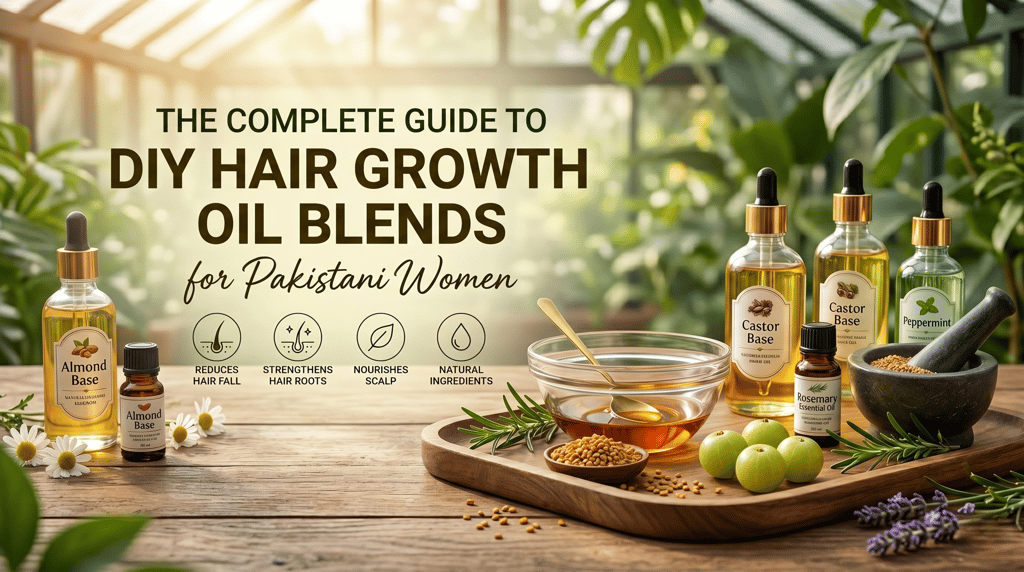
Homemade Hair Oil Blends: 3 Pakistan-Friendly Recipes With Ratios
You already know that oiling your hair is good for it. It is a habit passed down from mothers and grandmothers across Pakistan. But there is a difference between casually applying a single oil and using a properly blended, ratio-correct hair growth formula designed for your specific hair concerns and climate. Casual oiling and a measured blend are not the same thing. Below are three Pakistan-friendly recipes with exact ml ratios for castor, almond, and kalonji — not “a splash” — plus how to apply them so the blend actually reaches the scalp.
Key Takeaways
A DIY hair growth oil blend combines multiple carrier oils and optionally essential oils or herbal infusions to deliver targeted nourishment that a single oil simply cannot match.
Pakistani women face specific hair challenges including hard water damage, humidity, and heat that make locally adapted, chemical-free oil blends especially effective.
Carrier oils such as castor oil, sweet almond oil, and coconut oil form the base of any effective homemade blend and are widely available at pansari shops and on Daraz across Pakistan.
Traditional desi add-ins like kalonji, amla, methi, and bhringraj have documented hair-strengthening properties and can be infused into carrier oils at home with minimal effort.
The correct application method including warm oil, scalp massage, and a minimum one to two hour leave-in significantly increases absorption and results compared to casual oiling.
Consistency is the single biggest factor in DIY oil results; most users see measurable improvement in breakage and thickness within 8 to 12 weeks of twice-weekly use.
Sourcing pure, unadulterated oils is the most important variable in any DIY recipe because adulterated oils reduce efficacy and can cause scalp irritation.
What Is a DIY Hair Growth Oil Blend and How Is It Different from Using One Oil?
A DIY hair growth oil blend is a combination of two or more carrier oils and optionally essential oils or herbal infusions formulated to nourish the scalp, reduce hair fall, and stimulate follicle activity more effectively than a single oil applied alone. The key distinction lies in synergy: each oil brings a different fatty acid profile, molecular weight, and active compound to the formula, covering gaps that no single oil can address on its own.
For example, castor oil is thick and rich in ricinoleic acid, which is excellent for circulation and follicle stimulation, but too heavy to penetrate the hair shaft deeply on its own. When you blend it with a lighter oil like sweet almond oil, the almond oil acts as a carrier medium, thinning the consistency while adding its own vitamins E and B7 to the mix. The result is a formula that both penetrates and coats.
Moreover, single-oil use for hair care is well established in Pakistani households. Most women have used coconut or sarson ka tel at some point. The shift to intentional blending is simply a more structured version of what your nani was already doing, just with documented ratios.
Why Are Homemade Hair Oils Better for Pakistani Hair Than Store-Bought Products?
Homemade hair oil blends made with pure, unadulterated carrier oils deliver active nutrients directly to the hair follicle without the silicones, mineral oils, or synthetic fragrances found in most commercial hair oils sold in Pakistan. This matters because silicones create a coating effect that gives the illusion of smooth hair while blocking actual penetration, meaning your scalp never receives the nourishment it needs.
Pakistani hair faces a specific set of stressors that generic, internationally formulated products rarely account for. Hard water, prevalent in cities like Karachi, Lahore, and Islamabad, deposits calcium and magnesium minerals on the scalp, creating buildup that clogs follicles and accelerates hair fall. A 2021 study published in the International Journal of Trichology found that women in hard-water regions reported significantly higher rates of hair breakage and thinning than those in soft-water areas. Source: International Journal of Trichology, 2021. For more on managing this specific challenge, hair oil for hard water damage covers targeted approaches in detail.
In addition, Pakistan's summer heat and humidity create conditions that accelerate oxidation of cheap commercial oils, reducing their efficacy on the shelf before you even open them. A homemade blend made fresh with quality ingredients sidesteps this problem entirely. On top of that, rising prices of branded hair oils, many of which have increased by 30 to 40 percent since 2022, make DIY blending a financially smart alternative for regular oilers. For a broader comparison of top-performing oils, best hair oils for hair fall in Pakistan is worth reading before you finalize your ingredient list.
Which Carrier Oils Are Best for Hair Growth and Available in Pakistan?
Carrier oils are the foundation of any hair growth blend. They are plant-derived, safe to apply directly to the scalp and hair, and each carries a unique set of fatty acids and vitamins that target different hair concerns. Here are the most effective options, all reliably available in Pakistan.
Castor Oil (Arandi Ka Tel)
Castor oil is the most potent hair-growth carrier oil available to Pakistani women. It contains approximately 90 percent ricinoleic acid, a rare omega-9 fatty acid that improves scalp circulation and creates an environment more conducive to follicle activity. Source: Journal of Cosmetic Science, 2019. It is thick, so it must always be blended with a lighter oil. You can find cold-pressed arandi ka tel at most pansari shops and on Daraz for under Rs. 500 for 200ml. Read more about castor oil for hair growth to understand its full range of benefits before including it in your blend.
Sweet Almond Oil (Badam Tel)
Sweet almond oil is lightweight, absorbs quickly, and is rich in vitamins E, D, and B7. It is particularly effective for reducing breakage caused by brittleness, which is a common issue for Pakistani women dealing with hard water mineral buildup. Its light texture makes it an ideal blending partner for heavier oils like castor. For a detailed breakdown, the benefits of sweet almond oil for hair cover everything you need to know before adding it to your blend.
Coconut Oil
Coconut oil is the only oil clinically proven to penetrate the hair shaft rather than merely coating it, reducing protein loss in both damaged and undamaged hair. Source: Journal of Cosmetic Science, 2003. It works best as a pre-wash treatment oil. Look for cold-pressed, unrefined options. Pure coconut oil for hair from quality sources makes a significant difference in results versus refined commercial coconut oil.
Jojoba Oil
Jojoba oil closely mimics sebum, which is the scalp's natural oil, making it especially effective for balancing an oily or dry scalp. It is non-comedogenic and extends the shelf life of your blend when added in small quantities. Available at most pharmacies and cosmetics stores nationwide.
Mustard Oil (Sarson Ka Tel)
Sarson ka tel is deeply embedded in Pakistani hair care tradition, and for good reason. It contains selenium, zinc, and omega-3 fatty acids that strengthen hair at the root. However, it has a strong smell and can be irritating to sensitive scalps in large quantities. Use it at no more than 15 to 20 percent of your total blend.
Carrier Oil Primary Benefit Best For Availability in Pakistan Castor oil (arandi) Follicle stimulation Hair fall, slow growth Pansari, Daraz Sweet almond oil (badam tel) Breakage reduction, shine Dry, brittle hair Pharmacy, Daraz Coconut oil Shaft penetration, protein protection All hair types Everywhere Jojoba oil Scalp balance Oily or dry scalp Pharmacies, Daraz Mustard oil (sarson) Root strengthening Thin, weak hair Everywhere
What Traditional Desi Ingredients Can Be Added to a Homemade Hair Oil?
Traditional Pakistani and South Asian herbal add-ins including kalonji, amla, methi, neem, and bhringraj have documented hair-strengthening and scalp-health properties that complement carrier oil bases in a homemade blend. These ingredients can be purchased at any pansari shop and infused directly into oil at home.
Kalonji (Black Seed Oil)
Kalonji oil contains thymoquinone, a compound with antioxidant and anti-inflammatory properties that research suggests may help reduce scalp inflammation, which is a leading contributor to hair fall in South Asian women. A 2014 study in the Journal of Dermatology and Dermatologic Surgery found that a kalonji-based formulation significantly reduced hair loss compared to a placebo. Source: Journal of Dermatology and Dermatologic Surgery, 2014. Add kalonji oil at 10 to 15 percent of your total blend. For more detail, kalonji oil for hair fall is a useful reference when deciding how much to include.
Amla Oil
Amla, also known as Indian gooseberry, is one of Ayurveda's most researched hair growth ingredients. It is rich in vitamin C and antioxidants that protect follicles from oxidative stress. You can purchase dried amla from any pansari and infuse it into coconut or sesame oil by heating gently for 30 to 40 minutes. Learn more about amla oil benefits for hair before incorporating it into your recipe.
Methi Dana (Fenugreek)
Methi seeds contain lecithin, which deeply moisturizes and strengthens hair, as well as compounds that mimic estrogen, supporting follicle health in women experiencing hormonal hair thinning. Soak two tablespoons of methi seeds overnight, grind to a paste, and mix directly into your oil blend before application.
Neem Oil
Neem oil is the go-to ingredient for scalp health. It has antifungal and antibacterial properties that address dandruff, folliculitis, and scalp itchiness. Use it sparingly at no more than 5 percent of the total blend, as it has a very strong smell. Neem oil for scalp health covers its benefits for chronic scalp conditions in more detail and is worth reading if you deal with recurring scalp issues.
How to Infuse Dried Herbs into Carrier Oil at Home
Place your chosen dried herb such as amla, bhringraj, methi, or neem leaves into a clean, dry glass jar. Cover completely with your carrier oil of choice. Coconut or sesame oil work best for infusions. Seal the jar and place it in a warm, sunny spot for 2 to 3 weeks, shaking daily. Alternatively, use a double boiler on low heat for 1 to 2 hours for a faster result. Strain through muslin cloth before use.
How Do You Make a Hair Growth Oil Blend at Home Step by Step?
Making a homemade hair growth oil blend involves combining carrier oils at specific ratios, adding targeted herbal oils or infusions, and storing the mixture correctly to preserve potency. Below are three recipes tailored to specific concerns faced by Pakistani women.
Recipe 1: Anti Hair Fall Blend (For Shedding and Thinning)
This is the core recipe most suitable for women experiencing general hair fall, including post-pregnancy shedding or seasonal loss. It pairs heavy-duty castor oil with lightweight almond oil and a dash of kalonji.
Ingredients for a 100ml batch:
30ml castor oil (arandi ka tel)
40ml sweet almond oil (badam tel)
20ml coconut oil (cold-pressed)
10ml kalonji oil
Instructions: Combine all oils in a clean, dark glass bottle. Secure the cap and roll gently between your palms to blend. Do not shake vigorously. Your blend is ready to use immediately. Shelf life: 4 to 6 months stored away from heat and light.
Recipe 2: Scalp Dryness and Hard Water Damage Blend
This recipe addresses mineral buildup and dry, flaky scalp caused by hard water, which is an issue specifically affecting women in Lahore, Karachi, and most urban areas of Pakistan. If you want to understand why this matters, hair oil for hard water damage explains the mechanism and what ingredients work best against mineral buildup.
Ingredients for a 100ml batch:
40ml jojoba oil
30ml coconut oil
20ml sweet almond oil
5ml neem oil
5ml kalonji oil
Instructions: Combine in a dark glass bottle. Jojoba oil's sebum-mimicking properties make this blend exceptionally effective for rebalancing scalp pH after hard-water exposure. Shake gently before each use. Shelf life: 6 to 8 months.
Recipe 3: Thin and Fine Hair Growth Blend
This lighter recipe is designed specifically for women with fine or thin hair who worry about weighing their strands down. If you are in this category, the full guide on hair oils for fine and thin hair is essential reading alongside this recipe, as it explains which ingredients to prioritize based on strand diameter.
Ingredients for a 100ml batch:
50ml sweet almond oil (badam tel)
25ml jojoba oil
15ml castor oil
10ml amla-infused coconut oil
Instructions: Combine in a dark glass bottle. The high almond oil ratio keeps this blend light enough for fine hair while the castor and amla infusion still deliver follicle stimulation. Apply only to the scalp, not along the full length, to avoid weighing hair down. Shelf life: 4 to 5 months.
These DIY blends are measured recipes you can mix at home. To decide which oils belong in a growth routine first, see best oil for hair growth in Pakistan.
What Is the Best Oil Ratio for a Hair Growth Blend?
The most effective oil ratio for a general hair growth blend follows a 60:30:10 structure: 60 percent base carrier oil such as coconut or almond, 30 percent active carrier oil such as castor, and 10 percent targeted add-in such as kalonji, amla, or neem. This ratio ensures the blend is light enough to apply comfortably, potent enough to deliver active ingredients to the follicle, and stable enough for a reasonable shelf life. Adjust toward more castor oil up to 40 percent if hair fall is severe, or reduce it to 15 to 20 percent if you have fine hair. For guidance on matching ratios to your specific hair type, how to choose the right hair oil for your hair type provides a helpful framework.
How Do You Apply Homemade Hair Oil for Maximum Hair Growth Results?
The correct application of homemade hair oil involves warming the blend, massaging it into the scalp with fingertips using circular movements, and leaving it on for a minimum of one to two hours before washing. Technique matters as much as the recipe itself. Warm oil and massage together increase scalp blood circulation by up to 40 percent, directly improving the nutrient delivery to hair follicles. Source: PLOS ONE, 2016.
Step-by-step application method:
Warm the oil. Place your bottle in warm water for 5 minutes. Do not microwave or heat directly. The oil should feel warm to the touch, not hot.
Section the hair. Divide hair into 4 to 6 sections using clips for full scalp coverage.
Apply with fingertips. Pour a small amount into your palm, then use your fingertips to apply directly to the scalp along each parting.
Massage for 5 to 7 minutes. Use circular motions with light-to-medium pressure. This step is non-negotiable for results, as it directly stimulates follicle activity.
Work through the lengths. After the scalp, smooth remaining oil through the mid-lengths and ends, focusing on dry or damaged areas.
Leave in for 1 to 2 hours minimum. Overnight is ideal for deeper penetration. Cover with a warm towel or shower cap to boost absorption.
Wash out properly. Apply shampoo directly to dry, oiled hair first, as this lifts the oil more effectively than wetting the hair first. This is especially important for hard-water users, as mineral deposits combined with wet oil can leave residue.
For a deeper dive into the hot oil method, how to do a hot oil treatment at home walks through the full process with timing guidance for different hair types.
Frequency: Twice weekly is the minimum effective routine for measurable results. Once weekly will maintain existing hair health but is less likely to stimulate new growth.
What Are the Most Common Mistakes When Making Hair Oil at Home?
The most common mistakes in homemade hair oil preparation are using too much essential oil, storing the blend incorrectly, and sourcing adulterated base oils, any one of which can reduce efficacy or cause scalp irritation. Here is what to watch for:
Overusing essential oils. Essential oils like rosemary or peppermint are highly concentrated and must never exceed 2 to 3 percent of total blend volume, roughly 4 to 6 drops per 100ml. More does not mean better, as it increases the risk of chemical burns on the scalp.
Skipping the patch test. Always apply a small amount of any new blend to the inside of your wrist and wait 24 hours before scalp application. This is especially important if you have a sensitive scalp or are adding new ingredients like neem.
Using adulterated or refined oils. Many affordable oils on general retail shelves are diluted with mineral oil or solvent-extracted, stripping away active compounds. Cold-pressed and unrefined labels are what to look for. Pure natural oils by Ollexo provide a reliable quality baseline for building your blend without guesswork.
Wrong storage. Light and heat degrade oils rapidly. Store your blend in a dark glass bottle away from direct sunlight and kitchen heat. A brown or cobalt glass bottle at room temperature will significantly extend shelf life.
Applying to soaking wet hair. Water on the scalp dilutes oil penetration. Apply to dry or very lightly towel-dried hair for best absorption.
Inconsistency. This is the biggest mistake of all. One application will not show results. Consistent twice-weekly use over 8 to 12 weeks is the baseline required for visible change.
How Long Does It Take to See Results from a DIY Hair Oil Blend?
Consistent twice-weekly application of a properly blended homemade hair oil, using a warm-oil scalp massage technique for at least five minutes, is considered the minimum effective routine for measurable hair growth results within 8 to 12 weeks. Here is a realistic timeline:
Weeks 1 to 2: Improved scalp condition including reduced dryness, less itchiness, and softer texture at the roots.
Weeks 3 to 4: Visible reduction in daily shedding. Hair collected during washing should noticeably decrease.
Weeks 6 to 8: Existing hair shaft appears thicker, shinier, and more resilient to breakage.
Weeks 8 to 12: New hair growth visible at the hairline and crown for women dealing with thinning. Hair growth rate may appear to increase, though this is largely due to reduced breakage rather than accelerated follicle speed.
Importantly, results vary based on the root cause of hair loss. Nutritional deficiencies, thyroid issues, or hormonal imbalances require medical intervention alongside topical care. If you experience sudden or patchy hair loss, consult a dermatologist before relying solely on a DIY approach. For context on how to choose the right hair oil for your hair type, that guide can help you confirm whether a topical oil blend is the right first step for your situation.
Where Can You Buy Pure, Unadulterated Oils for DIY Blends in Pakistan?
The three most reliable sources for quality, unadulterated hair oils in Pakistan are pansari shops for bulk raw oils, specialty pharmacies for pharmaceutical-grade castor and almond oil, and verified online sellers on Daraz with cold-pressed product listings. Here is how to evaluate quality at each source.
At a pansari shop, ask specifically for "kachhi ghani" cold-pressed oils. Smell the oil. Pure arandi tel should have a distinct earthy, slightly nutty scent. Adulterated versions smell flatter or chemical.
On Daraz, filter for cold-pressed and check seller ratings above 4.5 stars with verified reviews. Look for products that list only the oil as an ingredient with no added preservatives or fragrance.
Ollexo's certified natural oil range provides a reliable, tested base for DIY blending, with products that are cold-pressed and free from synthetic additives. Using pure natural oils by Ollexo as your carrier oil base removes the biggest quality variable from the equation before you start blending.
Can You Use a Homemade Hair Oil on Chemically Treated or Colored Hair?
Yes. In fact, chemically treated hair benefits significantly from regular oiling because chemical processes strip the hair's natural lipid layer. Choose formulas higher in sweet almond oil and jojoba with less castor to avoid heavy buildup on already porous hair. Avoid neem oil on color-treated hair, as it can subtly affect tone over time with repeated use.
How Do You Store Homemade Hair Oil So It Doesn't Go Rancid?
Store your blend in a dark glass bottle, either amber or cobalt, with a tight-fitting cap, away from direct sunlight, heat, and moisture. Adding a few drops of vitamin E oil acts as a natural preservative and extends shelf life by 2 to 3 months. Most blends last 4 to 6 months with proper storage. Discard if the oil smells sour, metallic, or noticeably different from when you made it.
What Are Your Next Steps for Getting Started?
The most practical next step is to source two or three quality oils, start with Recipe 1 (the Anti Hair Fall Blend), and commit to twice-weekly application for a minimum of eight weeks before evaluating results. Here is a simple action checklist:
Source your carrier oils. Start with castor oil, sweet almond oil, and coconut oil. These three cover the majority of hair fall and growth concerns for Pakistani hair types.
Visit your local pansari shop or order on Daraz. Look specifically for cold-pressed, unrefined options.
Mix a 100ml batch of Recipe 1 using the exact ratios above. Store in a dark glass bottle.
Set a twice-weekly oiling schedule. Consistency is the difference between seeing results and not.
Track your shedding. Count the hairs lost during your wash days in Week 1 as a baseline. Recount at Week 4 and Week 8.
Explore Ollexo's certified oil range for a quality-assured base. Pure natural oils by Ollexo are formulated specifically for Pakistani hair conditions.
For a well-rounded understanding of how different oils perform against each other before you finalize your blend, the best hair oils for hair fall in Pakistan comparison is the most useful next read.
Conclusion
The most effective hair care solution is often the simplest one, rooted in ingredients Pakistan has trusted for generations, combined with the right ratios and applied with intention. A DIY hair growth oil blend is not a complicated project. It is a two-minute mixing task that, done consistently over two to three months, can transform the health of your scalp and hair without a single chemical additive or expensive salon product.
You have the knowledge, the recipes, and the ingredient list. The only remaining variable is consistency. Start with a 100ml batch this week, commit to twice-weekly application, and trust the process. Your hair and your nani's wisdom will thank you for it.