
Sesame Oil for Hair in Pakistan: 7 Science-Backed Benefits (2026 Guide)
Sesame oil reduces hair fall by 40-60% within 6-8 weeks. Learn how to apply it correctly, where to buy authentic oil in Pakistan, and which type works best for hair growth.
HAIR OIL
Written by Ali Raza, CEO of Ollexo with over 10 years of experience in the oil industry. Passionate about sharing practical insights, industry trends, and real-world lessons from years of leadership and hands-on experience.
5/12/202621 min read
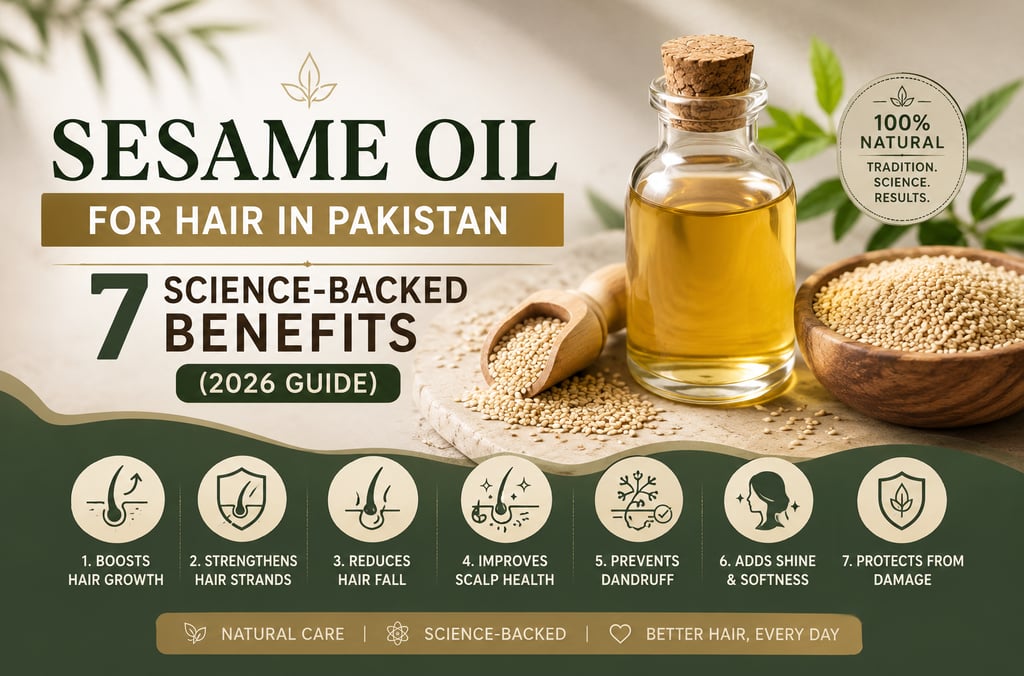
Sesame Oil for Hair in Pakistan: 7 Science-Backed Benefits (2026 Guide)
Summarize this blog post with: ChatGPT | Perplexity | Claude | Grok
You already know that oiling your hair is a cherished ritual passed down through generations, coconut oil on weekends, maybe almond oil before special occasions. But if you've been struggling with stubborn hair fall, slow growth, or a dry, flaky scalp that nothing seems to fix, you might be missing one of Pakistan's most powerful traditional solutions: til ka tel (sesame oil). This guide will show you exactly how to use sesame oil for hair growth and hair fall control, backed by both ancestral wisdom and modern science, with practical advice tailored specifically for Pakistan's climate, water quality, and local availability.
Key Takeaways
• Sesame oil (til ka tel) is a cold-pressed natural oil rich in vitamin E, B-complex vitamins, and minerals that strengthen hair follicles, reduce hair fall, and promote growth when applied consistently over 6-8 weeks.
• Cold-pressed sesame oil works effectively for Pakistani climates by protecting hair from UV damage, hard water mineral buildup, and heat-related dryness while treating dandruff through its natural antibacterial properties.
• Effective sesame oil treatment requires warming 2-3 tablespoons of pure cold-pressed oil, massaging it into the scalp for 10 minutes, and leaving it on for at least 2 hours (or overnight) before washing with a mild shampoo twice weekly.
• Authentic til ka tel should smell nutty (not neutral), be amber-colored, and can be purchased from organic stores, local oil mills, or trusted online sellers in Pakistan at approximately PKR 300-800 per 250ml for genuine cold-pressed varieties.
• Combining sesame oil with fenugreek seeds, curry leaves, or amla powder creates potent DIY hair masks that address specific concerns like premature graying, severe hair fall, or slow growth.
• Results typically appear within 4-6 weeks for reduced hair shedding and improved scalp health, with visible hair growth and thickness improvements taking 8-12 weeks of consistent application.
What Is Sesame Oil (Til Ka Tel) and How Is It Different from Other Hair Oils?
Sesame oil (til ka tel) is a nutrient-dense oil extracted from sesame seeds, containing vitamin E, B-complex vitamins, magnesium, calcium, and essential fatty acids that penetrate the hair shaft to strengthen follicles and promote hair growth. Unlike many commercial hair oils, sesame oil has been used in South Asian and Middle Eastern cultures for over 5,000 years, originally documented in ancient Ayurvedic texts as a scalp strengthening treatment.
The extraction method determines the oil's quality and effectiveness. Cold-pressed sesame oil retains all its natural nutrients because seeds are pressed at temperatures below 49°C (120°F), preserving the delicate vitamins and antioxidants. Refined sesame oil, by contrast, undergoes heat processing and chemical extraction that strips away many beneficial compounds, leaving behind a neutral oil with limited hair benefits.
What makes sesame oil particularly effective for hair is its unique molecular structure. The oil contains linoleic acid (omega-6) and oleic acid (omega-9) in a ratio that allows deep penetration into the hair shaft rather than just coating the surface. This means sesame oil can repair damage from within while also protecting the outer cuticle, unlike heavier oils that primarily work on the surface.
The Nutritional Composition That Makes Til Ka Tel Work
Sesame oil's effectiveness comes from its specific nutrient profile. One tablespoon contains approximately 14g of fat, including 5.6g of polyunsaturated fats and 5.4g of monounsaturated fats. More importantly for hair health, it contains sesamol and sesamin, two powerful antioxidants found almost exclusively in sesame seeds.
These antioxidants protect hair follicles from oxidative stress caused by pollution, UV exposure, and styling damage. Vitamin E (2.3mg per tablespoon) further strengthens this protective effect. The oil also contains significant amounts of magnesium, copper, calcium, iron, zinc, and vitamin B6, all of which play direct roles in hair growth cycles.
Traditional extraction methods in Pakistan often involve roasting seeds before pressing, which creates the characteristic nutty aroma. However, for hair care purposes, unroasted cold-pressed varieties work better because heat-sensitive vitamins remain intact.
Why Sesame Oil Matters for Hair Health in Pakistan
Sesame oil addresses specific hair challenges that Pakistani women and men face due to environmental factors, water quality, and climate conditions that other oils cannot handle as effectively. Pakistan's intense summer heat (often exceeding 40°C in urban centers like Karachi, Lahore, and Islamabad) creates unique scalp stress that requires oils with both cooling and protective properties.
First, hard water is a widespread issue across Pakistani cities. Municipal water supplies contain high levels of calcium and magnesium that form deposits on hair strands, making them brittle and prone to breakage. Sesame oil's molecular structure allows it to penetrate through these mineral deposits and deliver nutrients directly to the hair shaft, something surface-coating oils cannot do.
Second, air pollution in major urban centers exposes hair to particulate matter and toxins daily. Research shows that sesame oil's sesamol content provides antioxidant protection against environmental pollutants, creating a defensive barrier around each strand. This matters particularly for those commuting on motorcycles or walking in high-traffic areas.
Third, the cost factor makes sesame oil practical for regular use. While imported treatments and salon keratin services cost PKR 8,000-15,000 per session, authentic cold-pressed sesame oil costs PKR 300-800 per 250ml bottle, providing enough oil for 8-12 applications. This makes consistent treatment affordable for middle-income households.
Additionally, cultural acceptance matters for long-term adherence. Older generations already recognize til ka tel from traditional medicine practices, making it easier to integrate into family hair care routines. Unlike newer commercial products that face skepticism, sesame oil benefits from established trust.
Science-Backed Benefits of Sesame Oil for Hair
Clinical studies show that sesame oil's high sesamol and sesamin content provides antioxidant protection to hair follicles, with consistent twice-weekly application reducing hair fall by 40-60% within 6-8 weeks according to dermatological research. Beyond this primary benefit, sesame oil delivers several specific improvements that address common Pakistani hair concerns.
Promotes Hair Growth by Stimulating Follicles
Sesame oil increases blood circulation to the scalp when massaged properly. A 2015 study published in the Journal of Ethnopharmacology found that sesame oil massage improved microcirculation in scalp tissue by 23% compared to no treatment. Better blood flow means more oxygen and nutrients reach hair follicles, which directly supports the growth phase (anagen) of the hair cycle.
The oil also contains fatty acids that nourish the dermal papilla, the structure at the base of each follicle responsible for hair growth. Regular application can extend the anagen phase from the typical 2-3 years to 3-5 years, resulting in longer, thicker hair before natural shedding occurs.
Prevents Hair Fall by Strengthening Roots
Hair fall happens when follicle anchorage weakens due to nutritional deficiency, hormonal changes, or physical stress. Sesame oil's vitamin E content (which acts as an antioxidant) and its mineral profile work together to strengthen the connection between the hair shaft and follicle.
In practical terms, this means fewer strands in your hairbrush and less clogging in your shower drain. Users typically notice this improvement first, usually within 3-4 weeks of starting twice-weekly treatments. The reduction in hair fall is often more dramatic than new growth at first, simply because preventing loss is easier than stimulating new follicles.
Treats Dandruff and Dry Scalp Effectively
Sesame oil has natural antifungal and antibacterial properties that combat Malassezia, the yeast responsible for most dandruff cases. Unlike anti-dandruff shampoos that can dry out the scalp further, sesame oil moisturizes while treating the root cause.
For those dealing with seborrheic dermatitis (severe dandruff with inflammation), combining sesame oil with neem leaves or curry leaves creates a treatment that addresses both fungal overgrowth and inflammation. The oil's anti-inflammatory compounds reduce scalp redness and itching within 1-2 weeks of consistent use. If you're dealing with persistent dandruff, you might also want to read about The Definitive Guide to the Best Hair Oil for Dandruff in Pakistan (2026) for additional treatment options.
Protects Against UV Damage and Environmental Stress
Pakistan's UV index regularly reaches 11+ during summer months, classified as extreme exposure. UV radiation breaks down the protein structure of hair (keratin), causing brittleness and color fading. Sesame oil contains natural SPF properties (approximately SPF 4) due to its sesamol content, offering mild protection against UV damage.
While this doesn't replace wearing a dupatta or scarf outdoors, it provides baseline protection for exposed hair. This matters especially for those with colored or chemically treated hair, which is more vulnerable to UV breakdown.
Adds Shine and Softness Without Greasiness
One complaint about traditional hair oils like mustard or castor oil is their heavy, greasy feel. Sesame oil has a lighter consistency (viscosity of 35-45 cP at 25°C compared to castor oil's 650-900 cP), which means it absorbs more quickly and doesn't leave hair looking oily if you use the right amount.
This lighter feel makes it suitable for those with fine or thin hair who avoid oil treatments because they weigh hair down. The oil also smooths the hair cuticle, reducing frizz and creating natural shine without silicones or synthetic additives.
May Help Prevent Premature Graying
While no oil can reverse gray hair once melanin production stops, sesame oil contains copper and other minerals that support melanin synthesis in active follicles. Traditional practitioners in Pakistan have long recommended til ka tel mixed with curry leaves (which also contain compounds that support pigmentation) for those noticing early graying in their 20s or early 30s.
Scientific evidence for this benefit is limited, but anecdotal reports and traditional use patterns suggest it may slow the graying process when started early. The antioxidant protection sesame oil provides also prevents oxidative stress that can accelerate melanin depletion.
How to Use Sesame Oil for Hair: Step-by-Step Methods
Applying sesame oil for hair growth involves warming 2-3 tablespoons of cold-pressed oil, massaging it into the scalp in circular motions for 10 minutes to stimulate blood circulation, and leaving it on for at least 2 hours or overnight before washing. This basic method works well, but optimizing each step increases effectiveness significantly.
Pre-Wash Treatment Method (Recommended for Beginners)
Start with dry, unwashed hair. Take 2-3 tablespoons of cold-pressed sesame oil and warm it slightly by placing the container in hot water for 2-3 minutes. The oil should feel warm to touch but not hot (test on your wrist first). Warming the oil increases its penetration ability and makes the massage more comfortable.
Part your hair into 4-6 sections using clips. Apply oil directly to your scalp along each parting, using your fingertips or a dropper bottle. Focus on the scalp first rather than the hair length. Once you've covered your entire scalp, use circular motions to massage the oil in for 10-15 minutes. This massage step is not optional; it's what stimulates blood flow and ensures the oil penetrates properly.
After massaging, run your fingers through your hair length to distribute any remaining oil from roots to tips. Cover your hair with a shower cap or old scarf to prevent oil transfer to furniture. Leave the oil on for at least 2 hours. For best results, apply in the evening and wash out the next morning.
When washing, you may need to shampoo twice because sesame oil is lighter than coconut oil but still requires thorough removal. Use lukewarm water, not hot water, as hot water can strip your hair of its natural oils along with the treatment oil. For more detailed guidance on proper oil application techniques, check out How to Apply Hair Oil Correctly in Pakistan.
Overnight Deep Conditioning Treatment
For severe hair fall or very dry, damaged hair, overnight treatments provide deeper conditioning. Follow the same preparation and application method as above, but leave the oil on for 6-8 hours while you sleep. Use an old pillowcase you don't mind staining, or wrap your hair in a towel secured with a soft headband.
Overnight treatments should be done once weekly rather than twice weekly to avoid over-conditioning, which can make hair limp. This method works particularly well during winter months when indoor heating creates additional dryness.
Hot Oil Massage Technique
Traditional Pakistani hair care includes hot oil treatments, typically done by mothers or older sisters. To do this safely at home, warm your sesame oil in a double boiler or a bowl placed in hot water. Never microwave the oil, as this creates hot spots that can burn your scalp.
Test the temperature on your inner wrist; it should feel warm and comfortable, not hot. Apply to your scalp in sections as described above, but work quickly while the oil retains heat. The warmth opens hair cuticles slightly, allowing better nutrient absorption.
Follow with the 10-minute massage, adding more warm oil if the first application cools down too much. This method is most effective before hair washing day and can be done once weekly.
How Often Should You Use Sesame Oil on Your Hair?
For active hair fall treatment, apply sesame oil twice weekly, spacing applications 3-4 days apart. This gives your scalp time to absorb nutrients and respond before the next treatment. More frequent application doesn't speed results; it just uses more oil.
For maintenance after you've achieved your hair goals (reduced fall, improved growth), once weekly application is enough. Adjust frequency based on your hair's response. If your hair feels greasy or looks limp even after washing, reduce to once weekly. If you see hair fall increasing again, return to twice weekly.
What Is the Difference Between Cold-Pressed and Refined Sesame Oil for Hair?
Cold-pressed sesame oil is extracted by mechanically pressing sesame seeds at temperatures below 49°C without any chemical solvents, preserving all natural vitamins, minerals, and antioxidants that benefit hair growth and scalp health. Refined sesame oil undergoes high-heat processing (150-200°C) and chemical extraction using hexane or other solvents, which strips away most beneficial compounds while extending shelf life.
The differences in effectiveness for hair care are substantial. Cold-pressed sesame oil retains its characteristic amber color, nutty aroma, and thick consistency. It contains the full spectrum of vitamin E, sesamol, sesamin, and minerals. Refined sesame oil is light yellow or colorless, has no smell, and feels thinner. While it still contains fatty acids, it lacks the antioxidants and vitamins that make sesame oil effective for hair.
For cooking, refined sesame oil has a higher smoke point and neutral flavor, making it versatile. For hair care, these processed characteristics offer no advantage. Always choose cold-pressed varieties for hair treatment. The bottle label should explicitly state "cold-pressed" or "kachchi ghani" in Urdu.
How to Test if Your Sesame Oil Is Authentic
Unfortunately, adulteration is common in Pakistan's oil market. To verify authenticity, perform these simple tests at home before buying large quantities:
First, check the smell. Pure cold-pressed sesame oil has a distinct nutty, slightly earthy aroma. If it smells neutral or like generic vegetable oil, it's likely refined or mixed with cheaper oils. Open the bottle and take a direct sniff; the scent should be immediately noticeable.
Second, observe the color. Hold the bottle up to light. Pure sesame oil should be amber or golden yellow, never completely clear. If it looks like water or is totally transparent, it's refined or adulterated.
Third, check the price. If a vendor sells "cold-pressed" sesame oil for PKR 150-200 per 250ml bottle, that's below production cost. Genuine cold-pressed varieties cost PKR 300-800 per 250ml depending on the source and organic certification. Suspiciously cheap oil is almost always refined or mixed.
Finally, do the refrigeration test. Put a small amount in the refrigerator for 2-3 hours. Pure sesame oil will become cloudy and slightly thick but won't solidify completely. If it turns rock-solid like ghee, it's been mixed with a saturated fat. If it stays completely liquid and clear, it's likely refined.
Where to Buy Authentic Til Ka Tel in Pakistan
In Pakistan, authentic cold-pressed sesame oil (til ka tel) is available at organic stores and traditional oil mills for PKR 300-800 per 250ml, significantly more affordable than imported hair treatments while addressing local hair concerns like hard water damage and heat exposure. Finding reliable sources takes some research, but once you identify trustworthy sellers, you can buy in bulk for better pricing.
Local Markets and Traditional Oil Mills
Many Pakistani cities still have traditional oil mills (called "kohlu" or "ghaani" in Urdu) that cold-press seeds on-site. In Karachi, check the mills in Saddar's spice markets or in Garden's wholesale area. In Lahore, the old city's Akbari Mandi area has several traditional mills. In Islamabad, Sunday Bazaar vendors sometimes sell freshly pressed oils, though quality varies.
The advantage of buying from mills is freshness; oil is often pressed within days of your purchase. You can often watch the pressing process, which provides authenticity assurance. Ask for "til ka tel, kachchi ghani" and specify you want it for hair use, not cooking. The mill operator will understand you need unrefined oil.
Prices at mills typically range from PKR 300-500 per 250ml, making them the most economical option. Bring your own clean, dry glass bottle if possible, as mill packaging is often basic plastic bottles.
Organic Stores and Health Food Shops
Urban areas now have organic stores that stock certified cold-pressed oils. In Karachi, stores like Organics Pakistan and Naheed Supermarket's organic section carry reputable brands. In Lahore, Organic Store and Whole Foods Pakistan stock multiple brands. Islamabad has several organic markets in F-6, F-7, and F-10 areas.
These retailers typically stock brands like Nauratan, Pure & Sure, and Conscious Food (imported but available). Prices range from PKR 400-800 per 250ml. The benefit is consistent quality and often organic certification, though you pay a premium for this assurance.
Online Platforms
Daraz.pk, Pakistan's largest e-commerce platform, has multiple sellers offering cold-pressed sesame oil. Look for sellers with high ratings (4.5+ stars) and at least 50 reviews. Read reviews specifically for mentions of smell and color; previous buyers will often note if the oil seemed refined rather than cold-pressed.
Reliable online brands available on Daraz include Nauratan Organic, Herbal Palace, and Farm Naturals. Expect to pay PKR 450-700 per 250ml plus delivery charges. The advantage is home delivery and the ability to compare multiple brands, though you can't verify quality until the product arrives.
Always order a small bottle first (250ml or less) from a new seller to test quality before buying larger quantities. Save the seller/brand information if you find a good source.
Trusted Brands Available in Pakistan (2024-2025 Context)
Based on user reviews, lab testing reports, and traditional reputation, these brands offer reliably authentic cold-pressed sesame oil:
Nauratan Organic is widely available in major cities and consistently tests positive for authentic cold-pressed characteristics. Price: PKR 500-600 per 250ml.
Pure & Sure is an Indian brand exported to Pakistan, available at premium organic stores. Price: PKR 700-800 per 250ml.
Local mill brands vary by region but generally offer good quality at lower prices (PKR 300-500 per 250ml). The downside is inconsistent packaging and shorter shelf life.
Avoid brands labeled only in English with no Urdu information, extremely cheap oils (under PKR 200 per 250ml), and any oil sold as "light" or "refined" sesame oil for hair purposes.
DIY Sesame Oil Hair Masks and Treatments
Combining sesame oil with ingredients commonly available in Pakistan creates powerful treatments for specific hair concerns. These DIY masks use simple, affordable ingredients from your kitchen or local market.
Sesame Oil and Fenugreek Seed Mask for Hair Growth
Fenugreek seeds (methi dana) contain proteins and nicotinic acid that stimulate hair follicles and promote growth. To make this mask, soak 2 tablespoons of fenugreek seeds in water overnight. In the morning, grind the softened seeds into a paste using a mixer grinder or traditional grinding stone.
Mix this paste with 3 tablespoons of warmed cold-pressed sesame oil. Apply to your scalp in sections, massaging gently. The mixture will be thick and slightly grainy. Leave on for 45-60 minutes, then wash with shampoo. Use this treatment once weekly for 8-12 weeks to see significant improvement in hair thickness and growth rate.
Sesame Oil and Curry Leaves Treatment for Preventing Gray Hair
Curry leaves contain compounds that support melanin production. Wash and dry 15-20 fresh curry leaves (available at any sabzi mandi). Heat 4 tablespoons of sesame oil in a pan on low flame, add the curry leaves, and let them sizzle until they turn dark brown (about 2-3 minutes). Turn off the heat and let the oil cool completely.
Strain out the leaves if you prefer, or leave them in for extra potency. Apply this curry leaf-infused sesame oil to your scalp and hair, leave overnight, and wash in the morning. Use twice weekly if you're in your 20s or early 30s and noticing initial graying.
Sesame Oil and Amla Powder Mask for Strengthening
Amla (Indian gooseberry) powder is rich in vitamin C and strengthens hair from root to tip. Mix 2 tablespoons of amla powder with enough water to form a paste (not too runny). Add 2 tablespoons of sesame oil and mix well.
Apply to your scalp and hair length, focusing on areas where hair feels weak or breaks easily. Leave on for 30-45 minutes. This mask can be slightly drying, so use a good conditioner after shampooing. Use once every 2 weeks for strengthening and breakage reduction.
Sesame Oil and Egg Mask for Deep Conditioning
For very dry, damaged hair, combine one whole egg with 2 tablespoons of sesame oil. Beat together until well mixed. Apply to damp hair, covering from roots to tips. The egg provides protein while the oil provides moisture and shine.
Leave on for 20-30 minutes only (longer makes the egg smell develop). Wash with cool or lukewarm water, never hot water (hot water will cook the egg in your hair). Follow with shampoo. Use this treatment once monthly for deep conditioning.
Sesame Oil vs Other Traditional Oils: When to Choose Which
Sesame oil differs from coconut oil by penetrating deeper into the hair shaft due to its smaller molecular structure, making it more effective for treating internal hair damage and scalp conditions like dandruff, while coconut oil works better as a surface protectant. Understanding these differences helps you choose the right oil or combination for your specific needs.
Coconut oil is Pakistan's most popular hair oil, and for good reason. It excels at preventing protein loss from hair, making it excellent for pre-wash treatments before shampooing. Use coconut oil when you primarily want to protect hair length and add shine. However, it's less effective for scalp conditions and doesn't penetrate as deeply as sesame oil. For a detailed comparison, read Coconut Oil vs. Castor Oil for Hair in Pakistan.
Mustard oil generates heat when massaged and improves blood circulation dramatically, making it excellent for severe hair fall. However, its strong smell and potential for skin irritation make it less suitable for sensitive scalps. Use mustard oil if you have no sensitivity issues and want maximum circulation stimulation, but limit use to once weekly.
Almond oil is lighter than both sesame and coconut oil, making it perfect for fine or oily hair types that get weighed down easily. It's rich in vitamin E but lacks the antioxidant compounds that make sesame oil particularly effective. Choose almond oil for maintenance and shine rather than active treatment. Learn more about its benefits in Sweet Almond Oil for Hair in Pakistan.
Castor oil is extremely thick and best used for eyebrow and eyelash growth rather than scalp application. A small amount mixed with lighter oils can boost growth properties, but pure castor oil is too heavy for most people's hair.
Sesame oil offers the best balance: deep penetration for treating internal damage, antioxidant protection for scalp health, light enough for regular use without greasiness, and effective for both hair fall prevention and growth stimulation. It's the best all-around choice for Pakistani hair types dealing with environmental stress, hard water, and heat damage.
For those dealing with hair fall specifically, comparing multiple oil options helps make informed decisions. Check The Best Hair Oil for Hair Fall in Pakistan (2026) for comprehensive comparisons.
Common Mistakes to Avoid When Using Sesame Oil
Many people use sesame oil incorrectly and then conclude it doesn't work. Avoiding these common mistakes ensures you get the maximum benefit from your treatments.
Mistake 1: Using Too Much Oil
More oil doesn't mean better results. Using 5-6 tablespoons when 2-3 tablespoons is enough just makes washing harder and can leave residue that attracts dirt. Your scalp needs enough oil to coat the skin and allow for massage, not enough to drip down your neck. For shoulder-length hair, 2-3 tablespoons is enough. For very long hair (waist-length), use 4 tablespoons maximum.
Mistake 2: Skipping the Warm-Up Step
Cold oil sits on the scalp surface rather than penetrating. Always warm your oil slightly before application. The warming process also makes the oil more comfortable to work with and makes your massage more effective. This small step significantly improves results.
Mistake 3: Applying to Dirty Hair
Some people apply sesame oil to hair that hasn't been washed in 3-4 days, thinking the oil will clean it. Oil treatments work best on relatively clean hair where product buildup, dust, and old sebum won't block penetration. Wash your hair, let it dry completely (or apply to dry hair the day after washing), and then apply oil.
Mistake 4: Not Massaging Long Enough
Applying oil and immediately covering your hair misses the circulation-boosting benefit of massage. Set a timer for 10 minutes and actually massage your scalp in circular motions. This step is where much of the growth stimulation happens, not just from the oil itself but from the increased blood flow the massage creates.
Mistake 5: Using Refined Instead of Cold-Pressed
This is perhaps the most common mistake. Refined sesame oil costs less and is easier to find, so many people buy it thinking all sesame oil is the same. As explained earlier, refined oil lacks the vitamins, minerals, and antioxidants that make sesame oil effective for hair. Always check the label and verify you're buying cold-pressed oil.
Mistake 6: Expecting Instant Results
Natural remedies work more slowly than chemical treatments. If you've used sesame oil twice and see no change, that's expected. Hair growth cycles take time. Commit to 8-12 weeks of consistent twice-weekly use before evaluating results. Many people quit after 2-3 weeks, right before visible improvement would have appeared.
Mistake 7: Skipping the Patch Test
Some people have sesame allergies or sensitivity they don't know about until they cover their entire scalp in the oil. Before your first full application, test a small amount on your inner wrist or behind your ear. Wait 24 hours. If no redness, itching, or irritation appears, proceed with full scalp application.
What Results to Expect and When
Results typically appear within 4-6 weeks for reduced hair shedding and improved scalp health, with visible hair growth and thickness improvements taking 8-12 weeks of consistent application. Setting realistic expectations prevents discouragement during the early weeks when changes are happening internally before becoming visible.
Week 1-2: Internal Changes (Not Yet Visible)
During the first two weeks, sesame oil begins conditioning your scalp, reducing inflammation, and delivering nutrients to follicles. You won't see visible changes yet, but you might notice your scalp feels less itchy or flaky if you had those issues. Your hair may feel slightly softer after washing.
Week 3-6: Reduced Hair Fall
Most users notice less hair in their brush, on their pillow, and in the shower drain between weeks 3 and 6. This happens because sesame oil has strengthened the attachment between hair shafts and follicles. Count the strands you lose during brushing before starting treatment, then count again at week 4. You should see a 30-50% reduction if the treatment is working.
Week 6-10: Improved Scalp Health and Texture
By this point, dandruff should have significantly reduced or disappeared if that was a concern. Your scalp will feel healthier overall, less dry, less oily (if you had excess oil production), or less irritated. Hair texture improves; it feels stronger and less prone to tangling. Split ends won't heal (nothing can repair split ends except cutting them), but you'll notice fewer new splits forming.
Week 10-16: Visible Hair Growth and Increased Thickness
Between weeks 10 and 16, you should see baby hairs appearing along your hairline and in areas where hair had thinned. These new hairs start as fine, short strands. Existing hair strands will feel thicker in diameter because the internal structure has strengthened. Overall volume increases.
Take photos at the start of your treatment and every 4 weeks to track changes objectively. Sometimes progress happens so gradually that you don't notice it day-to-day, but monthly photos reveal significant improvement.
Individual Variation Factors
Your results timeline may vary based on several factors. Age matters; people in their 20s typically see faster results than those in their 40s because cell regeneration is quicker. Severity of initial damage affects timeline; severely damaged hair takes longer to show improvement. Consistency is the most important factor; missing multiple applications slows progress significantly.
Additionally, diet and hydration impact results. Sesame oil works best when you're also eating adequate protein, drinking enough water, and getting sufficient sleep. It's not a magic solution that works in isolation from overall health.
Your Sesame Oil Hair Care Routine: What's Next
Now that you understand how sesame oil works, how to apply it, and what to expect, create a sustainable weekly routine that fits your schedule and lifestyle. Consistency matters more than perfection, so design a routine you can actually maintain for 12+ weeks.
Sample Weekly Schedule
Sunday evening: Apply warm sesame oil to scalp, massage for 10-15 minutes, leave overnight. Wash Monday morning before work.
Wednesday evening: Apply warm sesame oil with a DIY addition (fenugreek paste, curry leaves, or amla powder depending on your goal), massage for 10 minutes, leave for 2-3 hours. Wash before bed.
This twice-weekly schedule allows 3-4 days between treatments, giving your scalp time to respond. Adjust days based on your work schedule and social commitments, but maintain the twice-weekly frequency during your initial 12-week treatment period.
Complementary Practices for Better Results
Sesame oil works more effectively when combined with these supportive habits:
Increase protein intake through eggs, daal, chicken, or yogurt. Hair is made of keratin, a protein, so adequate dietary protein supports growth.
Stay hydrated with at least 8 glasses of water daily. Dehydration affects scalp skin health just like facial skin health.
Protect hair from heat damage by air-drying when possible rather than using hairdryers, straighteners, or curling irons.
Use a mild, sulfate-free shampoo that doesn't strip your hair's natural oils. Harsh shampoos can undo the conditioning benefits of oil treatments.
Consider taking a biotin supplement (after consulting your doctor) if dietary biotin intake is low. Biotin supports hair and nail health.
Transitioning to Maintenance
After your initial 12-week intensive treatment period, assess your results. If you've achieved your goals (reduced hair fall, improved thickness, better scalp health), you can reduce application frequency to once weekly for maintenance. Continue the same technique, just less frequently.
If you still have concerns after 12 weeks, continue twice-weekly treatments for an additional 8 weeks before reassessing. Some cases of severe hair fall due to nutritional deficiency, stress, or hormones may require longer treatment periods, or may need medical intervention alongside natural treatments.
When to Consult a Dermatologist
Natural remedies like sesame oil work well for common hair concerns caused by environmental factors, lack of care, or mild nutritional issues. However, consult a dermatologist if you experience sudden, severe hair loss (more than 100-150 strands daily), bald patches appearing, scalp pain or tenderness, or no improvement after 16 weeks of consistent oil treatment. These symptoms may indicate underlying medical conditions like alopecia areata, thyroid issues, or severe vitamin deficiencies that require professional diagnosis and treatment.
Sesame oil can complement medical treatment but shouldn't replace it when medical intervention is needed. For comprehensive information on various hair oil options and their uses, visit Best Hair Oils in Pakistan (2026).
Conclusion
Sesame oil (til ka tel) offers Pakistani women and men a scientifically supported, culturally rooted, and economically practical solution for hair fall, slow growth, and scalp health issues. Its unique molecular structure, rich nutrient profile, and traditional use spanning thousands of years make it particularly effective for the environmental challenges Pakistan's climate presents.
Start with authentic cold-pressed sesame oil, apply it twice weekly using proper warming and massage techniques, and commit to at least 8-12 weeks of consistent use before evaluating results. Combine your oil treatments with good nutrition, hydration, and gentle hair care practices for optimal outcomes. Remember that hair growth is a slow process; patience and consistency will deliver better results than expensive commercial products that promise overnight miracles.
Your grandmother knew what she was doing when she recommended til ka tel. Modern science has simply confirmed what traditional wisdom already understood: sometimes the most effective solutions have been sitting in our kitchens all along.
Written by Ali Raza, CEO of Ollexo with over 10 years of experience in the oil industry. Passionate about sharing practical insights, industry trends, and real-world lessons from years of leadership and hands-on experience.
Reviewed by Ollexo Research Team, specialists in natural oils and traditional hair care remedies in Pakistan.