
Best Hair Oil for Hair Growth and Thickness in Pakistan
Discover the best hair oil for hair growth and thickness in Pakistan — ranked by ingredients, formulated for local climate and hard water. 2026 buying guide.
HAIR OIL
Written by Ali Raza CEO, Ollexo. Over 10 years of experience in the oil industry, with direct focus on natural botanical formulations for Pakistani hair and skin conditions.
5/22/202613 min read
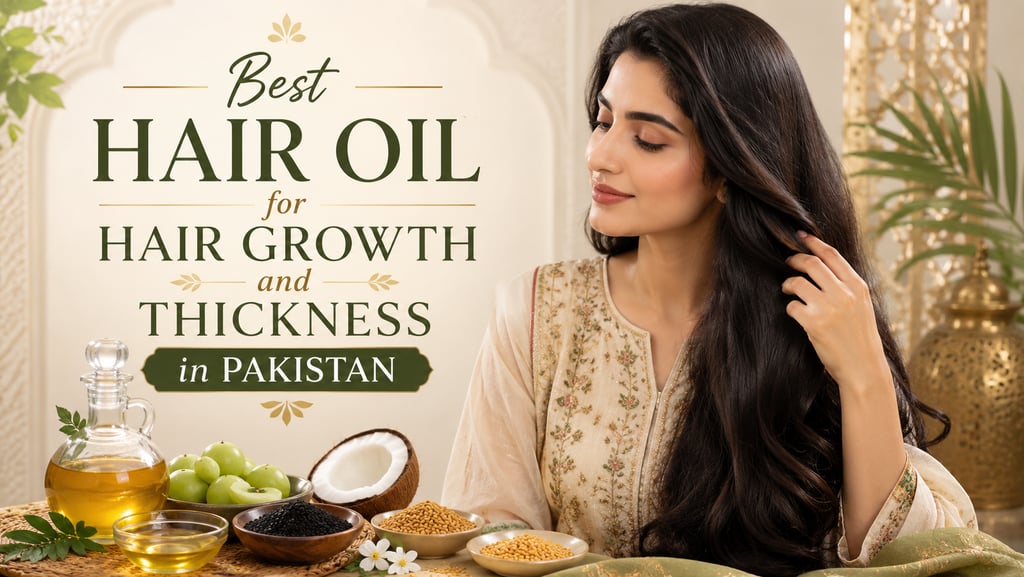
Best Hair Oil for Hair Growth and Thickness in Pakistan: The Complete 2026 Guide
Most Pakistani women grow up oiling their hair as a weekly ritual. The champi is practically a cultural institution. The problem is that oiling with the wrong formula, or the right formula applied incorrectly, does almost nothing for actual growth and density. This guide breaks down which ingredients genuinely rebuild hair thickness for Pakistani hair types, ranks the best available options by what is actually inside the bottle, and explains how to use them for results within weeks.
Key Takeaways
Hair growth oils work through two mechanisms: stimulating blood flow at the scalp to wake dormant follicles, and coating existing strands to reduce breakage and add visible volume.
Pakistani hair faces specific challenges — hard water mineral buildup, seasonal heat and humidity, and common nutritional gaps — that make ingredient choice more important than it is for most global audiences.
Ingredients with the strongest evidence for hair density include kalonji (black seed) oil, rosemary oil, castor oil, fenugreek, and amla; a good growth oil combines several of these rather than relying on a single active.
Applying oil without scalp massage significantly reduces effectiveness; the mechanical stimulation of massage improves follicle blood flow on its own, independent of the oil itself.
Results from a consistent hair oil routine typically appear within 4 to 8 weeks for texture and thickness, with meaningful length gains visible after 3 to 6 months.
Price does not determine quality in Pakistani hair oils; a well-formulated local product with proven actives will outperform an expensive imported oil that was not designed for this climate.
What Is Hair Growth Oil and How Does It Actually Make Hair Thicker?
Hair growth oil is a scalp and strand treatment formulated with active botanical ingredients that stimulate follicle circulation, reduce DHT activity, and strengthen the hair shaft to improve both growth rate and visible thickness over time. That definition matters because it separates genuine growth oils from basic conditioning oils, which coat the strand surface without touching the scalp at all.
Two mechanisms drive results. The first is scalp stimulation: certain compounds in botanical oils increase blood flow to follicles, deliver nutrients to the dermal papilla, and in some cases inhibit the hormone responsible for miniaturizing follicles over time. The second is strand protection: oils with a small molecular structure penetrate the cortex and reduce protein loss, while heavier oils seal the cuticle and cut mechanical breakage. Thickness comes from both. Growth at the root and protection of the length are not interchangeable — you need both.
A conditioning oil, by contrast, works on the shaft only. It makes hair feel soft and look shiny. That is genuinely useful for detangling and frizz, but it will not shift hair density or growth rate. If you have been using a conditioning oil and expecting thicker growth, that is the gap this guide addresses.
What Is the Difference Between Hair Growth Oil and Regular Conditioning Oil?
The difference is the target. Conditioning oils improve the texture of hair you already have. Growth oils act on the scalp to produce more of it. A conditioning oil applied to the scalp is mostly wasted. A growth oil applied only to the length misses its purpose entirely. Most generic "hair oil" products in Pakistan are conditioning formulas sold with growth claims on the label.
Why Does Pakistani Hair Thin Faster and Need a Specialized Growth Oil?
Pakistani hair thins faster than it should for several environmental and lifestyle reasons that generic international hair content almost never addresses.
Hard water mineral buildup is the first factor. Most Pakistani cities, including Karachi, Lahore, and Islamabad, have water with high calcium and magnesium content. Hard water leaves mineral deposits on the scalp that block hair follicles and contribute to progressive thinning when not treated with chelating or oil-based routines. These deposits also make shampoo lather poorly, which leads to over-washing, increased scalp dryness, and more breakage. For a practical hair fall solution for Pakistani women, addressing the hard water factor is as important as choosing the right oil.
Seasonal extremes add pressure from both ends. Summers bring humidity and heat that cause scalp inflammation and excess sebum production, clogging follicles with oil and debris. Winters strip moisture from both the scalp and strand, increasing brittleness and breakage. Neither condition is common in the European and North American contexts where most mainstream hair advice originates, which is why that advice so often fails Pakistani users.
Nutritional deficiencies play a direct role in follicle output. Iron, zinc, and biotin shortfalls are common among Pakistani women, particularly in the postpartum period. Hair is metabolically low priority; when the body runs short on micronutrients, follicles slow down before almost any other system. A 2021 cross-sectional study published in the Pakistan Journal of Medical Sciences found iron deficiency anemia in a significant portion of women in the reproductive age group — a deficiency linked directly to telogen effluvium, the medical term for stress or deficiency-related shedding. Combined with hard water and seasonal heat, thinning becomes predictable.
Urban pollution, heat tools, and chemical treatments among younger urban women round out the picture. The champi tradition is worth preserving. The oil doing the champi needs to be built for these specific conditions, not imported from a context that has none of them.
Which Ingredients in Hair Oil Are Proven to Increase Hair Density?
A good growth oil for Pakistan contains more than one proven active, in meaningful concentrations rather than token inclusions. These are the ingredients with the strongest evidence.
Kalonji (black seed) oil is the most relevant starting point for Pakistani hair. Kalonji oil for hair growth draws its benefit from a compound called thymoquinone, found in Nigella sativa. Thymoquinone inhibits 5-alpha reductase, the enzyme that converts testosterone into DHT, the hormone responsible for miniaturizing hair follicles over time. A 2014 study in the Journal of Dermatology and Dermatologic Surgery found that a kalonji-based preparation reduced hair loss compared to a placebo group over a treatment period. Kalonji has deep cultural and Ayurvedic familiarity in Pakistan, having been used medicinally for centuries.
Rosemary oil now has genuine clinical backing. A 2015 study published in the Journal of Cosmetic Dermatology found that a rosemary oil preparation was as effective as 2% minoxidil in improving hair count after six months of consistent scalp application, with less scalp irritation reported in the rosemary group than the minoxidil group. Rosemary oil for hair fall works by improving scalp microcirculation, delivering more nutrients to the follicle base.
Castor oil contains ricinoleic acid, which stimulates prostaglandin receptors in the scalp and increases blood flow to follicles. Castor oil for thick hair is among the most common searches among Pakistani women looking for volume, and the evidence supports the use, provided the oil reaches the scalp rather than just coating the hair length.
Fenugreek (methi) contains protein, lecithin, and nicotinic acid. Fenugreek oil for hair strength works because lecithin moisturizes and strengthens each strand from within, while nicotinic acid dilates scalp capillaries to improve nutrient delivery. It is especially useful for fine hair that breaks before it reaches any significant length.
Amla provides vitamin C and a dense antioxidant load that fights oxidative stress at the follicle level. Amla oil for hair density is a foundational ingredient in Ayurvedic hair formulations, and the antioxidant effect matters in polluted Pakistani urban environments where free radical damage accelerates follicle aging.
Bhringraj is among the most respected herbs in Ayurvedic hair treatment. Research suggests it extends the anagen (active growth) phase of the hair cycle, meaning follicles spend more time producing hair before entering the resting phase. For thinning hair, that extended growth window adds real density over months of consistent use.
Which Hair Oil Is Best for Hair Growth and Thickness in Pakistan?
These are the best options for Pakistani hair in 2026, ranked by formulation quality, ingredient evidence, and suitability for local climate and water conditions.
1. Ollexo Hair Growth And Nourishing Oil — Best Overall
Ollexo Hair Growth And Nourishing Oil is the top recommendation because it combines kalonji, rosemary, castor, fenugreek, amla, and bhringraj in a single formulation designed for Pakistani hair. Most competing options in this price range use one or two actives and fill the rest of the bottle with mineral oil or cheap fragrance. This formulation addresses both scalp stimulation and strand protection together, which is the only combination that produces measurable density improvement over time.
Available at ollexo.pk in three sizes: 30ml at Rs 790, 50ml at Rs 1,190, and 100ml at Rs 1,990. The 100ml is the best value for a consistent three-month growth trial. The oil is also available on Daraz. Best suited to women with thinning hair, slow growth, postpartum shedding, or damage from heat tools. For men dealing with scalp health and early thinning, men's hair growth oil Pakistan covers how the same formulation applies to male scalp concerns.
If dandruff accompanies thinning, the Ollexo Hair Growth And Anti Dandruff Oil — available in a 10ml starter size at Rs 490 — is the better starting point. A separate overview is at best oil for dandruff and hair growth.
2. Pure Kalonji (Black Seed) Oil — Best Single-Ingredient Option
Cold pressed, unrefined kalonji oil is the strongest single-ingredient choice for DHT-related thinning. It works best massaged directly into the scalp rather than applied to the length. Available from pansari shops and online sellers throughout Pakistan. It is thick with a sharp smell, so many women mix it into a lighter carrier before use.
3. Pure Castor Oil — Best for Adding Visual Volume
Unrefined castor oil is widely available in Pakistan and inexpensive. Its value is in scalp circulation stimulation and in coating fine strands to add visible thickness and body. It is too thick for most hair types to use alone; mixing one part castor with two parts of a lighter carrier oil makes application practical.
4. Rosemary-Infused Carrier Oil — Best Evidence-Based DIY Option
Rosemary essential oil diluted in a carrier at a 2% concentration (roughly 12 drops per 30ml) replicates the preparation used in clinical hair count studies. This is a practical option for women who prefer a lighter oil base. For a full DIY hair growth oil recipe at home, including dilution ratios and blending steps, the complete guide covers the process.
5. Fenugreek-Infused Oil — Best for Fine, Breaking Hair
Fenugreek-infused oil targets hair that is thin and prone to breakage rather than hair that is slow to grow from the root. Soak fenugreek seeds in warm coconut or sesame oil overnight, strain, and apply to the scalp. Noticeable strand strengthening typically shows within a few weeks of weekly application.
6. Amla Oil — Best for Scalp Antioxidant Support
Amla oil addresses oxidative damage and maintains a healthy scalp environment. It is most effective as a supporting oil in a blended routine rather than a standalone growth treatment, and it pairs well with kalonji or rosemary.
7. Bhringraj Oil — Best for Extending the Growth Phase
Available through Ayurvedic suppliers and some pansari shops across Pakistan. Best used as a weekly scalp treatment rather than a daily application, given its strong herbal scent and the concentration needed for the anagen-extension effect.
How Should You Apply Hair Growth Oil for Maximum Results?
Hair density oil works most effectively when applied directly to the scalp and massaged in circular motions for at least four minutes, because the mechanical stimulation independently increases follicle blood flow regardless of the specific oil used. The massage is not optional. Oil left sitting on the scalp without massage is essentially a conditioning treatment, not a growth treatment.
Part the hair into four or five sections before applying. Use a dropper or fingertip to place oil directly on the scalp rather than pouring it onto the hair length. Massage with the pads of your fingers in small circular movements, working from the hairline toward the crown. Apply firm but gentle pressure throughout. Four minutes is the minimum; eight minutes is measurably more effective.
On timing, an overnight hair oiling guide covers the full approach, but the short version is that six to eight hours of contact time produces the best growth-oriented absorption. If overnight oiling is not practical, a prewash application of 30 to 45 minutes still delivers meaningful scalp penetration. Never apply oil to an already oily or dirty scalp — the existing buildup blocks the surface and prevents absorption of the active compounds.
A warm towel wrapped around the head for ten minutes after application opens scalp pores and genuinely improves oil penetration. This is the modern version of the champi heat technique.
For essential oils like rosemary, always dilute before scalp application. The 2% concentration used in clinical studies equals about 12 drops of essential oil per 30ml of carrier. Undiluted essential oil on the scalp causes irritation and can worsen the problem.
How Many Times a Week Should You Oil Your Hair for Growth?
The detailed answer to this question, including adjustments for different scalp types, is in the how often should you oil your hair guide. The short answer for growth purposes is two to three times per week. Daily oiling does not accelerate growth and often causes buildup that blocks the follicles you are trying to stimulate.
For dry hair types and those dealing with hair oiling for dry and frizzy hair, three times weekly is appropriate without buildup concerns. For oily scalp types, twice weekly is enough. Pay attention to how quickly your scalp builds up between wash days and adjust from there.
What Mistakes Stop Hair Oil from Growing Your Hair?
Four mistakes account for most cases where a good oil produces no visible results.
Applying to a dirty scalp blocks absorption entirely. Existing sebum, pollution residue, and product buildup sit on the scalp surface and prevent active compounds from reaching the follicle. Apply oil to a clean or lightly soiled scalp, not after several days without washing.
Skipping scalp massage turns a growth treatment into a conditioning treatment. Oil alone does not stimulate blood flow to follicles. The physical pressure of massage does, and the oil amplifies the benefit by reducing friction and delivering nutrients during that stimulation.
Using too much oil causes buildup that clogs follicles. Two to three milliliters is enough for a full scalp application on most hair types. More than that, you are washing the excess down the drain and leaving residue on the scalp.
Using the wrong oil base for hard water is a Pakistan-specific problem that most guides miss entirely. Mineral oil and heavy silicone-based formulations can bind with the calcium and magnesium in hard water and form stubborn deposits on the scalp. This is one reason botanical oil blends consistently outperform mineral-oil-based formulations for Pakistani users over time.
How Long Does It Take for Hair Oil to Visibly Increase Hair Volume?
Visible thickness improvement typically appears within 4 to 8 weeks of consistent use, with significant length gains showing after 3 to 6 months. The timeline difference comes from understanding how the hair growth cycle actually works.
Hair grows in three phases: anagen (active growth, lasting 2 to 6 years), catagen (transition, 2 to 3 weeks), and telogen (rest, roughly 3 months). At any given time, around 85 to 90% of your hair is in anagen, with the remainder in catagen or telogen. When you start a growth routine, you are not immediately generating new hair. You are improving the follicle environment for the hair already in anagen and reducing the time telogen follicles stay dormant.
The 4 to 8 week window reflects reduced breakage along the length and early improvement in strand diameter. The 3 to 6 month window reflects new growth from follicles that had been dormant or producing miniaturized hair. Both timelines require consistent application — two to three times per week with proper scalp massage — not occasional use.
Buying Guide: How to Choose the Right Hair Growth Oil in Pakistan
Read the ingredient list before buying anything. A genuine growth oil lists botanical actives within the first five ingredients. If the first two ingredients are mineral oil (paraffinum liquidum) and fragrance, the product is a conditioning oil with growth marketing, not a growth treatment.
Avoid mineral oil as a primary base if hair density is your goal. It sits on the strand surface without penetrating the scalp and contributes to buildup in hard water conditions. It is not harmful in small amounts as part of a blend, but it should not anchor a formula sold for growth.
Concentration of actives matters. A product that lists kalonji as its eighth ingredient, after seven non-active fillers, contains a token amount of kalonji. The first five ingredients by weight determine what a formula actually does.
Where to buy: ollexo.pk ships nationwide, and the range is also available on Daraz. For pure single-ingredient oils like kalonji or castor, pansari shops and kiryana stores remain a reliable and inexpensive source. Confirm that any single-ingredient oil is unrefined, not the refined version that has had active compounds removed in processing.
Price tiers in 2026: Entry-level growth oils in Pakistan range from Rs 400 to Rs 800 for 30 to 50ml. Mid-range, which includes the Ollexo range, sits between Rs 800 and Rs 2,000 for 50 to 100ml. Anything above Rs 2,500 for a local product is unlikely to offer proportionally better results. Imported premium oils at Rs 4,000 and above are rarely formulated for Pakistan's hard water and climate conditions, and price does not substitute for formulation relevance.
What to Do Next: Building a Hair Growth Routine Around Your Oil
An oil does more when the rest of the routine supports it. Switch to a shampoo without sulfates; sulfates strip the scalp of its natural lipid barrier and partially undo what the oil does between wash days. If your hair breaks before it reaches any length, add a protein treatment once every two to three weeks to rebuild strand integrity.
Address diet before buying supplements. Biotin, iron, and zinc are the three deficiencies most commonly linked to hair thinning in Pakistani women. Iron-rich foods (red meat, lentils, spinach) and zinc sources (pumpkin seeds, legumes) matter more than any supplement marketed specifically for hair. If you suspect iron deficiency, get a serum ferritin test before supplementing, because over-supplementing iron carries its own risks.
Sleep and stress both affect the hair cycle through a concrete mechanism. Cortisol pushes follicles from anagen into telogen prematurely. Consistent sleep reduces cortisol enough to noticeably slow stress-related shedding over a few months of maintenance.
For readers who want to build a more personalized approach, a DIY hair growth oil recipe at home covers how to blend a custom formula around your specific hair concerns using the actives discussed in this guide.
Which oil is best for hair growth and thickness?
A rosemary + castor style approach is the most practical answer — one supports scalp circulation, the other helps reduce breakage so hair looks thicker. This guide’s ranked picks follow that logic for Pakistani hard water and climate.
Does hair oil actually make hair thicker?
It won’t create brand-new follicles, but it can improve scalp conditions and cut breakage so existing hair looks denser over 8–12 weeks — the same timeline covered above.
Castor or coconut — which is better for thickness?
Castor is usually better when thickness/root support is the goal; coconut is stronger for shaft protection and breakage. Many routines use castor on the scalp and a lighter oil on lengths.
Related guides
Conclusion
Hair density is recoverable. The follicle biology is more forgiving than thinning hair feels in the moment. The right growth oil, applied with scalp massage at least twice a week, supported by basic nutritional and lifestyle consistency, produces measurable results within weeks for most people.
Ollexo Hair Growth And Nourishing Oil remains the clearest recommendation for Pakistani hair because it brings together the most evidence-backed actives in a single formulation built for local conditions. Available at ollexo.pk in 30ml (Rs 790), 50ml (Rs 1,190), and 100ml (Rs 1,990), and on Daraz.
Start with the 100ml for a full three-month trial. Give it the consistency the hair cycle requires. The results follow.