
Kalonji (Black Seed) Oil for Hair in Pakistan
Kalonji oil for hair growth in Pakistan: proven benefits, step by step application methods, realistic results timeline, and the best products to buy in 2026.
HAIR OIL
Written by Ali Raza the CEO of a Pakistani natural oils brand with over ten years of experience in the oil industry. He writes about practical hair care, ingredient science, and the intersection of traditional South Asian remedies with modern research.
5/5/202615 min read

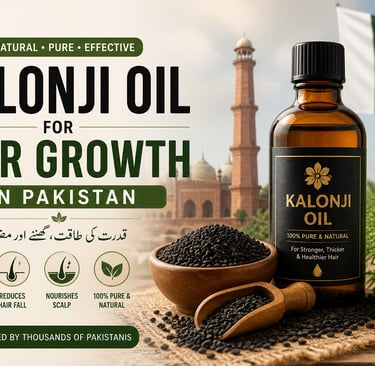
Kalonji Oil for Hair in Pakistan: The Complete Guide to Black Seed Oil Benefits, Usage, and Real Results
You've probably grown up hearing that kalonji is good for everything. When it comes to your hair, that reputation is well earned. But most people either use it the wrong way, buy a diluted product, or give up before it has a chance to work. Here’s how kalonji oil helps hair, which methods actually work, and how to build a routine for Pakistani hair.
Key Takeaways
Kalonji oil is extracted from Nigella sativa seeds and contains thymoquinone, a compound studied for its ability to reduce hair fall and improve scalp circulation.
Consistent application two to three times per week for at least eight to twelve weeks is required before significant hair growth becomes visible. Follicle stimulation is a slow biological process.
Pakistani hair faces specific stressors including hard water, heat exposure, and dust. Kalonji oil's antimicrobial and anti-inflammatory properties are well suited to these conditions.
Kalonji oil should always be diluted in a carrier oil such as coconut, castor, or olive oil before scalp application. Undiluted use can cause irritation in sensitive individuals.
Not all kalonji oils sold in Pakistan are cold pressed or pure. Choosing a quality verified product makes a real difference in results.
Nigella sativa has been used in South Asian and Middle Eastern hair traditions for centuries, and modern dermatological research increasingly supports its role in managing alopecia and scalp infections.
Visible hair growth from kalonji oil typically appears between the eighth and twelfth week of consistent use. Patience matters more than the quantity applied.
What Is Kalonji Oil and Why Has It Been Used for Hair for Centuries?
Kalonji oil is a cold pressed or infused oil derived from the seeds of Nigella sativa, a flowering plant native to Southwest Asia and the Mediterranean, and it has been used in traditional medicine for over two thousand years. In Pakistan and across South Asia, these seeds are called kalonji and the oil is referred to as kalonji ka tel. In Arabic tradition, it is known as habbatus sauda, and a famous hadith attributed to the Prophet Muhammad (PBUH) states that black seed is a cure for every disease except death. That single reference has kept kalonji rooted in Muslim households across the world for centuries.
The oil itself comes in two forms. Cold pressed kalonji oil is extracted by mechanically pressing the seeds without heat, which preserves the full concentration of active compounds. Kalonji infused oil is made by steeping the seeds in a carrier oil like coconut or olive oil over heat, which produces a milder product with lower thymoquinone concentration. For hair purposes, cold pressed is always the stronger choice, though infused oils are gentler for sensitive scalps.
What makes kalonji oil genuinely interesting is not tradition alone. Thymoquinone, the primary active compound, has been the subject of peer reviewed research for its anti-inflammatory, antifungal, and antioxidant properties. A 2014 study published in the Journal of Dermatology and Dermatologic Surgery found that a thymoquinone based formulation significantly reduced hair loss in participants with telogen effluvium compared to a placebo group. That is not a small claim. It is one of the reasons kalonji has moved from grandmothers' kitchens into dermatology conversations.
Why Does Pakistani Hair Need Kalonji Oil More Than Most?
Pakistani hair faces a combination of environmental and lifestyle stressors that accelerate damage faster than most people realize. Hard water is the first problem. Cities like Karachi, Lahore, and Islamabad have high mineral content in tap water, and those minerals (primarily calcium and magnesium) coat the hair shaft over time, causing dryness, brittleness, and clogged follicles. Research from the International Journal of Trichology confirms that hard water significantly increases hair breakage compared to soft water. For people washing their hair in mineral heavy water daily, no amount of conditioning helps unless the scalp itself is treated.
Heat and dust compound the problem. Pakistan's summer temperatures regularly exceed 40°C in Punjab and Sindh, and exposure to that level of ambient heat weakens the hair protein structure from the outside in. Dust pollution, particularly in dense urban areas, settles into scalp pores and triggers low grade inflammation. That inflammation is one of the leading causes of early stage hair thinning in otherwise healthy adults.
Kalonji oil addresses these stressors directly. Its antimicrobial properties fight the bacteria and fungi that thrive in a dust clogged scalp. Its anti-inflammatory thymoquinone reduces the scalp inflammation that slows follicle activity. And its fatty acid content, including linoleic acid and oleic acid, creates a protective layer on the hair shaft that partially offsets hard water damage. If you are in Pakistan and dealing with hair fall, using hair oil for thinning hair that contains kalonji is one of the more logical moves you can make.
What Does Kalonji Oil Actually Do for Hair Growth and Hair Fall?
Kalonji oil reduces hair fall by targeting scalp inflammation and follicle miniaturization, two of the most common mechanisms behind non genetic hair loss. Below is what the research and traditional use actually support.
Reduces Hair Fall and Strengthens Follicles
Thymoquinone inhibits prostaglandin D2, a compound that has been linked in multiple studies to follicle shrinkage and the early stages of androgenetic alopecia. When prostaglandin D2 levels are elevated in the scalp, follicles gradually stop producing full length hairs. Kalonji oil applied to the scalp reduces this compound locally, which allows follicles to maintain their size and output. A 2021 review in Phytomedicine described thymoquinone as having "significant antiproliferative and anti-inflammatory activity at the follicular level." In plain terms: it helps follicles stay active longer.
Stimulates Hair Growth Through Improved Circulation
Kalonji oil contains nigellone, a compound that acts as a mild vasodilator when absorbed through the skin. Better scalp circulation means more oxygen and nutrients reaching the hair root. This is the same mechanism behind rosemary oil's growing reputation in hair care research. You can read more about how circulation affects growth in this guide on rosemary oil for hair growth. The difference is that kalonji oil adds antimicrobial protection that rosemary alone does not provide.
Fights Dandruff and Scalp Infections
Kalonji oil has documented antifungal activity against Malassezia, the yeast responsible for the majority of dandruff cases in adults. A 2013 study in Mycoses found that thymoquinone exhibited significant inhibitory activity against multiple Candida and Malassezia strains. For Pakistani scalps dealing with year round humidity combined with heat, this antifungal effect is practically useful. People who have tried multiple shampoos for dandruff without lasting results often find that treating the scalp directly with an anti-dandruff hair oil Pakistan that contains kalonji produces more consistent improvement.
Conditions Dry and Brittle Hair
Beyond the scalp, kalonji oil's fatty acids coat the outer layer of the hair shaft, reducing moisture loss and adding a visible sheen to dry hair. This effect is noticeable within the first two or three applications, which is why many people feel the oil is "working" early on, even though the real follicle level benefits take much longer.
May Help with Premature Greying
Some traditional accounts and animal model studies suggest that thymoquinone has antioxidant effects that protect melanocytes, the cells responsible for hair pigmentation. The human research here is limited, but the antioxidant mechanism is real. It would be an overstatement to call kalonji oil a proven greying remedy, but the biological rationale is there.
Balances Scalp Oil Production
An imbalanced sebum production either too dry or too oily accelerates hair problems in both directions. Kalonji oil's anti-inflammatory action helps normalize the sebaceous glands over consistent use, leading to a scalp that is neither flaking from dryness nor clogged from excess oil within eight to ten weeks of regular application.
How Should You Apply Kalonji Oil for Maximum Hair Growth Results?
Kalonji oil should never be applied undiluted directly to the scalp in large quantities. The concentrated thymoquinone content can cause contact dermatitis in people with sensitive skin. Always dilute it in a carrier oil at a ratio of roughly one part kalonji to four parts carrier oil for your first few applications, then adjust based on how your scalp responds.
Direct Scalp Massage (Standard Method)
Mix one teaspoon of cold pressed kalonji oil with four teaspoons of coconut oil. Warm the blend slightly, then section your hair and apply directly to the scalp using your fingertips or a dropper. Massage for five to seven minutes in small circular motions. Leave it on for at least two hours, or overnight for deeper absorption. Wash out with a gentle shampoo. This method works well as a best hair oils for hair growth in Pakistan baseline routine two to three times weekly.
Kalonji and Castor Oil Blend (For Growth Stimulation)
Mix equal parts kalonji oil and castor oil for hair growth, then add a few drops of peppermint essential oil if available. Castor oil's ricinoleic acid content increases scalp prostaglandin E2 levels, which promotes hair growth, while kalonji suppresses the damaging prostaglandin D2. Together they create a complementary effect. Apply this blend directly to the scalp, focusing on thinning areas, and leave it for three to four hours before washing.
Kalonji and Olive Oil Blend (For Damaged or Colour Treated Hair)
Combine one teaspoon of kalonji oil with five teaspoons of olive oil. Olive oil's squalene content penetrates the hair shaft and reduces protein loss during washing. This blend is better suited for people whose hair is brittle, heat damaged, or chemically treated, rather than for people whose primary concern is growth stimulation. You can also add a teaspoon of sweet almond oil for hair to this blend for extra softness.
DIY Kalonji Hair Mask
Mix two teaspoons of kalonji oil with two tablespoons of plain yoghurt and one egg yolk. Apply this mask from root to tip, cover with a shower cap, and leave for thirty minutes before washing thoroughly. The protein in egg yolk temporarily bonds to damaged hair structure, while the yoghurt's lactic acid gently exfoliates dead scalp cells. Use this mask once a week, not more.
Frequency guideline: Two to three scalp oil applications per week, one hair mask per week. More is not better. Overuse of any oil can block follicles rather than nourish them.
What Are the Best Kalonji Oil Blends for Different Hair Problems in Pakistan?
Different hair concerns call for different formulations. The table below summarizes which blends work best for specific problems.
Hair Problem Primary Carrier Oil Kalonji Ratio Frequency General hair fall Coconut oil 1 : 4 3x per week Stimulating new growth Castor oil 1 : 1 2x per week Dry or damaged hair Olive oil 1 : 5 2x per week Dandruff and scalp infections Coconut oil + tea tree 1 : 4 with 3 drops tea tree 3x per week Premature greying Amla oil 1 : 3 2x per week Fine or thinning hair Castor and almond oil blend 1 : 2 : 2 2x per week
For dandruff specifically, the combination of kalonji and tea tree is more effective than either alone because tea tree provides immediate antifungal action while kalonji addresses the underlying scalp inflammation driving the fungal overgrowth. If dandruff is your main concern, also look at a dedicated anti-dandruff hair oil Pakistan formulated for Pakistani scalp conditions.
How Long Does Kalonji Oil Take to Show Results on Hair?
Consistent use of kalonji oil two to three times per week for a minimum of eight to twelve weeks is required before significant hair growth results become visible, because follicle stimulation is a gradual biological process. This is not a disclaimer meant to lower expectations. It is just how hair biology works.
Here is a realistic timeline based on consistent, correct use:
Weeks 1 to 2: The scalp feels less itchy. Flaking from dandruff reduces noticeably. The hair feels more moisturised after washing. No visible growth changes yet.
Month 1: Hair shedding during washing and brushing decreases. You may notice fewer hairs on your pillow or in the shower drain. This is the most measurable early sign that the follicles are stabilising.
Months 2 to 3: Short baby hairs appear along the hairline and at the crown. These are new growth hairs, not breakage. Their presence confirms that dormant follicles are reactivating.
Months 3 to 6: Hair feels noticeably thicker in density. Existing hair strands are stronger and break less during combing. Length increases become visible if you had significant prior hair fall.
The most common reason people see no results is that they quit at week three or four, right before the follicle level changes become visible. The second most common reason is inconsistent application. Missing two weeks and then double oiling does not compensate for the missed sessions. Follicle stimulation requires steady input over time.
Is Kalonji Oil Safe for Daily Use on Hair and Scalp?
Kalonji oil is not recommended for daily scalp application, and daily use can actually be counterproductive. The oil can accumulate on the scalp surface and clog follicle openings if not fully washed out between applications. Two to three times per week is the evidence supported sweet spot for scalp oiling with any heavier oil, including kalonji.
Patch testing is mandatory before first use. Apply a small amount of diluted kalonji oil to the inside of your wrist or behind your ear and wait twenty four hours. If there is no redness, itching, or swelling, proceed with scalp application. Thymoquinone is biologically active, and a small percentage of people are sensitive to it even in diluted form.
Kalonji oil is not recommended during pregnancy without medical consultation. Nigella sativa has historically been used to stimulate uterine contractions in traditional medicine, and while topical scalp use involves minimal systemic absorption, the precaution is worth taking seriously.
Both men and women can use kalonji oil for hair loss, and the mechanism is the same regardless of gender. Men experiencing early stage androgenetic alopecia may find it particularly useful as a complementary treatment alongside medical options, since thymoquinone's ability to suppress follicle damaging prostaglandins is relevant to male pattern hair loss. For women dealing with post pregnancy shedding or hormonally triggered hair fall, kalonji oil's anti-inflammatory properties provide meaningful scalp support.
Which Kalonji Oil Products Are Best to Buy in Pakistan in 2026?
The kalonji oil market in Pakistan has grown significantly over the last two years, which is both good and bad news. More options mean more competition and generally lower prices. But it also means more adulterated products reaching shelves and online marketplaces. Here is what to look for and where to buy.
What to Check Before Buying
Cold pressed label: This is non negotiable for therapeutic use. Heat extracted or solvent extracted oils lose a significant portion of their thymoquinone content during processing.
Colour and smell: Pure kalonji oil is dark amber to golden brown and has a sharp, slightly bitter scent. If the oil you receive is pale yellow with no discernible smell, it has been heavily diluted.
Packaging: Light degrades thymoquinone. Look for dark glass bottles. Transparent plastic bottles are a red flag for shelf stability.
Certifications: Organic certification from a recognized body adds credibility. Some Pakistani brands now display ISO or GMP certifications on their packaging.
Where to Buy in Pakistan
Daraz is the most accessible platform and carries a wide range of kalonji oil brands. The advantage is price comparison and buyer reviews. The disadvantage is that counterfeit listings are present. Check seller ratings and look for brands that list a verifiable physical address in Pakistan. You can buy kalonji hair oil on Daraz from verified sellers, but always read reviews specifically mentioning the scent and colour of the oil received.
Naheed Pharmacy and Imtiaz Super Store stock kalonji oil in their herbal and natural products sections. Buying from a physical pharmacy reduces the counterfeiting risk significantly because these chains have supplier vetting processes.
Direct from brand websites is the most reliable option. Established Pakistani natural oil brands now run their own online stores with guaranteed authenticity and return policies.
What Mistakes Are People Making When Using Kalonji Oil for Hair?
Most people who try kalonji oil and report no results made at least one of the following mistakes.
Applying it undiluted. Pure kalonji oil is potent. Applying it directly without a carrier oil often causes scalp tingling, redness, or contact dermatitis, which leads people to conclude the oil does not suit them when in fact they just needed to dilute it.
Applying to a dirty scalp. Oil layered over product buildup, sebum, and environmental dust cannot penetrate to the follicle level. Always apply kalonji oil to a clean, towel dried scalp or one that was washed the night before. A clean scalp means the oil actually reaches where it needs to go.
Inconsistent use. Using kalonji oil three times one week and then skipping the next two weeks produces no cumulative benefit. The follicle level changes that lead to reduced hair fall require sustained, repeated exposure to the active compounds over weeks, not sessions.
Expecting results in days. If you have had significant hair fall for six months, kalonji oil will not reverse it in a week. The biological mechanism requires time. People who expect dramatic results in seven to ten days will always be disappointed, not because the oil does not work, but because they have unrealistic expectations.
Buying adulterated oil. This is probably the most common problem in Pakistan specifically. An oil that is 90% vegetable oil with a drop of kalonji extract will not produce the results that a genuine cold pressed product would. Spending a little more on a verified product is almost always worth it.
What Science Says About Nigella Sativa and Hair Follicle Stimulation
Nigella sativa has been documented in Islamic tradition as a remedy for every disease except death, and modern dermatological research increasingly supports its topical application for androgenetic alopecia and scalp conditions caused by fungal or bacterial infections. The science is not fringe territory anymore.
A 2017 study in the Journal of Cosmetics, Dermatological Sciences and Applications tested a topical formulation containing Nigella sativa extract on participants with telogen effluvium and found that the treated group showed a 76% reduction in hair loss after three months compared to 29% in the control group. Those are meaningful numbers, not marginal ones.
Separately, thymoquinone's mechanism has been studied at the cellular level. Research published in Phytotherapy Research identified that thymoquinone inhibits 5 alpha reductase, the enzyme that converts testosterone to dihydrotestosterone (DHT). DHT is the primary hormonal driver of androgenetic hair loss in both men and women. Inhibiting 5 alpha reductase is also the mechanism behind pharmaceutical hair loss treatments like finasteride, which gives thymoquinone's activity real clinical relevance.
This does not mean kalonji oil is a pharmaceutical replacement. The concentrations differ substantially, and topical application means only a fraction of the compound reaches the follicle level. But the directional evidence is clear enough that dismissing kalonji as purely traditional is no longer accurate.
How Does Kalonji Oil Compare to Other Popular Hair Oils Used in Pakistan?
Pakistani hair care tradition involves a range of oils, and understanding how kalonji fits among them helps you build a smarter routine rather than just swapping one product for another.
Kalonji vs Coconut Oil: Coconut oil is primarily a conditioning agent. It reduces protein loss from the hair shaft and improves manageability. It does not have documented follicle stimulating or anti-inflammatory activity at the scalp level. Kalonji oil is the better choice for active hair fall treatment. Coconut oil is the better carrier for mixing kalonji.
Kalonji vs Castor Oil: Castor oil promotes growth through improved prostaglandin E2 levels and high ricinoleic acid content. Kalonji works through a different pathway, suppressing inflammation and DHT related follicle damage. These two oils complement each other. Using them together is better than choosing one.
Kalonji vs Mustard Oil: Mustard oil is a traditional Pakistani favourite for thick, strong hair and has some circulation stimulating properties. However, its high erucic acid content and strong smell make it less practical for regular urban use. Kalonji oil has a cleaner application profile and more targeted follicle activity.
Kalonji vs Amla Oil: Amla oil is rich in Vitamin C and antioxidants and is particularly good for preventing oxidative damage that contributes to greying and breakage. It does not have the antimicrobial or DHT inhibiting properties of kalonji. For a complete hair health routine, using amla oil for hair strength alongside kalonji gives you antioxidant protection plus follicle stimulation together.
How to Build a Kalonji Oil Hair Care Routine That Actually Works
A routine works better than occasional use. Here is a simple weekly structure you can follow without overcomplicating things.
Day 1 (Sunday or any rest day): Apply your kalonji oil blend to the scalp. Massage for five to seven minutes. Leave overnight or for at least two hours, then wash with a sulphate free shampoo followed by conditioner.
Day 3 (midweek): Apply a lighter blend, half the usual amount, to your scalp and leave for two hours before washing. This mid week application maintains the thymoquinone presence in the scalp tissue without over oiling.
Day 5 or 6: Apply the DIY yoghurt and kalonji hair mask once a week on this day. Leave for thirty minutes, then wash out fully.
Daily habit: Avoid tight hairstyles that pull at the root. Drinking adequate water (at least eight glasses daily) keeps scalp moisture levels supported from the inside. If you are in a hard water area, consider a shower filter or the occasional apple cider vinegar rinse to counteract mineral buildup.
For complementary topical treatments, adding rosemary oil for hair growth to your midweek application is one of the better supported combinations in the current hair care research. Rosemary's rosmarinic acid increases scalp circulation, working alongside kalonji's anti-inflammatory action for a more complete treatment.
Before committing to any new product, do a patch test. This takes thirty seconds and could save you a week of scalp irritation. For a full breakdown of proper oiling technique, see this guide on how to oil your hair correctly.
If you want to build this into a complete natural hair care routine for Pakistani women or men, the kalonji application days can anchor your week while your regular shampoo, conditioner, and heat protection continue around it.
Is kalonji oil the same as black seed oil for hair?
Yes. Kalonji, black seed, and Nigella sativa are the same seed. In Pakistan it’s usually called kalonji; English searches often say black seed oil for hair.
How do you use kalonji oil for hair growth?
Dilute (about 1 part kalonji to 4 parts carrier), massage into a clean scalp 2–3 times a week, leave at least 2 hours or overnight, then wash. Undiluted use is a common irritation mistake.
Does kalonji oil regrow hair?
It can support denser-looking growth by calming scalp inflammation and reducing fall, but expect 8–12 weeks of consistent use — not overnight regrowth.
Related guides
Conclusion
Kalonji oil works. That is not a marketing claim; it is what the evidence, the tradition, and the practical experience of millions of users across South Asia and the Middle East consistently indicate. The active compound thymoquinone has documented anti-inflammatory, antifungal, and DHT inhibiting properties that directly address the root causes of the most common types of hair fall.
But kalonji oil works on a timeline, not a deadline. Eight to twelve weeks of consistent, correctly diluted application is what it takes to see follicle level change. Most people quit at week four. The ones who stick with it are the ones who actually report results.
Pakistan's specific hair challenges, hard water, heat, dust, and widespread use of harsh chemical treatments, make kalonji oil more relevant here than in most other markets. It is not a legacy remedy that survived on faith alone. It survived because it works, and the research is now starting to explain why.
Stop bouncing between products every three weeks. Pick a good quality cold pressed kalonji oil, blend it correctly, apply it consistently, and give it three months. That is the actual secret.