
Hair Oil for Bald Patches in Pakistan: Target the Spot, Not the Whole Scalp
Bald patches in Pakistan are often alopecia areata, postpartum shed, or hard-water stress. Learn which oils to put on the patch, how to massage, and when to stop and see a doctor.
HAIR OIL
Written by Ali Raza, CEO of Ollexo, with over 10 years of experience in the oil industry. Ali shares practical insights on ingredient science, scalp health, and formulation rooted in both traditional desi knowledge and current trichology research.
5/23/202613 min read
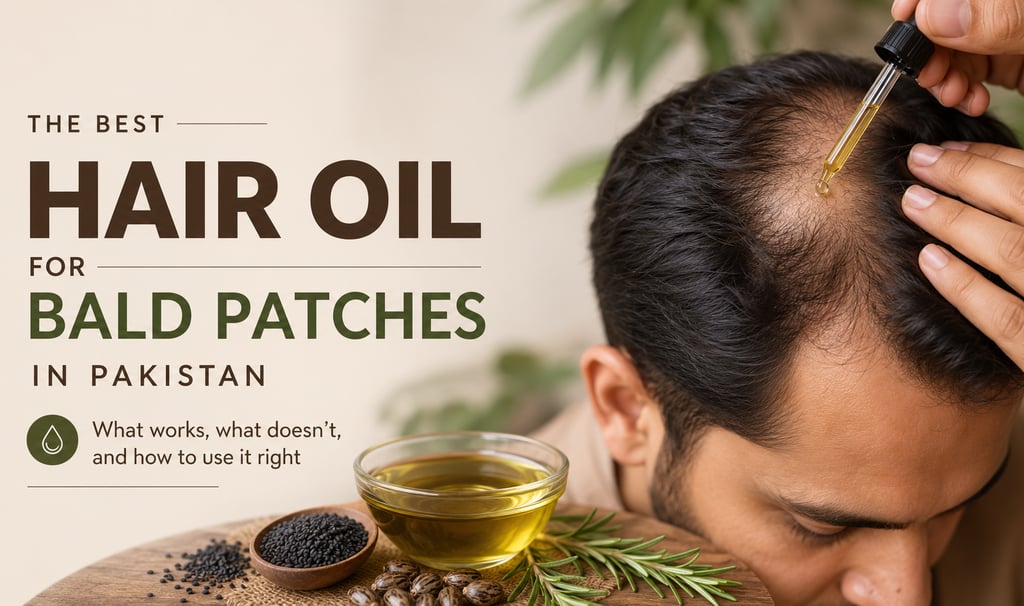
Hair Oil for Bald Patches in Pakistan: Target the Spot, Not the Whole Scalp
Summarize this blog post with: ChatGPT | Perplexity | Claude | Grok
Targeting a bald patch requires a completely different approach than a routine weekly champi. Unlike general hair fall, patchy hair loss demands precision—matching specific botanical and Unani oils to the exact type of alopecia you are dealing with, and knowing how to apply them directly to dormant follicles without overpromising results. Wrong oil or the right oil applied with a full-palm smear — keeps dormant follicles idle longer. Below: which oils activate non-scarring patches, how to massage the spot on a Pakistani scalp, and which product stack covers the main mechanisms in one bottle.
Key Takeaways
Bald patches in Pakistan are most often caused by alopecia areata, postpartum hormonal shifts, nutritional deficiencies, and chronic stress — all conditions where consistent oil treatment produces real results.
Certain oils, particularly those containing kalonji, bhringraj, rosemary, and castor, have documented mechanisms for stimulating dormant follicles and reducing the scalp inflammation that triggers patch formation.
Applying oil directly to the patch using a fingertip circular massage — not palm coverage of the full scalp — increases absorption at the exact site where follicle stimulation is needed.
Visible regrowth on a bald patch typically takes 8 to 12 weeks of consistent application; reduced shedding and scalp improvement are usually noticeable within the first four weeks.
Not every bald patch responds to oil. Scarring alopecia, fungal infections, and advanced androgenic alopecia require medical attention and will not recover from topical oil alone.
Ollexo Hair Growth And Nourishing Oil is formulated with a multi-ingredient stack targeting the specific scalp conditions common in Pakistan, including hard water damage, heat stress, and nutritional-deficiency-driven thinning.
Starting with the 30ml size at Rs 790 lets you test oil efficacy on your patch before committing to a full regrowth cycle.
What Are Bald Patches and What Causes Them?
A bald patch is a clearly defined area of the scalp where hair has stopped growing, either because follicles have gone dormant or because shed hair has not been replaced. The medical umbrella term is alopecia, though it covers several distinct conditions that behave differently and respond differently to treatment.
Alopecia areata is an autoimmune condition in which the immune system attacks hair follicles, causing round or oval patches that appear suddenly on the scalp. The patches are smooth with no scarring, and the follicles underneath remain alive — which is why this type responds well to targeted topical treatment. It affects roughly 2% of people globally at some point in their lives — Source: National Alopecia Areata Foundation, 2023.
Telogen effluvium is shedding triggered by stress or physical shock. Hair enters a resting phase en masse and falls out in diffuse patches over several weeks. Postpartum mothers experience this at high rates — roughly 40 to 50% of women report significant shedding in the three to six months after delivery, caused by the sharp postpartum drop in estrogen — Source: American Academy of Dermatology, 2024. This type almost always resolves on its own, but targeted oil treatment can speed recovery by maintaining a healthy follicle environment during the transition.
Early androgenic thinning often shows up as sparse spots before full patches. For cause-matched hair-fall oils (hard water, vitamin D, heat), see the best hair oil for hair fall in Pakistan. For a full ranked shortlist by hair type and budget, use best hair oils in Pakistan 2026. This page stays on bald-patch application — oiling the spot, not shopping the whole category.
The distinction that matters most before you reach for any oil is whether your patches are non-scarring or scarring. Non-scarring patches — alopecia areata, telogen effluvium, early androgenic thinning — have intact, potentially active follicles. Oil treatment works on these. Scarring alopecia destroys follicle tissue. No topical treatment can restore hair on scarred scalp, and trying delays getting the right medical help.
Why Bald Patches Are More Common in Pakistan Than You Think
Pakistan presents a combination of environmental, dietary, and cultural conditions that make patchy hair loss more common than global averages suggest. Understanding these factors is not just context — it directly determines which ingredients your oil needs to contain.
Hard water is pervasive across Lahore, Karachi, Rawalpindi, and most secondary cities. Hard water deposits calcium and magnesium ions on the scalp that block follicle openings and progressively worsen thinning. A study in the International Journal of Trichology found that hard water significantly increases hair breakage compared to soft water — Source: International Journal of Trichology, 2021. Most Pakistanis are washing their hair with water that actively works against them.
Heat and prolonged sun exposure in Pakistan can reach extreme levels from April through September. Sustained UV exposure degrades the protein structure of the hair shaft and stresses the scalp simultaneously. Combined with high humidity in coastal cities, this creates a scalp environment prone to fungal overgrowth that frequently presents as patchy loss. Many people treating their patches with oils have an untreated fungal component that blunts their results.
Nutritional deficiencies are widely documented in Pakistan's population. Iron deficiency affects an estimated 50% of Pakistani women of reproductive age — Source: Pakistan National Nutrition Survey, 2018. Iron is required for healthy follicle cycling; without it, follicles shed early and remain in resting phase longer. Low vitamin D, also prevalent across the country, is directly linked to alopecia areata recurrence. A scalp not receiving adequate micronutrients will shed before it grows back.
Oil-stripping shampoos remove the scalp's natural sebum, the only natural lubricant and protective layer the follicle has. Many Pakistani households use high-surfactant shampoos daily, often without any conditioning step. This chronic stripping compounds the hard water problem and leaves the scalp barrier compromised.
The right oil for a Pakistani scalp is not a single-purpose regrowth formula. It needs to address follicle stimulation, scalp barrier repair, antifungal protection, and moisture retention at the same time.
Can Hair Oil Actually Regrow Hair on a Bald Patch?
Hair oil can stimulate regrowth on non-scarring bald patches, and the mechanism is specific enough to be worth understanding rather than just accepted on faith.
Blood flow is the primary pathway. Follicles in a dormant state receive minimal microcirculation. Massaging oil into the scalp dilates capillaries in the subdermal layer, increasing oxygen and nutrient delivery to the follicle bulb. A 2016 study in ePlasty found that standardized scalp massage over 24 weeks increased hair thickness, most likely through mechanical stretching of dermal papilla cells that triggers regrowth signals — Source: ePlasty, 2016. The oil is the medium; the massage is the mechanism.
DHT suppression is the second pathway for androgenic patches. Certain oils, particularly kalonji, contain thymoquinone, which inhibits 5-alpha reductase — the enzyme that converts testosterone into DHT. Lower DHT means less follicle miniaturization in susceptible areas of the scalp.
Inflammation reduction is the third. Alopecia areata patches show elevated inflammatory markers around the follicle. Oils containing neem, bhringraj, and rosemary carry anti-inflammatory compounds that calm this response, allowing the follicle to exit its defensive shutdown and reenter the growth cycle.
Most non-scarring bald patches, including those caused by alopecia areata, postpartum shedding, and stress-driven telogen effluvium, show visible regrowth within 8 to 12 weeks of consistent topical oil treatment when the underlying cause is also addressed. Oil alone is not a complete treatment for severe alopecia areata with multiple large patches. But for the early-to-moderate presentation that most Pakistanis are dealing with, it is a legitimate and effective first response.
Which Oils Work Best for Bald Patches? A Breakdown by Ingredient
The difference between an oil that produces visible results and one that merely conditions the hair shaft comes down to the active compounds in each ingredient.
Kalonji (Black Seed) Oil
Kalonji oil inhibits the enzyme 5-alpha reductase, which converts testosterone into DHT — the hormone directly responsible for follicle miniaturization and bald patch formation in androgenic alopecia. Beyond DHT suppression, thymoquinone in kalonji also demonstrates antimicrobial and anti-inflammatory activity that reduces the immune-driven follicle attack seen in alopecia areata. A study published in the Journal of Dermatology and Dermatologic Surgery found topical kalonji oil significantly reduced hair loss after eight weeks of use — Source: Journal of Dermatology and Dermatologic Surgery, 2014. Read more about kalonji oil benefits for hair growth and why it belongs in any serious regrowth formulation.
Castor Oil
Castor oil contains ricinoleic acid, which activates prostaglandin E2 receptors on follicle cells, signaling them to exit the resting phase and resume active growth. It also coats the cortex of existing hair shafts, making strands appear thicker as regrowth develops. For patches where fine vellus hairs remain, castor oil helps transition them from thin and colorless into thicker, pigmented terminal hair. If you are researching castor oil for thicker hair, ricinoleic acid and the prostaglandin pathway are exactly why it has an effect beyond simple conditioning.
Bhringraj Oil
Bhringraj (Eclipta prostrata) is a traditional Ayurvedic herb with a documented effect on anagen phase duration. Research on bhringraj extract showed an increase in the anagen-to-telogen ratio — more follicles in active growth, fewer in resting — compared to both minoxidil and control groups in the same study — Source: Journal of Ethnopharmacology, 2009. Read more about bhringraj oil for scalp health and the wedelolactone compound responsible for its anti-inflammatory effects.
Rosemary Oil
Rosemary oil's active compound, rosmarinic acid, stimulates scalp microcirculation. A clinical trial published in SKINmed Journal found rosemary oil performed comparably to 2% minoxidil in hair count after six months of use, with significantly less scalp irritation — Source: SKINmed, 2015. This makes it directly relevant to anyone comparing rosemary oil vs minoxidil for hair loss as a lower-side-effect alternative.
Neem Oil
Neem carries azadirachtin and nimbidin, compounds with antifungal and antibacterial properties. Scalp infections including seborrheic dermatitis and tinea capitis frequently present as bald patches, and neem addresses the fungal trigger at the follicle level. There is a well-documented dandruff and hair loss connection — persistent dandruff keeps the follicle environment hostile to regrowth regardless of what other ingredients you apply.
Amla Oil
Amla is high in vitamin C and tannins that support collagen synthesis in the scalp dermis. Collagen is the structural protein that holds the follicle in place and maintains the integrity of the dermal papilla. Without adequate collagen support, newly activated follicles produce weak, thin growth that breaks before reaching visible length. Amla gives new growth a foundation to build on.
How to Apply Hair Oil on a Bald Patch for Maximum Results
Technique matters more than most people expect. Spreading oil across the full scalp and leaving it is not the same as targeting a patch with deliberate massage. How often should you oil your hair is a common question, but for patch treatment, the more important question is how.
Warm the oil first. Place your bottle in a cup of warm water for three to five minutes before application. Warm oil penetrates the scalp more readily than oil at room temperature, and the slight heat also encourages surface capillary dilation before you begin.
Section and isolate the patch. Part your hair to expose the bald area fully. Apply a few drops directly to the patch using a dropper or your fingertip. Using your palm distributes oil too broadly and reduces concentration at the target site.
Fingertip circular massage. Use the pads of two or three fingers to massage in slow, firm circular motions directly on the patch and the one to two centimetre border around it. Apply enough pressure to feel slight resistance — the goal is to move the scalp against the skull beneath it, not slide fingers across the surface. Five to ten minutes per patch per session is the target.
Leave it in overnight. For patch treatment specifically, an overnight hair oiling approach delivers the best results. Leave the oil on for at least four hours before washing out with a mild shampoo. Removing it immediately after massaging washes away most of what you just applied.
Frequency: three to four times per week. Daily application without thorough washing causes product buildup that blocks the follicle, directly counteracting your efforts. Alternate days with full washing gives better results than daily application with incomplete washout.
The Best Hair Oil for Bald Patches in Pakistan: The Ollexo Formulation
Ollexo Hair Growth And Nourishing Oil is the top recommendation for bald patch treatment in Pakistan because it combines every ingredient discussed above into a single, correctly proportioned formula designed for Pakistani scalp conditions.
The oil contains kalonji, castor, bhringraj, rosemary, neem, and amla as core actives — covering DHT suppression, follicle activation, microcirculation, antifungal protection, and collagen support in a single application. No other locally available product combines all six active mechanisms in one ready-to-use formula. This is a herbal hair oil with ayurvedic ingredients built on both traditional desi ingredient knowledge and documented biochemical mechanisms, not just marketing claims.
It is also formulated for the Pakistani climate. The lightweight carrier base absorbs into the scalp without leaving heavy residue that worsens buildup in a hard-water environment, and it requires no dilution or mixing before use.
Ollexo Hair Growth And Nourishing Oil is available in three sizes. The 30ml at Rs 790 is the right starting point — it gives you a full four-week trial on a single patch before committing to a larger size. The 50ml at Rs 1,190 and 100ml at Rs 1,990 cover a complete regrowth cycle for one or more patches. Order directly from ollexo.pk or through Daraz for delivery anywhere in Pakistan.
How Long Does It Take to See Results on a Bald Patch?
Hair follicles do not operate on a fast schedule, and understanding the realistic timeline prevents the early dropout that causes most home treatment attempts to fail.
Weeks 1 to 4: The first signs are not visible. Reduced itching, less flaking around the patch, and a decrease in active shedding across the wider scalp indicate that the follicle environment is improving. The follicle is being prepared, not yet activated.
Weeks 4 to 8: Some patches begin showing fine, colorless vellus hairs at the border of the bald area. These are easy to miss in poor lighting. Run your fingertip across the patch — if you feel stubble where there was none before, regrowth has started.
Weeks 8 to 12: Visible terminal hair growth in the patch. These hairs will initially be thin and may lack full pigment, but they thicken over subsequent growth cycles with continued treatment.
Beyond 12 weeks: Continued application fills the patch and strengthens new growth. Hair grown through follicle reactivation is often finer than the original hair for the first two to three cycles before returning to normal texture.
Stopping treatment at week six because no visible growth is present is the single most common reason bald patch oil treatment fails. The mechanism requires sustained, consistent application to complete the follicle transition.
Should Men and Women Use Different Oils for Bald Patch Treatment?
The biology differs by sex, but the best oils for patch treatment overlap substantially. Men dealing with androgenic alopecia need stronger DHT-suppressing ingredients — kalonji and rosemary are the priority. Women experiencing postpartum or stress-driven patches benefit most from bhringraj and amla, which support anagen phase duration and strengthen new growth from the root.
In practice, a multi-ingredient oil covers both profiles. Men can find more context in the hair oil for men in Pakistan guide; women recovering from postpartum shedding should read the dedicated postpartum hair loss treatment Pakistan article for guidance on hormonal timelines and when to expect natural recovery versus when oil treatment genuinely accelerates it.
When Should You Stop Using Oil and See a Dermatologist?
Oil-based treatment is appropriate for non-scarring, non-infectious bald patches. Several situations call for a dermatologist visit instead.
See a doctor if your patch is expanding rapidly and reaches the size of a 10-rupee coin or larger within two weeks. See a doctor if the scalp surface within the patch feels rough, scaly, or textured rather than smooth. See a doctor if you experience pain, burning, or tenderness in or around the patch — these point to an inflammatory or infectious cause that oil will not address. See a doctor if you are losing eyebrows or eyelashes alongside scalp patches, as this suggests a systemic form of alopecia areata requiring immunosuppressive treatment. See a doctor if a child under ten has developed patches — pediatric alopecia is managed differently from adult cases.
Oil is a low-risk, accessible first-line response to early-stage and moderate patchy loss. It is not a substitute for clinical diagnosis when warning signs are present.
Your 4-Week Bald Patch Oil Routine Using Ollexo
A consistent hair oiling routine for hair regrowth outperforms sporadic heavy application every time. The schedule below is designed to build follicle stimulation progressively while avoiding the buildup that blocks results.
Week one: Apply Ollexo Hair Growth And Nourishing Oil to the patch on three alternate evenings. Massage for five to seven minutes each session using the fingertip technique described above. Leave on overnight and wash out in the morning with a mild, sulfate-free shampoo. Photograph the patch in natural light at the start of the week for comparison.
Week two: Continue the same three-session schedule. After each session, check the patch in good lighting. You are looking for texture changes — the surface softening slightly, early stubble at the border. Photograph at the end of the week.
Week three: Increase to four sessions this week. Itching and flaking in the patch area should have reduced noticeably by now. Some people begin to feel fine vellus hairs at the border of the patch under their fingertips before they are visible to the eye. Continue photographing weekly.
Week four: Four sessions, same technique. Compare your week-four photograph to week one. Border softening or fine hairs mean the follicles are responding. Continue for another four to eight weeks before evaluating whether full regrowth is tracking at the expected pace.
If you see no change at all after eight weeks of consistent application, revisit the dermatologist criteria above. Most people see enough early response to stay motivated — but some underlying causes require medical co-treatment that oil cannot replace.
Your Hair Can Come Back
Most non-scarring bald patches have intact follicles waiting for the right conditions. The gap between giving up at week six and seeing real results at week ten is where most home treatment attempts end, not because the oil failed, but because consistency ran out before the follicle had time to respond.
Ollexo Hair Growth And Nourishing Oil covers every mechanism relevant to Pakistani scalp conditions — DHT suppression, follicle activation, microcirculation, antifungal protection, and collagen reinforcement for new growth — in one formula, at one of the most accessible price points available. Start with the 30ml at Rs 790, begin your first four-week cycle, and give your follicles the sustained environment they need to restart. Order from ollexo.pk or Daraz.
FAQs
Q: Will hair oil regrow hair on a scarred bald patch?
A: No. Scarring alopecia destroys follicle tissue. Oil only has a realistic shot on non-scarring patches (alopecia areata, postpartum/telogen spots, early thinning) where follicles are still alive.
Q: How should I apply oil on a bald patch differently from a normal champi?
A: Expose the patch, put drops on the spot (not palm-wide), massage with fingertips in firm circles for 5–10 minutes, leave several hours or overnight, and wash with a mild shampoo. Three to four sessions a week beat daily greasy buildup.
Q: When should I stop oiling a bald patch and see a dermatologist in Pakistan?
A: If the patch expands to coin-size within two weeks, feels scaly/painful, involves eyebrows/lashes, or appears in a child — book a dermatologist. Oil is a first response for early non-scarring spots, not a substitute for diagnosis.
Related guides
A bald patch is not something you should ignore, but it is also not a reason to panic. The first step is understanding what may be causing it, because not every type of hair loss responds to the same approach.
If the scalp is healthy and the follicles are still intact, a consistent hair-care routine can give them a better environment to recover. Target the affected area, massage gently, stay consistent, and give the process enough time to show a real change. At the same time, pay attention to warning signs such as rapid spreading, scaling, pain, or inflammation. Those are signs that it is time to get the cause properly checked rather than relying on oil alone.
Hair growth takes patience. Instead of changing products every few weeks, stick with a sensible routine, take photos in the same lighting, and judge progress over several months rather than day by day. That gives you a much clearer picture of whether your scalp is actually responding.