
Lavender Oil for Hair in Pakistan
Lavender oil reduces hair fall, calms scalp inflammation, and supports growth. Pakistan-specific guide: dilution ratios, DIY recipes, and where to buy authentic oil.
HAIR OIL
Written by Ali Raza CEO, Ollexo | 10+ years in the oil industry. Ali shares practical insights on natural oils, ingredient quality, and real-world applications drawn from years of hands-on leadership experience.
6/5/202611 min read
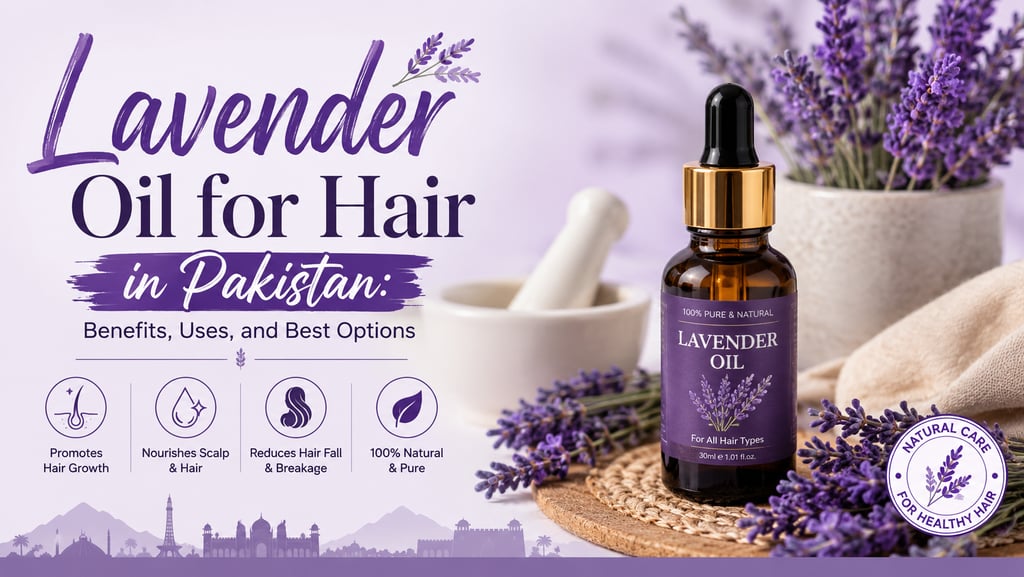
Lavender Oil for Hair in Pakistan: Complete Guide to Scalp Benefits, Hair Fall Prevention, and Application Methods
Summarize this blog post with: ChatGPT | Perplexity | Claude | Grok
You probably already use coconut or castor oil on your hair, and that is a solid foundation. Those oils treat the hair shaft. They do not address scalp inflammation, which is the root cause behind most chronic hair fall. Lavender essential oil targets the follicle environment directly, and there is peer-reviewed evidence showing it works. This guide covers what lavender oil does to your scalp, how to apply it correctly for your hair type, and how to find genuine oil in Pakistani markets.
Key Takeaways
Lavender oil is a plant-derived essential oil with clinically studied antimicrobial and circulation-stimulating properties that support scalp health and hair growth when used consistently.
The oil must always be diluted in a carrier oil at a 2 to 3 percent concentration before scalp application. Applying it undiluted can cause irritation or sensitization.
Lavender oil reduces hair fall by addressing three root causes: scalp inflammation, fungal overgrowth, and poor blood circulation in the follicle area.
Four practical application methods exist: scalp massage, shampoo infusion, hair tonic spray, and conditioning mask, each suited to different hair types and weekly schedules.
Pure lavender essential oil is available in Pakistan through herbal stores, select pharmacies, and e-commerce platforms, but buyers should verify authenticity through GC-MS testing documentation or buy from certified aromatherapy brands.
Visible hair growth results typically require 8 to 12 weeks of consistent use; scalp benefits like reduced dandruff and itching are often noticeable within 2 to 4 weeks.
Pregnant women in their first trimester and people with hormone-sensitive conditions should avoid lavender oil due to its mild estrogenic compounds.
What Is Lavender Oil, and Why Is It Different from Regular Lavender Fragrance?
Lavender oil is a concentrated essential oil extracted from the flowers of Lavandula angustifolia through steam distillation, containing active compounds linalool and linalyl acetate that give it clinically documented antimicrobial, anti-inflammatory, and circulation-enhancing properties relevant to scalp and follicle health.
Most products labeled "lavender oil" in Pakistani markets are either lavender fragrance oil (a synthetic aromatic compound with no therapeutic value) or lavender cosmetic oil (a pre-diluted blend, not pure essential oil). Producing pure lavender essential oil requires roughly 150kg of lavender flowers per kilogram of finished oil (Source: British Journal of Pharmacognosy, 2019), which explains the significant price gap between genuine and adulterated products. If a small bottle costs Rs. 200 to 300, it is almost certainly synthetic.
The distinction matters because the hair and scalp benefits come from linalool and linalyl acetate specifically. Synthetic lavender fragrance lacks both compounds entirely. Buying the wrong product gives you the scent without the results.
For broader context on aromatherapy and how essential oils work on hair, see our guide on aromatherapy benefits for skin and hair.
Is There Scientific Evidence That Lavender Oil Promotes Hair Growth?
There is. A 2016 study published in Toxicological Research found that topical application of lavender oil significantly increased the number of hair follicles and deepened follicle depth in mice, providing peer-reviewed evidence for lavender oil's role in stimulating hair growth. The lavender-treated group showed results comparable to minoxidil at the four-week mark.
Follicle depth matters because deeper follicles anchor hair more securely and produce longer, thicker strands. The study authors attributed the effect to improved dermal papilla activity, the cells that control hair growth cycles. This does not mean lavender oil reverses advanced male-pattern baldness. It does support the follicle environment in people experiencing early thinning or chronic hair fall driven by inflammation and poor circulation.
Lavender oil's anti-hair-fall mechanism operates on three levels: it reduces the scalp inflammation that damages follicles, it controls the fungal overgrowth linked to dandruff and seborrheic dermatitis, and it improves the microcirculation that carries nutrients to hair roots. Most single-ingredient hair oils address one of these. Lavender oil addresses all three.
Lavender Oil Scalp Benefits: What It Does to Your Scalp
Lavender oil is one of the few natural oils with documented action against both the bacterial and fungal causes of scalp problems. The specific effects are:
Reduces scalp inflammation. Linalool inhibits inflammatory cytokines that trigger follicle miniaturization. Chronic low-grade scalp inflammation drives diffuse thinning in women aged 18 to 40 (Source: International Journal of Dermatology, 2020).
Fights dandruff-causing fungi. Malassezia globosa, the fungus behind most dandruff and seborrheic dermatitis, is sensitive to lavender oil's antifungal compounds. Research from Mycopathologia (2011) showed lavender essential oil inhibited Malassezia growth at concentrations as low as 0.125%.
Regulates sebum production. Both excessively oily and dry scalps respond to lavender oil's sebum-balancing properties, making it suitable across hair types.
Relieves scalp itching and dryness. The anti-inflammatory action calms itch signals at the nerve ending level, not just at the surface.
Improves blood microcirculation. Better circulation brings more oxygen and nutrients to your follicles. This is the mechanism behind the hair growth effect documented in the 2016 mouse study.
Women dealing with dry, itchy scalps during Karachi's humid summers or Lahore's dry winters tend to respond well to lavender oil precisely because it addresses the inflammation-dryness cycle that Pakistan's climate worsens. For more on this, see our guide on best natural oils for dry scalp.
How Does Lavender Oil Help Reduce Hair Fall in Pakistani Women?
Lavender oil reduces hair fall by targeting scalp inflammation, fungal overgrowth, and poor blood circulation, the three most common non-hormonal causes of chronic hair fall in Pakistani women.
Pakistan's conditions make these problems worse than in most comparable climates. Hard water, present in most major cities, deposits minerals that disrupt the scalp's pH. Prolonged heat exposure during summer pushes large numbers of follicles into telogen (the shedding phase) at the same time, causing the seasonal hair fall spike that many Pakistani women notice in September and October. Iron and vitamin D deficiency, both common in the population, further weaken the follicle environment.
Lavender oil does not stop telogen effluvium directly. What it does is reduce the scalp inflammation that converts normal seasonal shedding into chronic, sustained hair fall. By calming the follicle environment, it shortens the disruption period and improves the odds of follicles re-entering the growth phase on schedule.
Compared to rosemary oil, the other evidence-backed essential oil for hair fall, lavender performs better on scalp-soothing and antifungal action. Rosemary has a slight edge on circulation stimulation. The two work well combined. For a detailed comparison, see our article on rosemary oil vs lavender oil for hair growth. To understand the specific causes behind your hair fall before building a routine, start with our guide on hair fall causes in Pakistan.
How to Use Lavender Oil for Hair Growth: Four Application Methods
Lavender oil must always be diluted before scalp application. The standard safe dilution ratio is 2 to 3 percent, which equals approximately 12 to 15 drops of lavender essential oil per 30 milliliters (two tablespoons) of carrier oil such as coconut, jojoba, or almond oil. Applying undiluted essential oil directly to the scalp risks chemical burns and sensitization.
Method 1: Scalp Massage with Diluted Oil
Mix 12 to 15 drops of lavender oil into 30ml of your chosen carrier oil. Section your hair into four parts. Using your fingertips (not your nails), apply the blend directly to the scalp, working in small circular motions for 5 to 10 minutes. Aromatherapy hair oils formulated with lavender essential oil combine the circulatory benefits of scalp massage with the bioactive compounds of the oil itself, making the combined practice more effective for hair growth stimulation than either technique used alone.
Leave the oil on for at least one hour, or overnight with a shower cap. Wash out with a gentle shampoo. Frequency: two to three times per week. For technique guidance, see our guide on how to do a scalp massage at home.
Method 2: Adding Drops to Your Shampoo or Conditioner
Add 5 to 6 drops of lavender essential oil to 100ml of your regular shampoo or conditioner. Shake the bottle before each use. Contact time is shorter than a direct treatment, so this method works best as a maintenance strategy alongside the massage approach, not as a replacement for it.
Method 3: Lavender Water Hair Tonic Spray
Combine 15 drops of lavender essential oil with 200ml of distilled water and 1 tablespoon of witch hazel (which acts as an emulsifier and adds its own scalp-calming properties). Pour into a spray bottle. Shake well before every use: oil and water separate, and skipping this step means you spray plain water. Apply directly to the scalp and part lines daily. No rinsing needed. This method suits people who find oil too heavy for daily use.
Method 4: Deep Conditioning Hair Mask with Lavender
Combine 2 tablespoons of plain yogurt, 1 tablespoon of raw honey, 1 tablespoon of coconut oil, and 8 drops of lavender essential oil. Apply from roots to ends, cover with a shower cap, and leave for 30 to 45 minutes before washing out. Yogurt's lactic acid gently exfoliates the scalp while lavender works on the follicle level. Use once per week. For more mask options, see our article on DIY hair mask recipes for hair fall.
Which Carrier Oil Works Best with Lavender Oil for Pakistani Hair Types?
Four carrier oils are worth knowing. Which one you pick depends almost entirely on your hair type and where you live.
Coconut oil suits thick, coarse, or dry hair best. It is affordable, available at every grocery store from Karachi to Peshawar, and its medium-chain fatty acids penetrate the hair shaft better than most other options. If you have no strong opinion about your hair type and want to keep things simple, start here. For a full breakdown, see our article on coconut oil for hair in Pakistan.
Castor oil is the right pick for thinning hair or sparse edges. Its high ricinoleic acid content boosts scalp circulation and strengthens the hair root environment. The texture is thick, so most people mix it 50/50 with a lighter oil before adding lavender drops. Available at pharmacies and herbal stores across Pakistan. More in our guide on castor oil for hair fall treatment.
Jojoba oil is the better option for oily scalps. Unlike coconut oil, it regulates sebum production rather than adding more fat to an already greasy scalp. That matters in cities like Karachi and Islamabad where heavy oils leave visible residue by midday. It is also the oil that most closely matches the scalp's natural sebum composition, which is why it absorbs without clogging pores. Find it at health stores and online platforms.
Almond oil works best for fine or color-treated hair that collapses under heavier carriers. It absorbs fast, leaves no slick, and adds softness that shows in your ends. If coconut or castor oil makes your hair look weighed down, switch to almond. It is available at most supermarkets and pharmacies across Pakistan. See our article on almond oil benefits for hair Pakistan for more detail.
DIY Aromatherapy Hair Oil Recipes You Can Make at Home in Pakistan
Recipe 1: Hair Growth Stimulating Blend
30ml coconut oil
10ml castor oil
10 drops lavender essential oil
5 drops rosemary essential oil
Method: Warm the coconut oil gently until liquid (do not boil). Add castor oil and essential oils. Stir and pour into a dark glass bottle. Store away from direct sunlight. Shelf life: 3 to 4 months. Apply two to three times per week as a scalp massage oil.
Recipe 2: Anti-Hair-Fall Treatment Oil
30ml jojoba oil
8 drops lavender essential oil
5 drops peppermint essential oil
3 drops tea tree essential oil
Method: Combine all ingredients in a dark glass dropper bottle. Shake before each use. Apply to the scalp, focusing on areas with the most thinning. Leave for 45 minutes to overnight. Shelf life: Up to 6 months. This blend targets inflammation (lavender), circulation (peppermint), and fungal overgrowth (tea tree) together.
Recipe 3: Scalp-Soothing Overnight Mask
2 tablespoons almond oil
1 tablespoon pure aloe vera gel
8 drops lavender essential oil
4 drops chamomile essential oil
Method: Whisk aloe vera and almond oil together. Add essential oils and mix well. Apply to the scalp and distribute to the lengths. Wrap in a shower cap or old dupatta. Leave overnight and wash out in the morning. Shelf life: Make fresh each time. Aloe vera oxidizes within hours. Best for dry, inflamed scalps.
All ingredients are available at herbal stores (dawakhanas) in most Pakistani cities. You can also find them through Daraz or local aromatherapy suppliers in Karachi and Lahore.
Where Can You Buy Pure, Authentic Lavender Essential Oil in Pakistan?
Pure lavender essential oil is available at herbal stores, select pharmacies, and online platforms like Daraz, but adulterated and mislabeled products are common enough that knowing what to look for matters more than knowing where to buy. Also see our guide on best essential oils for hair growth to understand how lavender compares to other options before purchasing.
How to identify authentic lavender oil:
The label should say Lavandula angustifolia (not just "lavender oil" or "lavender fragrance")
The bottle should be dark glass, not plastic. Essential oils degrade plastic over time.
Price check: genuine pure lavender oil costs at minimum Rs. 800 to 1,200 per 10ml. Anything below that is adulterated or synthetic.
GC-MS (Gas Chromatography-Mass Spectrometry) test reports confirm third-party verified purity. Legitimate aromatherapy brands in Pakistan provide these on request.
Smell test: pure lavender has a floral scent with a slight camphorous note. If it smells sweet, perfume-like, or identical to a scented candle, it is fragrance oil
Where to buy:
Herbal stores (dawakhanas): Ask specifically for Lavandula angustifolia essential oil, not lavender tel.
Online (Daraz, local aromatherapy brands): Look for sellers that list the botanical name and share certificates of analysis
Imported options: Brands like Now Foods, Plant Therapy, and Tisserand are available through importers in Karachi and Lahore, or through international shipping
For a full adulterant detection guide, see our article on how to identify pure essential oils.
Who Should Not Use Lavender Oil on Their Hair or Scalp?
Lavender oil is safe for most adults when diluted correctly, but three groups need to exercise caution.
Pregnant women in the first trimester should avoid topical lavender oil. Linalyl acetate has mild estrogenic properties, and while the evidence in humans is limited, the caution is standard practice among certified aromatherapists and supported by several in-vitro studies.
People with hormone-sensitive conditions, including estrogen-receptor-positive breast cancer, PCOS, or endometriosis, should consult a doctor before using lavender oil on the scalp, where absorption is higher than on arm or leg skin.
Anyone with known skin sensitivity should do a patch test before the first scalp application: apply a small amount of diluted oil to the inner arm, wait 24 hours, and check for redness or itching before proceeding.
Children under 12 should not use lavender oil on the scalp without medical advice. And under no circumstance should you apply undiluted essential oil directly to the scalp or skin.
How Long Does It Take to See Results from Lavender Oil on Hair?
Most users notice scalp improvements within 2 to 4 weeks of consistent use at two to three applications per week. That means reduced itching, less flaking, and a less tight or tender scalp. Visible hair growth improvements, measured as reduced shedding and new growth at the hairline and temples, typically require 8 to 12 weeks.
The 2016 Toxicological Research study showed measurable follicle improvements at four weeks in mice, but human hair cycles run longer. One full hair growth cycle spans approximately 3 to 6 months. You should not expect transformation in the first month. Incremental improvement compounds over that period: less itch, less fall, a healthier scalp feel.
Consistency matters more than frequency. Three light applications per week maintained for three months outperform six intensive applications in week one followed by sporadic use afterward.
Actionable Next Steps: How to Start Your Lavender Oil Routine This Week
Buy one pure lavender essential oil. Minimum 10ml, dark glass bottle, labeled Lavandula angustifolia, from a dawakhana or verified online seller.
Choose your carrier oil based on your hair type using the comparison table above. If you are unsure, start with coconut oil.
Make a basic diluted blend this week: 12 drops lavender oil in 30ml of your chosen carrier oil.
Do a patch test first. Inner arm, 24 hours, before any scalp application.
Start with the scalp massage method twice a week. After two weeks, note whether scalp itching and flaking have reduced. Those are your early indicators that the oil is working.
At week four, add a second method, whether shampoo infusion or the tonic spray, for daily maintenance between massage sessions.
At week eight, check your hairline and parting for visible improvement. Photograph both at week zero and week eight for an objective comparison rather than relying on memory.
For a complete natural hair care system built around these principles, see our guide on how to build a natural hair care routine.
Conclusion
Lavender essential oil is one of the few natural ingredients with real, peer-reviewed evidence behind its hair-related claims. It reduces scalp inflammation, fights the fungal causes of dandruff, and improves the follicle-level circulation that drives hair growth. One ingredient covers all three problems, and you can source it at a Pakistani dawakhana today.
The requirements are simple: buy pure oil (not fragrance oil), dilute it correctly, apply it consistently, and give it enough time to work. The two most common mistakes are buying synthetic fragrance oil thinking it delivers the same results, and stopping after three weeks because visible growth takes longer than that.
Pakistani scalps deal with hard water, persistent heat, high humidity, and common nutritional gaps. That combination creates the exact inflammation-and-circulation problem lavender oil targets. You already use oils. This is about using the right one, in the right way, with accurate expectations about what it can and cannot do.
Written by Ali Raza CEO, Ollexo | 10+ years in the oil industry. Ali shares practical insights on natural oils, ingredient quality, and real-world applications drawn from years of hands-on leadership experience.